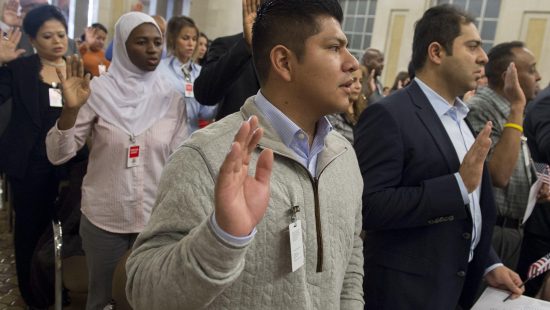
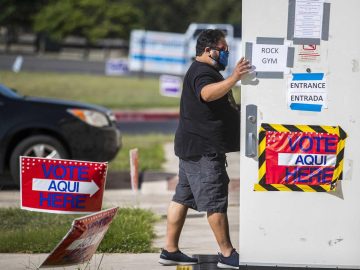
Trump made historic gains with Hispanic voters in 2024. New Texas polling suggests some of those voters are reconsidering their choices, putting the Latino vote at the center of the 2026 Senate race and the broader fight for Congress.
For Republicans, the 2024 election offered a tantalizing possibility: after decades of Democratic dominance among Hispanic voters, Texas Latinos might finally be becoming a durable part of the Republican coalition.
Donald Trump made historic gains with Hispanic voters in 2024, particularly among working-class voters and in communities along the Texas-Mexico border. Republicans did more than celebrate the gains. They began building their political strategy around the possibility that the shift was permanent.
Now, less than two years later, there are signs that the political ground is moving again.
A May 2026 UnidosUS poll found that 20% of Texas Hispanic voters who voted for Trump in 2024 said they would not vote for him if they could do the election over today. The same survey found widespread economic anxiety among Hispanic Texans, with the economy and cost of living among their leading concerns.
That does not mean those voters have automatically returned to the Democratic Party.
But it does mean that a Republican strategy built around permanently expanding the GOP’s Latino coalition is facing a serious test.
The warning signs are particularly visible in the Texas Senate race.
A July Fox News poll found Democrat James Talarico with a substantial advantage over Republican Ken Paxton among Hispanic voters. The statewide contest was considerably closer, making the Hispanic vote potentially decisive in a race that could help determine control of the U.S. Senate.
The numbers are striking because they come so soon after Trump’s breakthrough with Hispanic voters in 2024.
But the larger story is not simply that Hispanic voters are becoming Democratic again.
It is that Latino voters are becoming increasingly contestable territory for both parties.
From Republican breakthrough to Republican vulnerability
Trump’s 2024 performance was genuinely significant.
Pew Research Center estimates that Trump received 48% of the Latino vote in 2024, compared with 36% in 2020. That was a historic Republican performance and represented a 12-point improvement in just four years.
The shift was especially important among Latino men and working-class voters.
But the coalition Trump built has not remained static.
Pew found in April 2026 that 66% of Latino voters who had voted for Trump in 2024 approved of his job performance. That sounds like a majority, but it represented a 27-point decline from the beginning of his second term. The decline among Latino Trump voters was substantially larger than the decline among his non-Hispanic supporters.
The Texas numbers are even more politically significant because Texas Republicans have already acted on the assumption that their 2024 gains would endure.
Republicans redrew the state’s congressional map in 2025 in an effort to strengthen their position in the House. The Supreme Court ultimately allowed the Republican favored map to stand. The new districts could put several Democratic held seats in play.
That strategy makes the Latino vote particularly important.
If the Republican gains among Hispanic voters persist, the new map could help Republicans maintain or expand their House advantage.
If those gains begin to disappear, some of the seats Republicans targeted could become considerably more competitive.
And this is where Texas becomes a national story
Texas is not an isolated case.
Hispanic voters have become one of the most important swing constituencies in American politics. They accounted for roughly one in ten voters in the 2024 presidential election, according to AP VoteCast.
That means even relatively modest changes in their voting behavior can have consequences far beyond Texas.
In 2024, Trump’s improved performance among Hispanic voters helped him make gains in several battleground states, including Arizona and Nevada. His gains among Latino voters also contributed to Republican improvements in places such as Florida and parts of the industrial Midwest.
The reverse could now be true.
If voters who moved toward Trump in 2024 move back toward Democrats in 2026, the effect could be felt in congressional districts across Arizona, Nevada, Pennsylvania, California, Florida and other states with large Hispanic electorates.
The stakes are particularly high because the House is expected to be decided by a relatively small number of competitive districts.
A few percentage points among Latino voters could therefore matter more than the national Hispanic vote alone might suggest.
It is not necessary for Democrats to recreate their old 20 or 30 point advantage among Hispanic voters.
They may only need to recover part of what they lost.
The Latino vote is becoming less predictable
That may be the most important lesson of all.
For years, both parties operated with a relatively simple understanding of Hispanic voters: Democrats could generally expect a large advantage, while Republicans competed for a minority of the vote.
The 2024 election broke that model.
Trump demonstrated that Republicans could win an extraordinarily large share of Hispanic voters by focusing on inflation, wages, immigration, and cultural issues, and by appealing directly to working-class voters who did not necessarily see themselves as part of the traditional Democratic coalition.
Now Democrats have an opportunity to reverse some of those gains.
But there is no guarantee they will.
National polling shows that many Latino voters who have become dissatisfied with Trump are not necessarily enthusiastic about Democrats. Some remain undecided. Others are dissatisfied with both parties.
That creates a different political environment from the one Democrats faced before 2024.
The question is no longer simply:
Will Hispanic voters vote Democratic or Republican?
It is:
Which party can actually persuade them that their economic and personal concerns will be addressed?
That distinction could determine turnout as well as vote choice.
A warning for both parties
For Republicans, the danger is assuming that the 2024 Latino breakthrough was a permanent realignment.
It may yet become one. But the early evidence suggests that some of the voters who moved toward Trump remain persuadable.
For Democrats, the danger is assuming that dissatisfaction with Trump automatically brings those voters home.
It doesn’t.
The party has to win them.
That means competing on the issues that pushed many Hispanic working-class voters toward Trump in the first place: inflation, housing, wages, public safety, immigration and economic opportunity.
The national implications are enormous
If Republicans retain most of their 2024 Hispanic gains, Trump’s coalition could represent a genuine long-term transformation of the Republican Party and reshape the electoral map for years.
If Democrats recover a significant portion of those voters, Republicans could discover that the 2024 breakthrough was less a realignment than a temporary disruption of the traditional voting pattern.
And if neither party succeeds in winning their confidence, turnout could become the decisive factor.
Texas is therefore more than a bellwether.
It is a laboratory for the future of the American electorate.
The state is testing whether the historic Latino shift of 2024 was the beginning of a permanent Republican realignment or whether voters who crossed party lines for Trump are already reconsidering that decision.
The answer could determine not only who wins Texas congressional seats this November, but whether Republicans or Democrats control the House and Senate after the 2026 midterms.