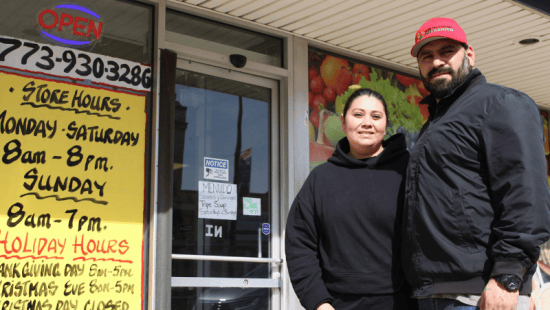
Costs are rising while customers are watching their spending. Here is how small businesses can adjust prices strategically without turning a necessary increase into a customer-retention problem.
For many small-business owners, raising prices can feel like a no-win decision.
The cost of supplies, labor, insurance, rent, equipment and other operating expenses keeps putting pressure on already-thin margins. At the same time, customers are becoming more careful about what they spend.
That leaves business owners caught between two uncomfortable choices: absorb higher costs and watch profits shrink, or raise prices and risk losing customers.
But there is another way to approach the problem.
Instead of treating a price increase as a simple percentage added to everything, small businesses can approach pricing as a strategic decision. That means identifying where margins are weakest, deciding which prices actually need to change, giving customers reasonable notice and making sure they understand what they continue to receive for their money.
The pressure is real. The Federal Reserve’s 2026 Small Business Credit Survey found that rising costs of goods, services and wages were the most common financial challenge reported by small businesses, while reaching customers and growing sales was the most common operational challenge. Overall, 77% of surveyed firms reported experiencing challenges associated with rising costs during the prior year.
The U.S. Chamber of Commerce’s second-quarter 2026 Small Business Index found that 57% of small businesses identified inflation as a top concern, up from 48% a year earlier. Revenue was the second-most cited challenge, at 26%. The Chamber also reported that businesses were seeing customers become more cautious about spending.
That creates the central pricing dilemma for many small businesses:
How do you charge enough to keep your business healthy without pushing away the customers you need?
Start With Your Numbers, Not Your Customers
Before deciding how much to charge, determine which parts of the business are actually profitable.
A business can have strong sales and still have weak margins. One product may sell constantly but generate little profit. Another service may have fewer customers but produce significantly more money after labor and other direct costs are considered.
Start by reviewing:
- Revenue by product or service
- Direct costs
- Labor required to deliver each offering
- Discounts and promotions
- Payment processing and other transaction costs
- Customer acquisition costs
- Profit margins
- How long it has been since each price was reviewed
The goal is to identify where your pricing is no longer sustainable.
Current guidance from Xero’s small-business pricing guide recommends reviewing prices regularly and using smaller, incremental increases rather than waiting until margins have deteriorated enough to require a large jump. Xero also recommends analyzing current margins, competitor pricing and customer price sensitivity before making a change.
That creates an important distinction:
You do not necessarily need to raise every price.
Do Not Assume Every Price Needs the Same Increase
A blanket price increase is easy to implement, but it may not be the smartest strategy.
Consider a business that offers five services. Two may have healthy margins, while three have become significantly more expensive to provide.
Increasing all five prices by the same percentage could make the profitable services unnecessarily expensive while still failing to solve the margin problem on the weakest services.
A better approach is to identify the specific areas under pressure.
You may decide to:
- Raise prices on services that require substantially more labor.
- Increase prices on products with higher supplier costs.
- Adjust prices on high-demand services where customers continue to see strong value.
- Add a surcharge for unusually expensive or time-consuming services.
- Redesign packages rather than simply increasing the base price.
- Leave some highly price-sensitive products unchanged while adjusting others.
Xero’s current guidance similarly identifies selective increases, including raising prices only on certain products or adding charges for premium services or peak periods, as possible strategies.
This is a more surgical approach to pricing.
It also gives you an opportunity to understand how customers respond before making broader changes.
Test New Prices With New Customers First
One way to reduce risk is to introduce new pricing to new customers before changing every existing customer’s rate.
Suppose you charge $100 for a service and believe $115 better reflects the cost and value of delivering it.
Rather than immediately moving every existing customer to $115, you could begin quoting $115 to new customers.
That gives you information.
Are new customers accepting the price?
Are they asking substantially more questions?
Are competitors offering similar services for less?
Are customers choosing a different package?
You can use those answers to refine your pricing before making a larger change.
Xero specifically lists increasing prices for new customers as one possible rollout strategy.
This does not mean existing customers should be treated unfairly. It means a business can use new business as a practical testing ground while developing a transition plan for established customers.
Give Customers Options Instead of Only Giving Them a Higher Number
A price increase becomes harder for customers to absorb when there is only one choice.
Tiered pricing can provide another path.
For example:
Basic — $100
Core service with fewer extras.
Standard — $125
The business’s primary offering.
Premium — $150
Additional support, convenience or services.
The exact prices will depend on the business. The principle is what matters.
Customers with tighter budgets have an option that keeps them connected to the business, while customers who value additional service have an opportunity to spend more.
Tiered pricing can be particularly useful for service businesses because it allows owners to separate what is essential from what requires additional time, labor or resources.
The important thing is to make the differences between tiers real and understandable.
Do not create confusing packages simply to make a higher price look attractive.
Consider Grandfathering Loyal Customers
Existing customers often need a different transition than new customers.
One option is to temporarily grandfather existing customers at their current rate.
For example:
“Beginning October 1, our standard monthly rate will increase to $125. Because you have been a customer since 2024, we will keep your current rate through December 31. Your new rate will take effect January 1.”
This approach gives loyal customers time to adjust while allowing the business to begin moving toward sustainable pricing.
It can also reinforce an important message: the business recognizes the value of long-term relationships.
But grandfathering should have a defined end date.
If a business keeps dozens of outdated prices indefinitely, the strategy can become another source of margin pressure.
Tell Customers Before the New Price Appears
Surprising customers with a higher invoice is one of the easiest ways to turn a manageable price increase into a trust problem.
Xero recommends giving most customers 30 to 60 days’ notice, explaining the reason for the change and highlighting the value customers will continue to receive.
The exact notice period may depend on the type of business, customer agreement and applicable rules. Businesses should review their contracts and legal obligations before changing prices.
For a typical customer communication, keep the message simple:
What is changing.
When it changes.
Why the business is making the change.
What customers will continue receiving.
What customers need to do, if anything.
You do not need a long apology.
A confident explanation is usually better than a defensive one.
For example:
“Beginning October 1, our rates will increase by $15 per month. This change reflects higher operating and service-delivery costs and allows us to continue providing the level of service our customers expect. We appreciate your continued support and remain committed to providing reliable service and support.”
The message should also be honest.
Do not tell customers that prices are increasing because of “better service” if the primary reason is simply that your costs have increased.
Do Not Apologize for Running a Sustainable Business
Many small-business owners become uncomfortable when talking about higher prices.
That discomfort can lead to excessive explanations, unnecessary discounts or an uncertain message.
A sustainable business needs enough revenue to pay its workers, cover its expenses, maintain quality and remain open.
The goal is not to convince every customer that a higher price is wonderful.
The goal is to communicate clearly enough that customers understand what is changing and why.
Some customers may decide the new price no longer fits their budget. That is a possibility every business owner should recognize.
The objective is not zero customer loss at any cost.
The objective is a healthier business with sustainable margins and strong relationships with the customers who value what you provide.
That is also why pricing and customer retention should be considered together. Parriva’s earlier guide, “Your Next Customer May Already Be a Customer: Why Retention Is the Growth Strategy Small Businesses Are Missing”, can help business owners think about the other side of the equation: keeping existing customers engaged and coming back.
Know When a Price Increase Is Probably Necessary
A price review deserves serious attention when:
- Your costs have increased significantly.
- Your profit margin has steadily declined.
- You have not reviewed your prices in a year or more.
- You are consistently selling below comparable market prices.
- A product or service requires substantially more labor than when the price was established.
- Demand remains strong even though your current price is low.
- Your business has added meaningful value to the product or service.
On the other hand, proceed more carefully if customers are already leaving in large numbers, competitors offer nearly identical products at substantially lower prices, or you do not know which parts of your business are profitable.
Do not raise prices simply because someone else did.
Know your numbers first.
Five Pricing Mistakes That Can Cost You Customers
1. Raising everything by the same percentage
Different products and services have different costs, demand and margins.
2. Waiting until the last minute
Delaying price reviews can force a business into a much larger increase later. Regular reviews can make smaller changes easier to manage.
3. Giving customers no explanation
A surprise increase can make customers feel taken for granted.
4. Offering no alternative
A lower-cost package or different service level may allow budget-conscious customers to remain with you.
5. Immediately discounting when customers push back
Discounts can solve an individual problem, but repeatedly cutting the new price can undermine the entire pricing strategy.
What to Track After You Raise Prices
A price increase should not end when the new price appears on an invoice.
Track what happens afterward.
At minimum, monitor:
Customer retention: Are customers leaving at a higher rate?
Revenue per customer: Are you generating more revenue from the customers who stay?
Profit margin: Did the increase actually improve profitability?
Sales volume: Did demand change significantly?
Customer feedback: What are customers saying about the new pricing?
Xero likewise recommends monitoring sales volume, profitability and customer feedback after implementing a price change so the business can determine whether the strategy is working.
The goal is to learn.
If customers accept the increase but a particular service experiences a sharp decline in demand, you have useful information.
If customers remain while margins improve, the change may be working.
Pricing should be treated as an ongoing business process, not a decision made once and forgotten.
A Simple 30-Day Price-Increase Plan
If you are considering a price increase, start here.
Week 1: Review the numbers
Calculate your margins and identify the products or services putting the most pressure on profitability.
Week 2: Review the market
Look at comparable prices, customer demand and the value your business provides.
Week 3: Design the change
Decide whether you need a blanket increase, a targeted increase, new packages or a combination of approaches.
Week 4: Prepare customers
Give appropriate notice, communicate clearly and make sure employees know how to answer customer questions.
Then monitor the results.
The Goal Is Not Simply to Charge More
A small business does not have to choose between protecting its customers and protecting its margins.
The better approach is to recognize that the two are connected.
A business that continually absorbs higher costs may eventually have to cut staff, reduce service, delay investments or compromise quality. A business that raises prices carelessly may lose customers faster than it can replace them.
The strongest pricing strategy sits between those extremes.
Know your costs. Know your customers. Raise the prices that need to change. Give people reasonable notice. Offer choices when possible. Then measure what happens.
For small businesses operating under continued cost pressure, the goal is not simply to charge more.
It is to build a price structure that allows the business to remain healthy enough to keep serving its customers.