Small businesses and private nonprofits affected financially by the June Boyle Heights warehouse fire can now apply for federal disaster loans even if their property was never physically damaged. Here’s who qualifies, how the loans work and what to know before applying.
For a small business owner, a disaster does not have to destroy your storefront to hurt your bottom line.
A warehouse fire can mean fewer customers, interrupted operations, unpaid bills, disrupted suppliers or unexpected expenses. That is why the federal government is making disaster loans available to businesses and private nonprofits that suffered economic losses connected to the June Boyle Heights fire, even when they did not experience direct physical damage.
The U.S. Small Business Administration announced the assistance Aug. 17 under a disaster declaration covering the 2026 Los Palos Incident, the official name for the Boyle Heights Fire. The incident occurred June 17 through June 25 at a large commercial property on Los Palos Street.
For Parriva readers following our small-business coverage, the most important takeaway is simple:
If the fire caused your business to lose money, it may be worth checking whether you qualify—even if your business never caught fire.
You may qualify without physical damage
The SBA’s Economic Injury Disaster Loan, or EIDL, program is designed to help eligible businesses and private nonprofits deal with working-capital needs caused by a declared disaster.
Under this declaration, the SBA specifically says physical damage is not required.
The loans can help cover expenses such as fixed debts, payroll, accounts payable and other bills that could not be paid because of the disaster. The SBA determines eligibility and the amount and terms of any loan based on the applicant’s financial condition.
That distinction matters for businesses in and around Boyle Heights.
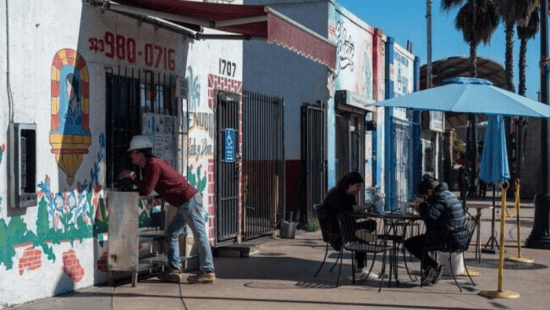
A restaurant, retailer, contractor, neighborhood service business or other small company might have remained physically intact while still experiencing a financial hit from the fire and its aftermath.
The important question is not simply, “Did my building burn?”
It is whether your business experienced financial losses directly related to the disaster.
How much can businesses borrow?
Eligible applicants may qualify for loans of up to $2 million.
The SBA lists interest rates as low as:
- 4% for businesses
- 3.625% for private nonprofits
Loan terms can extend for as long as 30 years.
The SBA says interest does not accrue and payments are not due until 12 months after the date of the first loan disbursement. The actual loan amount, interest rate and repayment terms are determined by the SBA based on each applicant’s financial circumstances.
These are loans, not grants. Business owners should therefore consider the repayment obligation carefully before accepting financing.
Which counties are covered?
The disaster declaration covers:
- Los Angeles County
- Kern County
- Orange County
- San Bernardino County
- Ventura County
The program is available to eligible small businesses, small agricultural cooperatives and private nonprofit organizations, including faith-based organizations, that experienced financial losses directly related to the disaster.
The SBA says agricultural producers, farmers and ranchers are not eligible under this declaration, except for aquaculture enterprises.
When is the deadline?
The deadline to submit an Economic Injury Disaster Loan application is:
May 14, 2027
That gives affected businesses considerable time to apply, but waiting may not be the best strategy if the fire has already created a cash-flow problem.
Businesses should begin gathering documentation showing what changed financially after the disaster, including revenue, expenses and other information that can help establish the economic impact.
Where can Boyle Heights businesses get help?
The SBA has opened Business Recovery Centers in Los Angeles where business owners can speak directly with representatives about the disaster-loan process.
One is particularly close to the affected community:
East LA/Boyle Heights BusinessSource Center
1780 E. First St.
Los Angeles, CA 90033
Hours listed by the SBA are Monday through Friday from 8 a.m. to 5 p.m. and Saturday from 9 a.m. to 2 p.m.
A second center is located at the East LA Entrepreneur Center (Centro Maravilla), 4716 E. Cesar Chavez Ave., Building B, Los Angeles, CA 90022, with hours Monday through Friday from 8 a.m. to 4:30 p.m.
The SBA says walk-ins are welcome, and applicants can also schedule an appointment through its Business Recovery Center appointment system.
How to apply
Businesses can begin through the SBA’s official disaster assistance application page.
The SBA also provides disaster-assistance information through its official small-business resources, where applicants can find information about disaster lending and other federal assistance.
If you need help with the application process, the SBA lists its Disaster Customer Service Center at 1-800-659-2955. Applicants can also email disastercustomerservice@sba.gov. Telecommunications relay users can dial 7-1-1.
What should you have ready?
Before applying, it makes sense to organize the financial information that demonstrates how the Boyle Heights fire affected your business.
That could include records showing:
- Revenue before and after the incident
- Increased operating expenses
- Unpaid bills
- Payroll obligations
- Accounts payable
- Changes in customer activity
- Other documented financial losses connected to the disaster
The goal is to clearly explain the connection between the disaster and your business’s economic injury.
If you are unsure whether your losses qualify, the SBA’s recovery centers may be a useful first stop. You do not have to determine your eligibility on your own.
The bigger lesson for small businesses
The Boyle Heights warehouse fire was not simply a story about a building burning.
The Los Angeles Fire Department reported that crews battled the large commercial-structure fire for more than a week, with the incident ultimately reaching knockdown on June 25. LAFD also reported significant operational challenges inside the structure and smoke impacts affecting surrounding communities.
For nearby businesses, the economic effects of a major industrial fire can extend beyond the property itself.
That is exactly why the SBA’s economic-injury provision matters.
A business can survive the fire itself and still suffer financially from the disaster.
If that happened to your business, the federal assistance now available may provide another option for keeping the doors open, meeting operating expenses and continuing the recovery.
Parriva will continue following resources available to California’s small businesses through our Business section and practical community reporting.