Federal records show prolonged detention, limited documented referrals for high-risk pregnancies and conflicting miscarriage counts. A new lawsuit challenges ICE’s compliance with its own pregnancy protections.
A federal medical billing system that experienced months of delays is now operating again. What remains unclear is whether U.S. Immigration and Customs Enforcement (ICE) has recovered missing information about miscarriages among women held in its detention centers.
The question has become more pressing following a November 24 report by the Women’s Refugee Commission, which found that ICE detained 733 pregnant women between January 2025 and April 2026.
The government knows how many pregnant women its records identify as having entered detention. The available information provides a less complete picture of what happened to their pregnancies.
Weeks in detention, limited medical referrals
The commission’s analysis of federal records found that pregnant women spent an average of 43 days in detention, more than eight times the average under the previous administration. One woman remained in custody for 219 days.
The records also identified approximately 128 women with high-risk pregnancies. Only four had documented referrals to a higher level of care.
That does not establish that the remaining women received no medical treatment. But it raises questions about whether they received the specialized attention their conditions required.
For pregnant women in detention, access to prenatal appointments, diagnostic screenings and emergency treatment depends largely on the institutions holding them.
Two different miscarriage counts
In September, The Guardian reported that ICE had documented 18 miscarriages during the first nine months of 2025.
The agency could not provide updated figures after October 3 of that year.
The Women’s Refugee Commission’s November announcement cites a separate disclosure of federal information identifying 16 miscarriages between January 2025 and February 2026.
Despite the overlapping reporting periods, the figures differ. The publicly available information reviewed for this article does not explain why.
Neither count provides a reliable basis for determining the miscarriage rate among pregnant women in ICE custody.
A billing system that took a year to become operational
The gap in miscarriage statistics emerged during an October 2025 transition between medical billing arrangements.
According to Acentra Health’s published contract chronology, implementation of its replacement claims processing system encountered funding and contracting delays, including a suspension of work in April 2026.
The system became operational on October 12, 2026.
Acentra emphasizes that its responsibilities involve processing medical claims from outside healthcare providers. The company does not provide medical treatment, authorize care or make clinical decisions for detainees.
The restoration of claims processing does not establish that ICE has recovered the missing miscarriage statistics. Nor does the absence of aggregate statistics necessarily mean individual patient records were lost.
Whether the agency has reconstructed those figures remains unconfirmed.
The consequences reach California
For California families, these concerns are not distant.
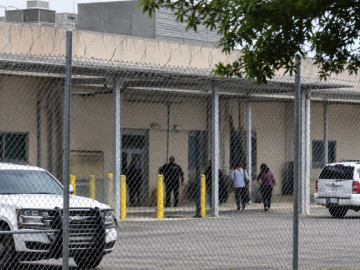
A California asylum seeker identified as Angie Rodriguez reportedly experienced a miscarriage while detained at the Mesa Verde ICE Processing Center in Bakersfield in 2025. Her experience is also referenced in the new federal lawsuit.
The circumstances illustrate the importance of timely medical attention during detention, although the available evidence does not establish what caused her miscarriage.
Her case comes amid broader concerns about delays in medical treatment and other deficiencies inside California immigration detention facilities.
State investigators and federal inspectors have also reached substantially different conclusions about conditions in those facilities, raising questions about the effectiveness of detention oversight.
For families attempting to challenge detention or obtain medical assistance, access to legal representation can be another obstacle. Recent research found that 38% of California immigration court cases examined had no recorded legal representation.
ICE’s own pregnancy protections
A 2021 ICE directive establishes a general presumption against detaining pregnant, postpartum or nursing individuals, except under exceptional circumstances or when release is prohibited by law.
The directive also requires continued medical and custody evaluations.
A federal lawsuit filed November 24 alleges that ICE has effectively abandoned important protections established by that directive.
DHS maintains that the directive remains in effect and says pregnant detainees have access to prenatal services, medical screening, nutritional support and emergency treatment.
The lawsuit’s allegations remain unresolved.
Congress is also seeking answers
In an October 13 letter to ICE leadership, members of Congress requested information about miscarriages, stillbirths, pregnancy-related hospitalizations and efforts to recover missing statistics.
They requested a response by November 6. Whether ICE has responded privately to their offices remains unconfirmed.
The federal government has established procedures for deciding when pregnant women can be detained and what medical monitoring they should receive.
Determining whether those procedures are protecting women requires reliable information about the care provided and the outcomes experienced.
With the replacement billing system now operating, one question remains particularly important: whether ICE can recover the missing information and provide a reliable account of pregnancy-related medical outcomes in its custody.