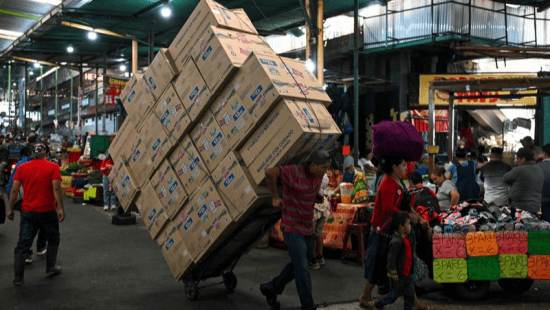
Changing migration patterns are reshaping California’s workforce, where approximately 2.4 million Mexican-born workers remain central to the state’s economy.
Approximately 2.4 million California workers were born in Mexico, based on 2024 workforce estimates from the Public Policy Institute of California.
They remain the largest national-origin group among California’s immigrant workers. Yet their share of the state’s entire workforce declined from 15% in 2005 to 12% in 2022, according to PPIC’s historical workforce analysis.
Throughout that period, immigrants continued to account for roughly one-third of California’s workers.
How will California adapt as a workforce that has helped sustain its economy for decades changes?
Mexican migration is no longer what it once was
A new report from the United Nations Economic Commission for Latin America and the Caribbean, released November 23, found that more than 48 million people born in the region were living outside their country of birth in 2024, more than three times the number in 1990.
Nearly 57% lived in North America.
But Mexican immigration to the United States has followed a different trajectory.
The Mexican immigrant population in the United States grew from 2.2 million in 1980 to more than 11.7 million in 2007. By 2024, it stood at approximately 11.1 million, according to the Migration Policy Institute.
Mexico remains the largest country of origin for U.S. immigrants, but many of those residents have now lived in the country for decades.
California accounted for approximately 35% of Mexican immigrants nationwide during the 2020–2024 period.
California’s immigrant workforce is becoming more diverse
Mexican immigrants account for 37% of California’s foreign-born workforce. Among immigrant workers who arrived within the previous five years, however, 27% came from Mexico and 37% from Asia, according to PPIC’s analysis of 2024 census data.
Those findings illustrate the changing origins of California’s newer immigrant workers.
The transformation comes at a time when immigration has become particularly important to the state’s labor supply.
An April 2026 PPIC report found that California’s labor-force participation rate fell from 67% in 2001 to 62.8% in 2025, largely because of population aging.
With limited growth in the U.S.-born working-age population, immigration has accounted for nearly all recent growth in California’s labor force.
Agriculture and the next generation of workers
California agriculture illustrates the depth of the state’s connection to Mexican immigration.
An analysis presented at UC Davis in May 2025 found that 83.7% of California crop workers surveyed between 2018 and 2022 were born in Mexico, compared with 45.6% in other regions.
The survey excludes H-2A temporary agricultural workers and livestock workers. It also found that California crop workers tended to be older and more likely to live with their families than workers elsewhere.
The challenges of an aging workforce are already visible in farming communities.
In September 2025, KQED reported on Carmen, an agricultural crew supervisor in Fresno County who had spent two decades working in the fields before becoming a supervisor.
She was having difficulty recruiting younger workers. On the morning KQED accompanied her to a grape harvest, only three of the six workers she expected arrived. All were older than 40.
At the same time, Carmen encourages her children to pursue an education so they can find alternatives to the physically demanding work she knows so well.
Their opportunities represent progress for the family. For agricultural employers, they also illustrate the challenge of attracting a new generation of workers.
What the transformation means for California today
The questions extend beyond agriculture.
In Los Angeles, construction workforce concerns have emerged alongside the need to rebuild homes destroyed by wildfires. Immigration enforcement and difficulties recruiting qualified workers add uncertainty for contractors and families.
Meanwhile, California faces growing questions about employment opportunities for older workers, including those seeking alternatives to physically demanding occupations.
The available research does not establish precisely how many Mexican-born workers are employed in each of the state’s major industries or how recent immigration policies have affected their numbers.
But California’s workforce challenges cannot be understood solely by counting new arrivals at the border.
They also involve the retirement security of longtime workers, the opportunities available to their children and the ability of employers to offer jobs that attract a new generation.
Adapting to changing migration patterns means investing not only in California’s future workforce but also in the economic security of the people who have helped sustain its communities for decades.