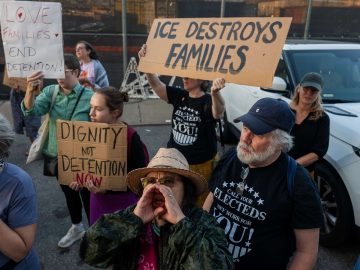
A new Pew Research Center survey finds growing awareness of immigration enforcement and concerns about personal safety that extend across generations of Latino families.
Nearly three in four Latino adults in the United States report hearing about or seeing immigration arrests or raids near home. About half say the Trump administration’s deportation efforts make them feel less safe in their communities.
Those concerns extend across generations, including among Latinos born in the United States. The November 23 Pew Research Center findings are particularly relevant to Southern California, where businesses have documented disruptions associated with immigration enforcement.
Awareness of ICE activity is growing
Among Hispanic adults, awareness of local ICE arrests or raids during the previous six months rose from 59% in October 2025 to 74% in November 2026. The latest national figure for all adults is 55%.
Awareness is not the same as a firsthand encounter. Seven percent of Hispanic adults reported being stopped and questioned about their citizenship or immigration status during that period.
Separate enforcement records provide additional context. CBS News reported that DHS figures for fiscal year 2026 included more than 491,000 ICE arrests and 483,200 deportations.
Homeland Security Secretary Markwayne Mullin described the enforcement results as advancing public safety. Those totals do not themselves measure changes in community safety.
Research based on government records also tracks arrests and deportations across seven Southern California counties.
How perceptions of safety differ across generations
In October 2025, 47% of Hispanic adults said the administration’s deportation efforts made them feel less safe locally. The latest estimate is 51%. The results do not establish a statistically significant increase in this review.
Meanwhile, 15% now report feeling safer and 31% report no difference.
The share reporting reduced feelings of safety differs by generation:
- Hispanic immigrants: 58%.
- U.S.-born Hispanic adults: 46%.
- Second generation, with at least one immigrant parent: 51%.
- Third generation or later, with two U.S.-born parents: 40%.
Political differences are also substantial. Among Hispanic Democrats and Democratic-leaning independents, 67% feel less safe. Among their Republican counterparts, 18% feel less safe and 41% feel safer.
In Los Angeles County, a February report found that 82% of 311 surveyed businesses reported adverse effects associated with immigration enforcement. This is a finding about respondents, not an estimate for every county business.
Los Angeles restaurant operators interviewed by Parriva described cutting staff, changing menus and relying on relatives to keep their businesses running.
These accounts document local economic pressures, not the prevalence of safety concerns among California Latinos. A specific DHS response to the new Pew findings was not obtained.
Where California families can find immigration assistance
Pew surveyed 10,247 adults nationwide from November 9 to 15. Its findings are national estimates, not California-specific results. They cannot establish whether crime has increased or decreased, whether particular arrests were lawful or whether an individual faces detention.
California residents looking for immigration assistance can consult two state resources:
- The directory of state-funded nonprofit immigration legal services includes Los Angeles providers and removal-defense services.
- Regional Network Hubs for Immigrant Families coordinate legal assistance and community education across California.
Eligibility and appointment availability vary. For individual legal questions, consult a qualified immigration attorney or accredited legal representative.
The findings show why immigration status alone cannot explain how Latino families perceive enforcement. For families seeking answers about their own circumstances, reliable legal information offers a more useful starting point than neighborhood rumors or national polling figures.