Metro has expanded its LIFE outreach into food banks, health centers and community events as the low-income transit program grows. Now the agency is examining how many eligible riders are still outside the program or aren’t regularly using the benefit.
Across Los Angeles County, Metro is increasingly taking its low-income transit program to places where residents already go for food, health care and other services.
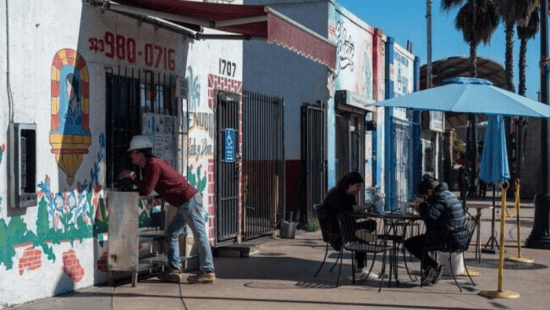
That was visible Friday, when Metro’s LIFE program held enrollment outreach at three community locations: Eugene A. Obregón Park in East Los Angeles, a food distribution at San Fernando Health Center – DHS LA County and an evening event at Panorama Park.
The events are part of a much larger effort to connect low-income residents with LIFE, the Low-Income Fare is Easy program, which provides qualifying Los Angeles County residents with unlimited free rides for their first 90 days and then 20 free rides each month.
But the bigger story is no longer simply whether Metro can get people enrolled.
It is whether the agency can find the people who are eligible but still aren’t participating.
Metro reports 649,312 cumulative LIFE enrollments as of July 31, 2026. The figure represents enrollments since the program began in 2018; it is not a count of current active participants.
Eligibility is available through several public-benefit programs, including CalFresh, EBT, Medi-Cal, SNAP, Social Security, Social Security Disability and TANF. Residents can also qualify through Metro’s household-income test. The current income limit for a household of four is $83,300.
Once approved, a rider receives 90 days of unlimited free rides on participating transit systems. After that, the rider can receive 20 free regional rides each month. Metro also allows participants to automatically load the monthly rides, although the TAP card must be used within 60 days for automatic loading to continue.
For households already balancing food, housing, health care and other expenses, the benefit can reduce one recurring cost: getting around.
That transportation burden is part of a larger affordability problem Parriva has examined. In our recent look at California Latino household finances, we found that housing, gasoline and health-care costs can continue to consume substantial household resources even as incomes rise. The story also examines the transportation costs facing Latino households across California.
Metro’s current LIFE outreach calendar shows the program appearing at health fairs, community events, food distributions and other locations where residents already interact with public-service organizations.
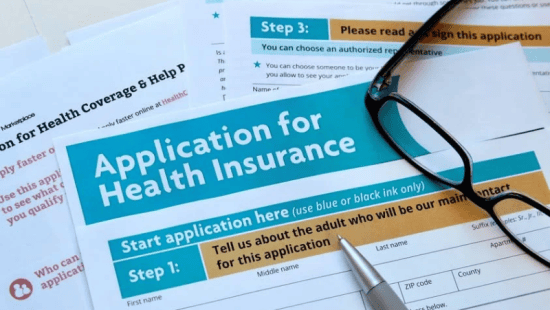
That strategy matters because applying for a public benefit can require people to know the program exists, understand whether they qualify and complete an application.
Instead of requiring every potential participant to find Metro’s enrollment system on their own, the agency is bringing enrollment into existing community networks.
Metro’s LIFE application is also available in multiple languages, including Spanish, Chinese, Korean, Japanese, Vietnamese, Armenian and Russian.
That makes the program relevant across many Los Angeles communities, including Latino households, without making ethnicity a condition of eligibility.
The 649,312 figure is significant, but it doesn’t tell us how many people currently use LIFE.
Metro’s own recent planning documents make that distinction important.
A Sept. 17, 2026 motion before Metro’s Executive Management Committee calls for a plan to increase participation in subsidized and fareless programs by at least 30% for calendar year 2027.
The proposal specifically calls for Metro to report current enrollment and utilization levels and assess eligible riders who are not currently enrolled or regularly using available benefits. It also calls for strategies to increase enrollment, retention and utilization.
That means Metro itself is looking beyond the number of people who have signed up.
The unanswered question is how large that next population is.
Metro still doesn’t publicly show the full picture
There is no current public figure that allows a simple calculation of how many Los Angeles County residents are eligible for LIFE but remain unenrolled.
That’s because LIFE has multiple eligibility pathways.
CalFresh recipients can qualify. So can Medi-Cal participants and people who qualify through Metro’s income test. Those populations overlap, and they cannot simply be added together to produce a LIFE-eligible population.
That distinction matters when looking at the scale of the program.
A large public-benefit population tells us that there are potentially millions of interactions with programs that can provide a pathway into LIFE. It does not tell us how many people qualify for LIFE, because eligibility depends on individual circumstances and Metro’s separate income rules.
The same caution applies to Metro’s enrollment figure: cumulative enrollments are not the same as current active riders.
Metro’s current outreach pattern raises another question Parriva examined: Are enrollment efforts reaching the communities with the largest concentrations of potentially eligible riders?
The answer cannot yet be established from the publicly accessible data we were able to verify.
Los Angeles County maintains current tract-level CalFresh data that can be used to examine the concentration of recipients around individual LIFE outreach locations. But the current records for the three Friday sites could not be reliably retrieved for this analysis.
So there is no responsible basis yet to label any of the three locations a “highest-need” area or claim that Metro is concentrating outreach in the communities with the greatest LIFE eligibility.
What can be established is narrower and still important:
Metro is repeatedly taking LIFE enrollment into places where residents already access food, health and community services.
Whether that strategy is reaching the largest pool of eligible nonparticipants remains an open reporting question.
What riders should know
For Los Angeles County residents who think they may qualify, Metro’s LIFE program information and enrollment page explains the eligibility rules and application process.
Qualifying residents can apply online or at LIFE enrollment events. Applications are available in multiple languages.
The basic benefit is substantial: 90 days of unlimited free rides after approval, followed by 20 free regional rides each month.
Metro’s current program page also lists upcoming enrollment events and special outreach opportunities.
The bigger question for Metro
LIFE has moved well beyond being a small fare-assistance program.
With more than 649,000 cumulative enrollments, Metro now has to address a different challenge: finding the people who qualify but have not enrolled, those who enrolled but no longer use the benefit, and those who may have difficulty maintaining participation.
Metro’s proposed 30% expansion plan puts that question directly on the agency’s agenda.
For riders, the issue is simple.
A free transit benefit only helps if eligible people can find it, qualify for it, enroll and continue using it.
Metro is now taking LIFE into the community to make that first connection easier.
The next measure of success will be how many people who are still outside the program are finally reached.