As families honor their loved ones this Día de Muertos, relatives of immigrants who died in ICE custody are demanding answers about medical care, preventable deaths and accountability.
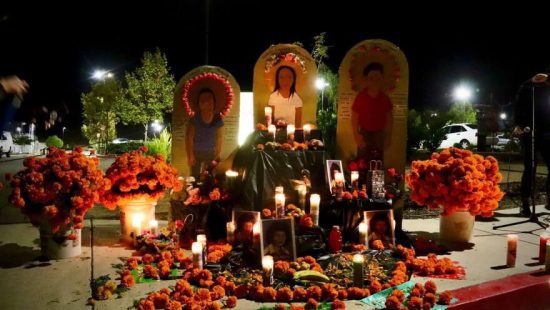
Across Mexico and throughout Latino communities in the United States, Día de Muertos is a time to remember those who are no longer here. Families prepare altars, place photographs of their loved ones beside candles and marigolds, and bring food and other offerings to honor their memories.
But this year, for dozens of immigrant families, the traditional celebration carries a painful additional meaning. Their loved ones did not die peacefully at home or surrounded by family. They died while detained by U.S. Immigration and Customs Enforcement (ICE), thousands of miles from the communities where they grew up.
And the deaths have not stopped.
Since President Donald Trump returned to the White House on January 20, 2025, the number of immigrants dying in immigration detention has reached levels that have drawn growing scrutiny from human rights organizations, medical professionals, and journalists.
According to the American Civil Liberties Union (ACLU), at least 57 people died in immigration detention between the beginning of Trump’s second administration and September 22, 2026. The organization also warned that the actual number of deaths connected to detention could be higher because some people die shortly after being released, cases that may no longer be included in ICE reporting requirements.
More recent cases have continued to emerge. A database maintained by the San Francisco Chronicle documented additional deaths in October, including Roberto Jimenez Gutierrez, who died on October 24 at the Otay Mesa Detention Center in California.
The continuing reports raise questions about the conditions inside immigration detention facilities and the responsibility of federal authorities to protect people held in their custody.
Behind every number is a family
For families, the statistics represent something much more personal than a government report.
One of the cases that attracted national attention was that of Geraldo Lunas Campos, a 55 year old Cuban immigrant who died on January 3, 2026, at Camp East Montana in Fort Bliss, Texas.
Initially, ICE described his death as a medical emergency. However, an El Paso County medical examiner subsequently classified the death as a homicide. An autopsy found that he became unresponsive while being physically restrained by law enforcement officers.
The case was examined by The Washington Post and The Texas Tribune, raising serious questions about the circumstances surrounding his final moments.
Another case involved Edwin Jovanny Lopez Cornejo, a 39 year old immigrant who died on August 1, 2026, at Delaney Hall in New Jersey. His family raised concerns about the medical attention he received and the availability of his medication. He left behind a 12 year old daughter.
These cases illustrate why families and human rights organizations are demanding more transparency about medical treatment, emergency responses, and investigations into deaths inside detention facilities.
A growing concern over medical care
Human Rights Watch reported that 52 people died in ICE custody during the first 500 days of Trump’s second administration, through June 4, 2026.
Its investigation examined detention conditions and interviewed relatives, attorneys, and former detainees. The organization identified concerns involving medical neglect, excessive force, overcrowding, and inadequate living conditions.
The ACLU has also warned that the mortality rate among people held in ICE detention has more than doubled compared with the first Trump administration.
A separate investigation by the San Francisco Chronicle examined medical records and autopsy reports in individual cases. Its journalists consulted physicians who reviewed the documentation. In at least 17 of the cases examined, doctors concluded that delayed or inadequate medical treatment may have contributed to the deaths.
ICE maintains that healthcare is a priority and says detention facilities provide medical, dental, and mental health services. However, families and advocates continue to demand answers about whether those services are consistently available when detainees need them.
The families left behind
For immigrant families, death in detention creates a particularly difficult form of grief.
Some relatives spend months trying to obtain medical records, autopsy reports, and explanations from federal authorities. Others must navigate legal proceedings while dealing with the emotional and financial consequences of losing a family member.
In many cases, the deceased had children, parents, spouses, and relatives who expected them to return home.
For families separated by immigration enforcement, the possibility of never seeing a loved one again becomes a reality that extends far beyond the detention center.
A different kind of Día de Muertos
In Mexican tradition, Día de Muertos is not simply a day of mourning. It is a celebration of memory, identity, and the belief that those who have died remain part of the lives of those who remember them.
This November, the photographs placed on some family altars may include immigrants who left Mexico, Central America, the Caribbean, and other parts of the world in search of safety, work, and a better future.
Their stories deserve to be remembered beyond the statistics.
As immigration detention continues to expand and new deaths are reported, the central questions remain: Were these deaths preventable? Did detainees receive adequate medical attention? Are families receiving complete information? And who is being held accountable?
For the families lighting candles this Día de Muertos, remembrance comes with another demand: that their loved ones are not forgotten, that the circumstances of their deaths are investigated, and that other families do not have to endure the same loss.
The flowers will fade, the candles will burn out, and the altars will eventually be taken down. But for families who lost someone in immigration detention, the search for answers does not end on November 2.