Nithya Raman wants more protected bike lanes and safer streets in Los Angeles. Research shows why Latino neighborhoods need those investments and why their location matters.
For many Los Angeles residents, a bicycle is more than a way to exercise or enjoy a weekend afternoon. It can be the most affordable way to get to work, reach a bus stop, take a child to school, or run errands without paying for gasoline, insurance, parking, or a car payment.
For Latino workers and immigrant families, especially those with limited transportation options, bicycles can provide a vital link to jobs and everyday necessities.
But riding a bicycle in Los Angeles can also mean sharing busy roads with cars and trucks, navigating streets without protected lanes, and risking serious traffic collisions.
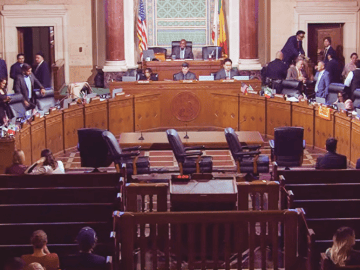
That is one of the transportation challenges facing Mayor-elect Nithya Raman, who has made safer streets, expanded bicycle infrastructure, and improved public transportation central to her vision for the city.
Her plans could change how Angelenos move around the nation’s second-largest city, but they also raise an important question for Latino neighborhoods: Will the communities that depend on affordable transportation have access to the safest streets?
More than a recreational activity
Research suggests that bicycle use among Latinos is not limited to recreation.
A 2015 national study by the Breakaway Research Group, commissioned by PeopleForBikes, found that Hispanic bicycle riders reported particularly high levels of transportation-related cycling.
Among Hispanic respondents who already rode bicycles, 58% reported using them to travel to work or school, compared with 40% of white respondents. Nearly half, 49%, reported riding to connect with public transportation, compared with 23% of white respondents.
The study also found that 65% of Hispanic respondents used bicycles for shopping or errands.
Although the research is more than a decade old and does not represent the entire Latino population, it illustrates the multiple purposes bicycles serve for people who ride them.
For workers who cannot afford a vehicle or live far from reliable public transportation, a bicycle can make the difference between having access to a job and spending additional time and money getting there.
A 2016 study by San José State University’s Mineta Transportation Institute examined transportation patterns among low-income Latino immigrants in the San Francisco Bay Area.
Researchers found that low-income immigrants were less likely to have access to motor vehicles and faced several barriers to transportation, including affordability, safety, and unreliable service.
The study also found that these immigrants were less likely to have access to bicycles than higher-income immigrants or US born residents. The findings suggest that transportation inequality is not simply about whether people want to ride. It is also about whether they can afford a bicycle and have safe places to use it.
The safety problem in Latino neighborhoods
In Los Angeles, the debate over bicycle lanes is also a question of public safety.
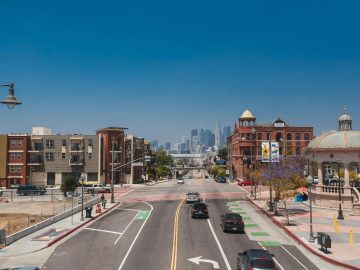
Many major streets in neighborhoods with large Latino populations were designed primarily to accommodate vehicle traffic. Cyclists often have to navigate multiple lanes of moving cars, buses, and commercial vehicles.
According to BikeLA’s 2023 Bicycle Safety Report, 85% of bicycle fatalities recorded in Los Angeles County in 2022 occurred on roads without bicycle lanes. The report also found that bicycle fatalities were heavily concentrated in low-income, Black and Latino neighborhoods.
A 2021 study published in the Journal of Transport and Health examined the distribution of cycling risks throughout Los Angeles County. Researchers found that neighborhoods with larger Hispanic populations and lower household incomes faced greater exposure to traffic injuries and air pollution.
The findings highlight an important contradiction. Cycling can offer health and economic benefits, but residents in disadvantaged neighborhoods may face greater risks simply because of where they live and the infrastructure available to them.
For Latino families, safer streets can affect more than commuting. They can determine whether children can ride to school, whether teenagers can travel independently, and whether parents can use bicycles to reach nearby stores, parks, and public transportation.
What Raman wants to change
Raman has made transportation reform one of the central components of her mayoral agenda.
Her campaign platform calls for expanding protected bicycle lanes, accelerating dedicated bus lanes, improving pedestrian crossings and redesigning streets to make them safer for everyone.
One of her major commitments is to accelerate implementation of Measure HLA, the voter-approved Healthy Streets LA initiative passed in March 2024.
The measure requires the city to implement applicable improvements from its Mobility Plan 2035 when qualifying street resurfacing and reconstruction projects take place. These improvements can include protected bicycle lanes, pedestrian safety measures, and dedicated bus infrastructure.
Raman has promised to make those improvements a priority rather than allowing projects to remain delayed.
Her platform also calls for physically protecting existing bicycle lanes with concrete barriers and improving crosswalks with curb extensions. She wants to strengthen the city’s Vision Zero program, which aims to eliminate traffic deaths, by establishing a dedicated Vision Zero director in the mayor’s office.
The plan also includes creating safer neighborhood streets, reducing cut-through traffic, and improving school zones.
Public transportation is another major part of her agenda. Raman wants to accelerate bus lanes on heavily traveled routes, increase bus frequency, and use automated cameras to enforce restrictions on vehicles driving or parking in dedicated bus lanes.
She has argued that buses must become faster and more reliable if Los Angeles wants residents to have realistic alternatives to driving.
These proposals could be particularly relevant to Latino workers who combine bicycles and public transportation to reach their destinations.
The political and economic debate
Raman’s transportation agenda is expected to encounter resistance from some drivers, business owners, and residents concerned about losing parking spaces or vehicle lanes.
Her supporters argue that protected bicycle lanes and better public transportation can reduce traffic deaths and give residents more affordable ways to travel.
Michael Schneider, founder of Streets for All, a transportation advocacy organization that supported Raman, has said he expects the incoming mayor to move aggressively on implementing Measure HLA.
The organization was instrumental in campaigning for the measure and has become one of the influential voices pushing for safer streets in Los Angeles.
However, expanding bicycle infrastructure does not automatically guarantee that Latino communities will benefit equally.
The location of investments will matter. If protected lanes and pedestrian improvements are concentrated in wealthier neighborhoods, communities with significant transportation needs could continue to face dangerous streets.
Raman’s administration will have to demonstrate that its investments reach neighborhoods where workers, families, and students need them most.
Who benefits from safer streets?
For Los Angeles, the transportation debate is about more than whether bicycles should have additional space on busy roads.
It is also about who can afford to move around the city and who has access to safe transportation.
For some Latino families, owning a car remains essential because of work schedules, long distances, and limited public transportation options. Others depend on buses, bicycles or a combination of transportation methods.
A safer network of bicycle lanes could give those residents more choices while reducing the risks of traveling through busy streets.
Raman has presented a vision of Los Angeles where residents do not have to depend so heavily on cars to reach work, school, and essential services.
The challenge will be turning that vision into improvements that reach every neighborhood, including the Latino communities that have historically faced transportation and infrastructure inequalities.
For many workers, a bicycle is already part of the daily commute. The question now is whether Los Angeles will make that journey safer.