A four-year admission rule is blocked, major OPT payments remain proposed, and stricter internship guidance faces a legal challenge.
LOS ANGELES — November 13, 2026
International students at California universities face several federal immigration changes, but the rules affecting their studies and employment are not all in the same legal position.
A November 12 analysis by the American Immigration Council examines federal actions involving F-1 students, including a four-year admission limit, proposed payments for post-graduation work authorization and stricter internship guidance.
The differences matter: a federal court has blocked the four-year rule, the proposed OPT payments are not mandatory, and restrictive CPT guidance has been issued and is being challenged in court.
Is the four-year F-1 rule in effect?
No. A federal judge in Massachusetts issued an order on September 14 preventing a Department of Homeland Security final rule from taking effect while litigation continues.
The rule would replace the longstanding duration of status framework with fixed admission periods of up to four years.
Under the existing framework, eligible F-1 students generally may remain for their authorized educational program and related practical training as long as they maintain status and meet applicable requirements.
Students needing additional time under the blocked rule would have faced a separate extension process.
The government appealed the court order. On November 3, it requested a 30-day pause in the appeal, according to the higher-education organizations challenging the rule.
The existing duration-of-status framework remains in place under the latest verified court information.
Are the proposed $70,000 OPT payments required?
No. DHS proposed the payments on October 8, but they have not become effective requirements.
The proposal would require educational institutions to pay $70,000 before recommending an eligible student for initial Optional Practical Training, or OPT, and $30,000 for certain subsequent training authorizations.
OPT permits eligible F-1 students to work temporarily in positions related to their fields of study, including after graduation.
DHS says its proposal is intended to address fraud and misuse. Higher-education advocates argue that the payments could impose substantial costs on universities and restrict employment opportunities.
The public-comment period ended November 9. That deadline did not make the proposed payments mandatory.
What changed for student internships?
Curricular Practical Training, or CPT, allows eligible F-1 students to participate in authorized practical training connected to their academic programs.
In August, Immigration and Customs Enforcement issued guidance interpreting CPT eligibility more narrowly. Under that interpretation, practical training generally must be required of all students in the degree program.
The change has already affected university procedures. Yale University reported that it began applying the narrower interpretation to CPT requests on August 24.
Four higher-education organizations sued the federal government on October 5, arguing that the guidance improperly changed longstanding requirements and threatened internships.
A federal judge heard arguments on their request for preliminary relief November 6. No subsequent ruling was established in the latest accessible records reviewed for this article.
Filing a lawsuit does not itself suspend agency guidance.
Students should not assume that all internships are prohibited or that previously available CPT arrangements remain eligible. They should consult their designated school officials before accepting or beginning practical training.
What does this mean for California universities?
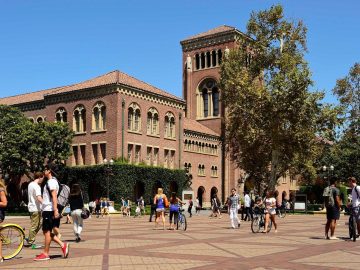
California universities educate international students across undergraduate, graduate and research programs.
The federal changes could affect academic planning, practical training and the recruitment of graduates by employers.
California also participated as an amicus in litigation over the four-year admission rule.
The consequences are not entirely hypothetical. In April 2025, UCLA reported that federal authorities had terminated immigration records for six current students and six former students participating in practical training, as Parriva previously reported.
Those earlier actions are separate from the 2026 CPT guidance and proposed OPT payments.
Parriva has also examined the economic consequences of declining international student enrollment in California. Those estimates should not be treated as losses caused by the latest proposals.
The available evidence does not establish how many California students have lost internships because of the August CPT guidance.
What should international students do now?
Students should verify their circumstances before changing academic or employment plans.
- Check the current rule. A blocked regulation, an agency instruction and a proposed rule have different legal effects.
- Consult your designated school official. Universities can explain applicable CPT and OPT procedures.
- Obtain authorization before working. An internship offer does not itself establish immigration authorization.
- Review travel and immigration records. Visa validity, SEVIS records and lawful student status involve distinct requirements.
- Seek qualified legal advice when necessary. Students facing record terminations or disputed authorization may need individualized assistance.
The American Immigration Council’s analysis illustrates how several federal actions can affect students differently.
For California universities, the immediate responsibility is to communicate those distinctions accurately. For students, understanding which rules actually apply can help prevent costly decisions based on proposals or outdated information.