Nearly two months after the Lineage warehouse fire, air monitoring continues at two nearby schools while residents report lingering odors and health concerns. Here’s what families can do and what officials have actually put in place.
Nearly two months after the fire at the Lineage warehouse, as officials announce seven-motion packages and five-page letters, families in Boyle Heights are still asking something much simpler: if my child gets sick at school tomorrow, what actually happens?
On Tuesday, Councilmember Ysabel Jurado stood at a podium with a seven-motion package. On Friday, LAUSD sent a five-page letter responding to the teachers’ union’s 14 demands. Before that, the governor declared a state of emergency, the mayor signed two executive orders, and Lineage Logistics pledged $3.3 million in aid. On paper, the institutional response to this disaster has been massive.
But on the streets of Boyle Heights, the question remains far more basic than any motion or letter can answer: if I send my sick child to school tomorrow, what real help will I actually get?
What the “Aid” Numbers Show, and What They Don’t
According to figures Lineage itself has published, the company has distributed 207 cash-assistance cards totaling $207,000, an average of about $1,000 per card, through door-to-door outreach to the nearly 800 households identified by the city and county as most directly impacted. The company says it has contacted approximately 87 percent of those households.
That leaves an open question: what happens to the rest of the neighborhood, people living outside that “most directly impacted” radius who are still reporting odors, pests and health symptoms?
What Residents Say They’re Actually Living Through
The gap between paperwork and reality was laid bare at a South Coast AQMD hearing on August 5, where more than 100 Boyle Heights and East LA residents traveled 25 miles to Diamond Bar, many boarding buses before 8 a.m. and missing a day of work, just to testify before air regulators.
What they described wasn’t legislative abstraction. It was concrete, ongoing symptoms: nausea, headaches, bloody noses, rashes, sinus and eye infections, asthma flare-ups and breathing problems. Several speakers said it was frustrating that they had to leave their own community, miss work and travel that far just to be heard, and called on regulators to hold future hearings in Boyle Heights itself. Many said their central concern was whether the air would be safe when their kids went back to school.
That same frustration boiled over weeks earlier at a community town hall, where angry residents booed Mayor Karen Bass as she took the stage and packed the auditorium demanding a concrete timeline instead of more updates. Lineage’s chief operating officer, Jeff Rivera, apologized directly: “I understand the uncertainty, the frustration and the disruption that it’s caused, and I am sorry.” But apologies aren’t the same as answers to basic operational questions, local outlets have reported that Lineage still hasn’t clarified publicly who is eligible for its direct financial assistance, or how it plans to cover residents’ utility bills, something the company had promised as far back as July 9.
The Specific Scenario: A Sick Kid at School
This is where the picture gets clearer, though not necessarily more reassuring. According to the City of Los Angeles’s official recovery page:
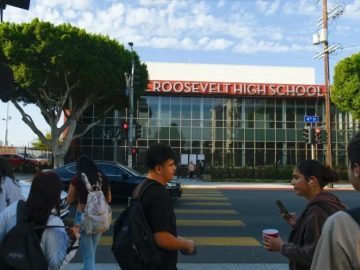
- The South Coast Air Quality Management District maintains real-time air monitoring at two schools specifically near the site: Robert Louis Stevenson Middle School and Eastman Avenue Elementary School.
- The Mayor’s Office has expanded mobile health clinics in the area specifically to treat people with symptoms related to the fire.
- Residents can call 211 LA for county resources, including public health information, and 311 for general city assistance.
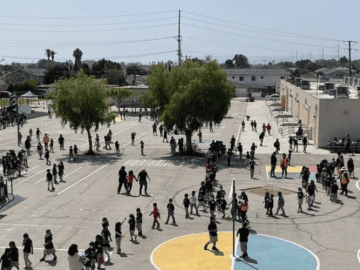
- LAUSD, for its part, commits in its letter to protocols developed by environmental scientists, air purifiers in every classroom, and adjusted schedules to keep students indoors longer, but the letter does not spell out a specific protocol for what happens if a student develops acute symptoms during the school day beyond normal school nursing procedures.
In other words: if your child gets sick tomorrow, the most direct path today would likely be the county’s mobile health clinic or 211, not necessarily the school itself, though the school district does monitor air quality at two specific campuses.
Jurado’s Own Diagnosis
The line that probably best captures this gap came from Jurado herself, while introducing her seven-motion package: “Boyle Heights has already waited too long. This package makes clear that relief cannot be delayed, accountability cannot be optional, and recovery cannot happen without the people who lived through this disaster.” She added something that, likely without intending to, summarized the structural problem at the heart of all this: “Introducing motions is an important step, but not the last.”
In other words, even the official who has pushed hardest for action acknowledges that motions, like letters and press statements, are steps, not solutions. Nearly seven weeks after the fire, residents told FOX 11 that daily life remains disrupted: fewer people going outside, some wearing masks, parents driving to other parks because the smell still lingers near home.