Officials say the ammonia threat has been contained, but unhealthy smoke and fine-particle pollution continue affecting parts of East Los Angeles, the San Gabriel Valley and surrounding communities.
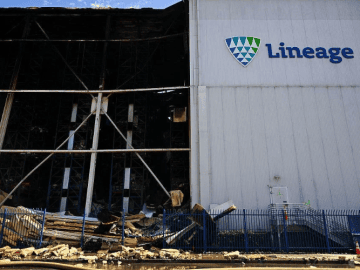
The massive warehouse fire at the Lineage Logistics cold-storage facility in Boyle Heights continues to affect air quality across portions of Los Angeles County, sending smoke into communities miles away and prompting health officials to urge residents to take precautions.
Although firefighters have made progress in controlling the blaze, smoke from the fire has caused elevated levels of fine-particle pollution known as PM2.5. Air quality readings have periodically reached unhealthy and very unhealthy levels in areas downwind of the fire.
Communities reporting impacts include Boyle Heights, East Los Angeles, Montebello, parts of the San Gabriel Valley, and portions of central Los Angeles County.
For residents, the most immediate concern is not flames but the air they are breathing.
Why Officials Are Concerned
This is not a typical wildfire.
The fire involves a large industrial cold-storage facility where rooftop solar panels burned and an ammonia refrigeration system was damaged during the incident.
Officials say the ammonia threat has largely been neutralized after hazardous materials teams removed remaining chemicals from the facility. Air monitoring has not detected dangerous levels of ammonia in surrounding neighborhoods.
However, smoke remains a serious concern.
The biggest health risk comes from PM2.5 particles, tiny pollutants small enough to penetrate deep into the lungs and enter the bloodstream.
Health experts warn that exposure can trigger:
• Coughing
• Sore throat
• Burning eyes
• Headaches
• Sinus irritation
• Asthma attacks
• Breathing difficulties
Who Faces the Greatest Risk?
Health officials say extra caution should be taken by:
• Children
• Older adults
• Pregnant individuals
• People with asthma
• People with COPD
• Individuals with heart disease
• Outdoor workers
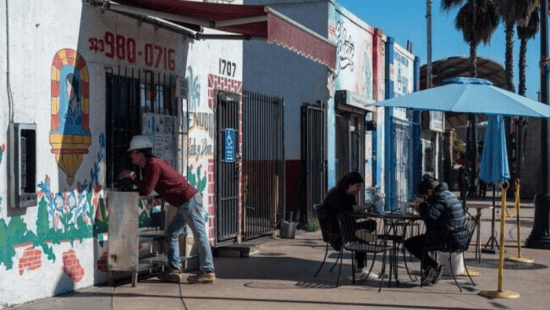
Many Latino families in East Los Angeles and surrounding communities fall into these higher-risk categories because of multigenerational households where young children and elderly relatives live under the same roof.
What Residents Should Do Right Now
If you can see smoke or smell smoke:
• Stay indoors whenever possible.
• Keep windows and doors closed.
• Set air conditioners to recirculate mode.
• Turn off swamp coolers and whole-house fans that pull outdoor air indoors.
• Avoid strenuous outdoor activity.
• Keep pets indoors.
If you must go outside, wear a properly fitted N95 or P100 respirator. Cloth masks and standard surgical masks do not adequately filter fine smoke particles.
Why the Smoke Smells So Strong
Officials say the odor is coming from several sources.
The building’s insulation continues to smolder deep within the structure. In addition, approximately 85 million pounds of frozen food stored inside the warehouse is beginning to spoil as refrigeration systems fail.
Authorities say odor complaints may continue even after visible smoke decreases.
How to Track Air Quality Near You
Residents can monitor conditions in real time through:
• South Coast AQMD’s online air quality map
• The South Coast AQMD mobile app
• Local emergency alerts
• Los Angeles County public health updates
Because smoke conditions can change quickly depending on wind direction, air quality may vary significantly from one neighborhood to another.
Why This Matters
For many Los Angeles residents, especially in East Los Angeles and Boyle Heights, this incident is more than a temporary inconvenience.
These communities already face higher exposure to freeway traffic, industrial emissions and environmental health burdens. Additional smoke exposure can worsen existing health disparities and place further strain on families managing asthma, respiratory illnesses and other chronic conditions.
As firefighters continue working to extinguish the blaze completely, health officials say residents should continue monitoring local air quality reports and limit exposure whenever smoke is visible or detectable by smell.