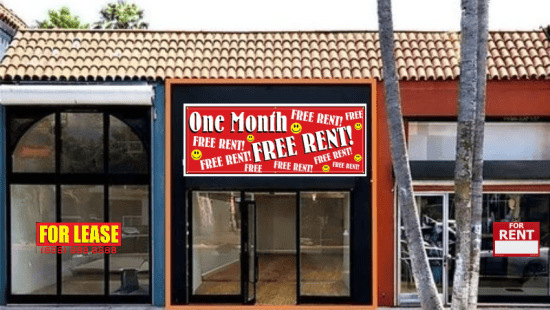
A proposed Commercial Rental Property License would give Los Angeles County more information about commercial rents, leases and vacancies while creating potential new protections for small businesses in unincorporated areas.
For a small-business owner, the storefront is more than a place to operate. It is where customers know the business, employees work and years of community relationships are built.
But when commercial rent rises or a landlord dispute threatens the lease, moving can mean losing much more than a physical location.
That is the problem Los Angeles County is now trying to address.
The Board of Supervisors has directed county departments to develop a Commercial Rental Property License, or CRPL, for landlords in unincorporated Los Angeles County.
The proposal could create a system for tracking commercial properties, rents, vacancies and leases while giving the county new tools to address certain landlord violations.
But the license does not exist yet. The county is developing the framework for a future ordinance.
What would the new commercial rental license do?
The proposed CRPL would require commercial landlords to register their properties with the county and provide information about leased spaces.
That could include the size of a space, rent amount, lease duration, tenancy information and vacancy status.
The goal is to give the county a clearer picture of commercial rental conditions, including where rents are rising, where vacancies are occurring and how long businesses remain in a location.
That information could become important as the county tries to understand why small businesses leave commercial corridors.
For entrepreneurs already dealing with higher operating costs, the pressure can come from several directions at once. Parriva recently examined how inflation, declining customer traffic and other economic pressures are squeezing small businesses in Survive the Storm: What Small Businesses Should Protect When Money Gets Tight
Commercial rent can become another major fixed cost.
Does this mean commercial rents will be capped?
No.
The proposed CRPL is not a general commercial rent-control program.
The motion does ask county staff to explore a voluntary “Special Status” license for landlords who agree to limit rent increases to 3% annually for 10 years, potentially in exchange for county incentives.
That would be voluntary. It would not impose a 3% limit on every commercial landlord.
The distinction matters for business owners because the proposal does not mean their landlord will automatically be prohibited from raising the rent.
What happens if a landlord violates tenant protections?
The proposal would explore connecting the commercial license to the county’s existing Commercial Tenant Anti-Harassment Ordinance.
Under the proposed framework, a landlord’s license could potentially be suspended after a final court determination of a violation.
During a suspension, county staff would explore restrictions on rent increases and no-fault evictions, to the extent permitted by state law.
Those mechanisms still have to be developed.
They are not new protections that businesses can claim today.
Could a displaced business receive relocation assistance?
Potentially.
One of the most significant parts of the proposal is relocation assistance for commercial tenants displaced because of landlord violations.
County staff have been directed to develop a possible formula based on the greater of:
- three months of the business’s gross receipts, or
- three months of fair-market rent for an equivalent location,
plus moving costs, subject to a recommended cap.
The county is also being asked to consider relocation assistance for businesses displaced by redevelopment.
For a small business, that could matter enormously.
Moving a restaurant, salon, auto shop, neighborhood market or other storefront operation is not simply a matter of finding another address. A business may have to move equipment, rebuild its customer base, change signage and absorb lost revenue while reopening.
Why this matters for Latino-owned businesses
Commercial displacement is also an economic issue for the communities that depend on neighborhood businesses.
Latino-owned and immigrant-owned businesses are a major part of Los Angeles County’s small-business economy. Many operate in customer-facing industries where location and neighborhood relationships are especially important.
Parriva has previously reported on how Latino entrepreneurs are already dealing with multiple economic pressures. In They Say Small Businesses Hold Up the Economy. Is That Still True When the Economy Itself Is in Crisis? , we examined how immigration enforcement, declining customer traffic and financial pressure can combine to threaten neighborhood businesses.
That makes the commercial-rent question particularly important:
Can a business afford to stay in the neighborhood where it built its customer base?
The county’s proposal is an attempt to give policymakers better information about that problem and potentially give businesses more protection when displacement results from violations.
What should small-business owners do now?
There is no new CRPL application to file yet.
The county still has to develop the licensing framework and bring a future ordinance back to the Board of Supervisors.
Business owners can still take practical steps:
- Keep a copy of your commercial lease and amendments.
- Document rent increases and important communications with your landlord.
- Keep records of rent payments and major lease-related expenses.
- If you receive a notice affecting your tenancy, seek legal or business assistance before signing a new agreement.
- Check county resources for available small-business assistance.
The county’s small-business programs include counseling and connections to legal and other business-support services.
Parriva’s coverage of Latino entrepreneurship also shows why access to capital and business support matters when costs rise. Our recent SBA Doubles Small Business Loan Limits to $10 Million as Latino Entrepreneurs Push for More Access to Capital Parriva Business Insights looked at another side of the same problem: businesses need access to resources to survive and grow, but financing does not solve every operating-cost challenge.
The bigger question
The proposed Commercial Rental Property License is about more than creating another county registration system.
It could give Los Angeles County a clearer picture of who is paying what, where commercial vacancies are occurring and why small businesses are leaving.
But information alone will not keep a storefront open.
The real test will be whether the final ordinance gives small businesses something they can use before they lose their location, while keeping the rules workable for commercial property owners.
For a neighborhood business, that difference can determine whether the doors stay open.
What changed?
The Board of Supervisors directed county departments to develop a framework for a Commercial Rental Property License.
Who could be affected?
The proposal is aimed at commercial landlords and tenants in unincorporated Los Angeles County.
What has not happened?
The CRPL is not yet an operating licensing requirement, and the proposal does not create a general commercial rent cap.
County departments will develop recommendations for the proposed licensing system and future ordinance for consideration by the Board of Supervisors.
For small-business owners, the next important question is not simply whether Los Angeles County will create a commercial rental license. It is what protections, costs and responsibilities will ultimately be written into the rules.