Los Angeles voters are being asked to judge two mayoral records on homelessness, housing, public safety and climate. But before deciding who is delivering results, there is a more basic question: How reliable are the numbers being used to measure progress?
Karen Bass and Nithya Raman are offering competing visions for Los Angeles as the Nov. 3 mayoral election approaches.
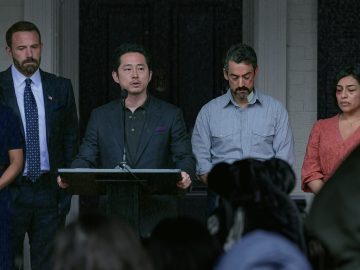
At a Sept. 3 environmental forum, the two candidates defended their records and described what they would do differently on climate, emergency preparedness, transportation and other city issues.
But homelessness remains one of the race’s central tests.
And that is where the numbers get complicated.
The number everyone is arguing about
The Los Angeles Homeless Services Authority’s 2026 count estimated that 45,194 people were experiencing homelessness in the city, with overall homelessness reported as 3.4% higher than the previous year. Unsheltered homelessness was reported as nearly 8% higher.
Those numbers quickly became political evidence.
Raman pointed to the citywide increase while highlighting a nearly 49% decline in street homelessness in her council district. Bass has pointed to her administration’s Inside Safe program and other interventions as evidence of progress.
But then came an important complication.
A Los Angeles Times investigation found that inconsistent reporting of shelter beds at Union Rescue Mission contributed substantially to the reported citywide increase. The Times estimated that correcting that particular issue could reduce the reported 3.4% increase to about 1.9%, while cautioning that other factors make it impossible to establish a perfectly precise trend.
That does not mean the homeless count is worthless.
It means voters should be careful about treating a single percentage as a precise measurement of whether City Hall succeeded or failed.
What the data can tell us and what it can’t
FACT: LAHSA reported an increase in homelessness in 2026.
FACT: There were reporting inconsistencies involving shelter beds that affected the calculation.
FACT: Unsheltered homelessness declined sharply in Raman’s Council District 4. Parriva previously examined that claim in its Bass-Raman debate fact-check, finding the 49% year-over-year decline supported while cautioning against turning that number into proof that Raman alone caused the improvement.
Those facts do not automatically establish CAUSATION.
A decline in one council district does not, by itself, prove that Raman’s policies caused the decline.
Likewise, a citywide increase does not, by itself, prove that Bass’s policies caused homelessness to rise.
That distinction matters because multiple programs, agencies, funding streams and outside conditions affect homelessness at the same time.
Inside Safe creates another measurement problem
Bass’s Inside Safe program has moved thousands of unhoused residents indoors.
But getting someone indoors is not necessarily the same thing as permanently ending homelessness.
As Parriva reported in Inside Safe Gets People Inside. But How Many Stay Housed?, three measurements need to be separated:
Placement: Did someone move from the street into interim housing?
Retention: Did that person remain housed?
Outcome: Did that person ultimately move into permanent housing and remain there?
Those are different outcomes. Parriva’s earlier reporting found that about 40% of people moved indoors through Inside Safe had later returned to unsheltered homelessness, based on LAHSA data.
That does not prove Inside Safe failed.
It does show why the number of people moved indoors cannot, by itself, measure whether homelessness has been permanently reduced.
Raman faces the same evidence test
Raman has a legitimate result to point to in her district.
But the larger mayoral question is different.
What produced that result, and could it be replicated across Los Angeles?
The answer is not obvious from the homeless count alone.
Parriva’s earlier reporting on the city’s plan to potentially move away from LAHSA also documented the broader accountability problem: who controls the money, who manages the system and who is ultimately responsible for results?
That question is important because the next mayor will inherit a system involving the city, county, LAHSA or its successor, nonprofit providers and state and federal funding.
The mayor can influence that system.
The mayor cannot control every factor that determines how many people become or remain homeless.
This is why the race needs a different kind of fact-check
Parriva’s previous Bass-Raman debate fact-check found a recurring pattern: candidates often started with real numbers but asked voters to draw broader conclusions than the underlying evidence could establish.
That is not unusual in political campaigns.
A statistic can be accurate while the conclusion drawn from it is questionable.
A housing project can be funded without being completed.
A person can be moved indoors without being permanently housed.
A crime category can decline without every crime category declining.
And a homeless count can rise without telling us precisely why.
The same principle should apply to both candidates.
The question voters should ask
The most useful way to evaluate Bass and Raman may therefore be neither:
“Who has the better campaign?”
nor:
“Who has the better talking point?”
It is:
How will we know who is actually making Los Angeles better?
That requires asking four questions about every major campaign claim:
What is the number measuring?
How reliable is the measurement?
Can the candidate actually claim responsibility for the result?
What should voters reasonably expect to change?
That framework can be applied to homelessness, housing, public safety and climate.
And the environmental debate shows why that matters.
Bass argues Los Angeles has made progress on clean energy and environmental issues. Raman argues that the city has stalled and that important work remains unfinished.
Both positions contain claims that can be tested.
For example, the question isn’t simply whether Los Angeles is getting hotter.
It is whether city policy is reducing residents’ exposure to that heat — and whether those protections reach neighborhoods that need them most.
Parriva’s recent reporting on L.A.’s unequal heat and tree canopy shows why a citywide environmental statistic can conceal very different experiences from one neighborhood to another.
Why this matters to Latino voters
The mayoral race matters particularly in a city where Latino voters represent a major part of the electorate.
But Parriva should not reduce the story to “what Latino voters think.”
The better question is what the candidates’ policies mean for the communities they serve.
That includes:
- renters struggling with housing costs;
- workers navigating transportation and public safety;
- families living in hotter neighborhoods with less shade;
- small businesses dealing with city regulations;
- immigrant communities navigating an increasingly complicated local and federal environment.
Parriva’s recent reporting on Los Angeles street vendors, for example, shows how a mayoral policy debate can quickly become a question about whether immigrant entrepreneurs can safely participate in the city’s economy.
The same principle applies here:
Government policy matters when it changes people’s lives.
WHAT THE EVIDENCE CANNOT TELL US
The available homelessness data cannot establish exactly how much credit either Bass or Raman deserves for changes in homelessness.
The count is an important measurement tool, but it is an estimate affected by methodology, reporting and changes within the homelessness system.
The recent shelter-bed reporting problem makes that limitation particularly clear.
The data also cannot establish that Inside Safe caused the city’s homelessness trend, or that Raman’s district-level approach alone caused the decline in her district.
Those are causal conclusions, and they require more evidence than a single year’s count.
What the evidence can tell us is simpler:
The numbers are key. But definitions, methodology, timing and causation matter too.
And that may be the most important lesson for voters entering the final stretch of the mayoral race.
The real test
Bass has a record to defend.
Raman has a record to challenge.
Both have promises to make.
But voters deserve something more useful than competing campaign narratives.
They deserve to know:
What happened?
Why did it happen?
Who can legitimately claim credit?
What remains unresolved?
And most importantly:
How will we know whether the next mayor actually delivered?
That is the test that should follow both candidates all the way to November.