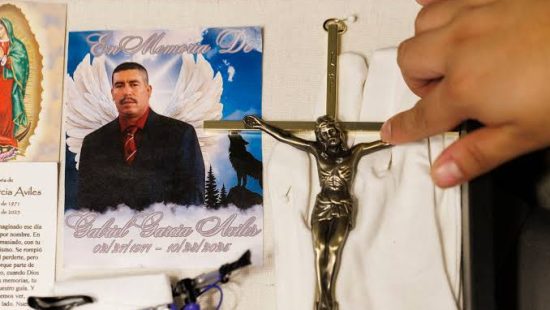

An internal ICE mortality report reveals a four-hour delay in emergency care for Gabriel Garcia-Aviles, whose death a medical expert says was potentially preventable.
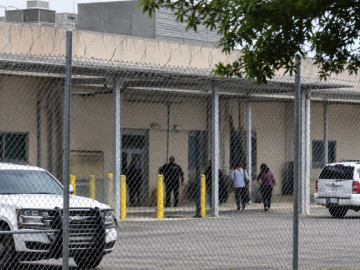
Gabriel Garcia-Aviles, 56, was showing signs of alcohol withdrawal when he was detained in October 2025 and sent to the Adelanto ICE Processing Center. He died on Oct. 23, fewer than 10 days later. An internal ICE mortality report and a physician who reviewed it now point to the same troubling conclusion: with faster care, he might have lived.
The report, recently obtained by the San Francisco Chronicle through a public records request, shows that medical staff at Adelanto waited four hours to get Garcia-Aviles emergency medical care. Michele Heisler, medical director at Physicians for Human Rights, reviewed the documents and said his death was potentially preventable. Even after the delay, she noted, he was taken to the hospital in a custody vehicle rather than an emergency vehicle, where medics could have started treatment on the way.
A treatable condition
Alcohol withdrawal is a recognized medical emergency. Doctors generally manage it with close monitoring and medication, and the danger grows quickly when symptoms go unaddressed. According to ICE, hospital officials attributed Garcia-Aviles’s death to cardiac arrest due to alcohol withdrawal. In other words, the condition officials say ended his life is one that medical staff are trained to recognize and treat.
ICE has said he showed suspected withdrawal symptoms on the day he was detained and was admitted to a hospital right away. The documents reviewed by the Chronicle and Heisler describe a four hour wait before emergency care was arranged. That gap is at the center of the questions now facing the agency.
Not an isolated case
The finding fits a pattern documented by others. The Chronicle reported earlier this month that ICE’s own internal reviewers found deficient medical care in 23 of 29 deaths they examined between January 2025 and January 2026. The newspaper obtained those reviews through public records law after months of delay. ICE declined to tell the paper whether anyone had been held accountable.
Independent experts have reached similar conclusions. A 2024 report by the ACLU, Physicians for Human Rights and American Oversight reviewed 52 deaths in ICE custody from 2017 to 2021. Its medical experts concluded that 49 were preventable, likely preventable or possibly preventable, and only three were not. Heisler, who served as a reviewer, described the failures as egregious, citing poor care, wrong care and a lack of monitoring.
A 2026 report from Human Rights Watch and Physicians for Human Rights raised the alarm again. Its medical experts said they had a high suspicion of inadequate or delayed care in several of the 39 deaths during the first year of the current administration. They also warned that the government releases so little information that many deaths cannot be classified at all.
Pressure on Adelanto
Adelanto has drawn scrutiny well beyond this case. Rep. Judy Chu and Rep. Dave Min were among 44 members of Congress who demanded answers after Garcia-Aviles and Ismael Ayala-Uribe died at the facility within about a month of each other. Chu has repeatedly called for the facility to close, citing a record of medical neglect. Adelanto is also the subject of a federal class action lawsuit alleging inhumane conditions.
Garcia-Aviles had lived in the United States for more than three decades, according to his family and lawmakers, and relatives said they learned how sick he was only when he was near death. ICE has described a different history, saying he entered the country illegally in the past and had been arrested on suspicion of minor offenses in Costa Mesa.
What the agency says
The Department of Homeland Security has said there is no spike in deaths in custody and that death rates remain low. ICE has said it is committed to keeping people in its custody in safe, secure and humane environments.
The documents leave key questions unanswered. Who decided to wait four hours? Why was he not transported by ambulance? And has anyone been held responsible? For a family still waiting for answers, and for the experts who reviewed the records, those questions remain open.