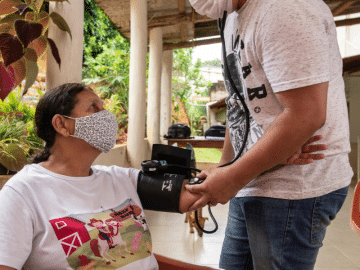
New CDC findings reveal persistent rural maternal health disparities as California’s own data show substantial differences in pregnancy-related deaths across regions.
When Madera Community Hospital reopened in March 2025 after more than two years of closure, one important service was missing: labor and delivery.
The hospital had delivered 735 babies in 2022. Its reopening restored important medical services, but not the maternity ward that local families had previously relied on.
That chage is important in a region where pregnancy-related mortality is among California’s highest.
Between 2021 and 2023, the Central San Joaquin Valley and Sierra Nevada region recorded 28.2 pregnancy-related deaths per 100,000 live births. In the region encompassing Orange, San Diego and Imperial counties, the figure was 11.
What the CDC found about rural maternal mortality
An analysis published November 26 by the Centers for Disease Control and Prevention examined 7,357 pregnancy-related deaths recorded nationwide between 2015 and 2024.
Although 82.1% of those deaths occurred among urban residents, rural counties recorded higher mortality relative to the number of births.
The mortality ratio reached 28.9 deaths per 100,000 live births in the most rural counties, compared with 16.2 in counties surrounding large metropolitan centers.
Heart-related conditions and infections, including sepsis, were leading causes of death.
The researchers pointed to the importance of improving access to medical specialists, obstetric services and primary care. However, the analysis did not directly measure healthcare-access barriers or establish that those barriers caused individual deaths.
California’s improvement conceals regional differences
The California Department of Public Health documented 202 pregnancy-related deaths between 2021 and 2023.
California’s statewide mortality ratio declined from 21.6 deaths per 100,000 live births in 2021 to 12 in 2023.
Yet the region encompassing Los Angeles, Santa Barbara and Ventura counties recorded 13.3 deaths per 100,000 live births over the three-year period, less than half the ratio in the Central San Joaquin Valley and Sierra Nevada region.
California’s regional classifications are based on hospital referral patterns and differ from the federal rural and urban classifications. Neither dataset establishes that geography alone explains why women die.
But these differences demonstrate what statewide averages can conceal.
When the nearest maternity ward is miles away
A 2024 national study estimated that the average distance to an obstetric hospital was 33.4 miles for residents of rural maternity care deserts, compared with 11.4 miles in rural communities with full access.
California has experienced its own loss of maternity services.
An investigation by CalMatters documented closures across the state, including facilities serving Central Valley communities. Its subsequent reporting identified disproportionate consequences for Latino and low-income communities.
The operator of Madera Community Hospital cited the resources required to maintain obstetric services and inadequate reimbursement when explaining why labor and delivery would not initially return.
California’s maternal mortality data also show higher mortality among patients covered by Medi-Cal than among those with private insurance.
That disparity does not establish that Medi-Cal causes poorer outcomes. Differences in underlying health conditions and economic circumstances may also contribute.
Nevertheless, healthcare coverage and the availability of medical services are two different measures of access.
The danger does not necessarily end after childbirth
Nearly two-thirds of California’s pregnancy-related deaths occurred after delivery.
Almost half occurred within six weeks of childbirth, while 13% occurred between 43 days and one year afterward.
Pregnancy-related deaths include deaths from conditions caused or aggravated by pregnancy, even when they occur months after it ends.
The CDC also cited earlier research showing that rural postpartum patients were more likely than urban patients to experience delays receiving medical care.
For women who develop cardiovascular complications or serious infections, access to follow-up appointments and specialist treatment can be essential long after leaving the maternity ward.
Where California families can find support
Medi-Cal beneficiaries who lack transportation to covered medical appointments can request transportation assistance through their health plan or applicable Medi-Cal provider arrangements.
Eligible pregnant and postpartum patients can also obtain doula services for up to one year after pregnancy.
Doulas provide nonclinical support and do not replace medical professionals.
Patients should discuss postpartum follow-up care with their healthcare provider and contact their health plan if they experience difficulty arranging covered services. In a medical emergency, call 911 and tell medical personnel about any current or recent pregnancy.
California’s declining statewide mortality ratio represents progress. But the differences between its regions reveal why improvements in maternal health must be measured not only by statewide outcomes, but also by whether women can obtain the care they need wherever they live.