A new St. John’s Community Health report documents respiratory, eye and other health problems among people treated after the Lineage Logistics warehouse fire.
For weeks after the Lineage Logistics warehouse fire, residents of Boyle Heights described what they were living through in their own words: burning eyes, coughing that wouldn’t quit, sleepless nights, a fear of their own air. This week, a new report turned that experience into something harder to dismiss: diagnoses, patient counts, a documented methodology. The numbers don’t lie. Now the question is what the city, Lineage Logistics, and regulators intend to do about them.
The evidence
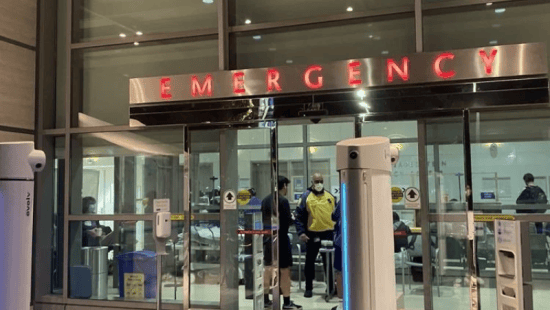
St. John’s Community Health, a network that serves more than 150,000 patients across L.A. County, deployed three mobile clinics into Boyle Heights within days of the fire igniting on June 17. Working alongside more than a dozen community organizations and city, state, and county officials, the clinics screened residents, workers, and anyone near the affected area from June 17 through July 31.
The result: of 1,306 unduplicated patients seen, 469, nearly 36% , met the report’s criteria for fire-related exposure. Acute upper respiratory infection. Eye disorders and conjunctivitis. Persistent cough. Asthma exacerbation severe enough to require urgent breathing treatment. Broken down further, 26.6% of patients were diagnosed with toxic smoke exposure and 24.5% with hazardous substance exposure. Dozens more were prescribed anxiety or sleep medication, which the report ties to environmental exposure, sleep disruption, housing instability, lease-termination fears, relocation concerns, and the ongoing uncertainty of not knowing whether their own neighborhood was safe.
The demographics are their own piece of evidence: more than 91% of patients were Latino, over 64% were women, and more than 63% were 50 or older, a population both disproportionately exposed and disproportionately vulnerable to what they inhaled.
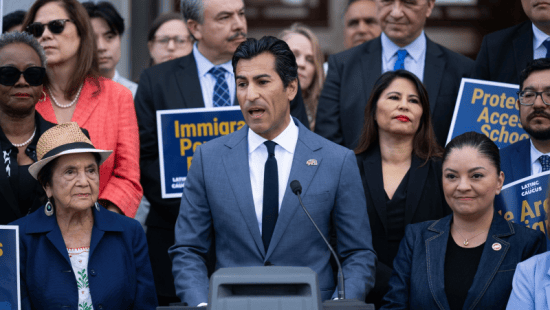
“Close to 40% of people we provided health care to had serious, acute, and devastating health problems,” said Jim Mangia, president and CEO of St. John’s, at the news conference releasing the findings. He went further, calling it a public health disaster and accusing Lineage of covering up the scale of the damage.
Why it’s not just anecdote
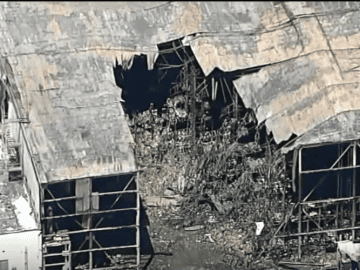
This isn’t a survey of feelings; it’s a clinical tally, built from actual diagnoses at the point of care, during and after a fire that burned in a 491,000-square-foot facility for more than a week and reignited multiple times: first the rooftop solar panels, then a ruptured ammonia line, then a hydrogen fluoride reading tied to a burning lithium-ion battery days later. Each flare-up triggered a new shelter-in-place order for the surrounding neighborhood, while only around 70 residents on the two closest streets were ever evacuated. Early in the crisis, residents were also told the air was “not dangerous”, a statement Mayor Karen Bass later walked back, acknowledging that all smoke, under all circumstances, is harmful.
Put together, a documented multi-day, multi-hazard fire, a formal clinical study, and hundreds of confirmed diagnoses is a different order of proof than residents simply saying they don’t feel well. That’s what makes this report hard to argue with and it’s what should anchor every question this story asks about the emergency response, rather than speculation standing in for it.
Now what?
Councilmember Ysabel Jurado, who represents Boyle Heights, said the report puts hard numbers behind what residents have said since June 17: this was never just a warehouse fire, it was a public health emergency. That the community got sick is no longer a matter of dispute. What remains open is what the city, Lineage Logistics, and regulators are obligated to do next for the hundreds of people this report already counted, and for whatever long-term harm hasn’t shown up in a clinic yet.