“I grew up there, I went to church there, and my mom had her business there. For me, this is something very personal,” says Gastélum.
More than three months after the Lineage warehouse fire, affected Boyle Heights families and businesses are still dealing with health, financial and legal questions.
On June 17, 2026, a fire broke out at a 491,000-square-foot cold storage warehouse operated by Lineage Logistics at 1400 S. Los Palos St. in Boyle Heights. The blaze burned for over a week, with flare-ups and reignitions continuing until it was finally extinguished on June 24. Mayor Karen Bass declared a local state of emergency and issued a shelter-in-place order for nearby residents due to a biohazard threat from decomposing food inside the facility. In the weeks that followed, the smell from the spoiled food and ongoing air quality concerns continued to affect the Boyle Heights community for months.
Attorney Omar Gastélum is one of the people who has felt the impact of the fire on the community up close.
“I grew up there, I went to church there, and my mom had her business there. For me, this is something very personal,” says the attorney, who now represents 350 families affected by what he calls a “catastrophic event” at Lineage Warehouse.
This attorney, who speaks straightforwardly about what happened, has no doubt that Boyle Heights being home to a working-class immigrant community was the reason behind the complications its residents have faced.
“You could clearly see the difference between the recent fire in Garden Grove and the one in Boyle Heights. There, they evacuated. Here, the authorities made misleading statements about how the fire was affecting the families living in the area. We still don’t have a clear picture of how it’s harmed the health of the elderly and the children who live there. It’s too soon. It will take a long time before we have a clear picture,” Gastélum tells Parriva.
Gastélum is referring to a separate emergency that unfolded weeks earlier in Orange County. In late May 2026, the Orange County Fire Authority issued an evacuation order for roughly 50,000 Garden Grove residents after officials determined a tank at an aerospace manufacturing facility was at risk of exploding or leaking a large amount of toxic chemicals into the air. That evacuation order was lifted days later, on May 26, once the threat was contained. In Boyle Heights, by contrast, authorities issued a shelter-in-place order rather than a mandatory evacuation, a distinction Gastélum argues reflects a different level of urgency in how the two communities were treated.
One of the things that has made things hardest for the community, in his view, has been ICE operations. Many residents haven’t wanted to leave their homes, ask for help, or seek out a lawyer, out of fear of becoming visible and having to face ICE.
“Remember what was happening in Los Angeles right before the fire, raids everywhere. It’s easy to understand the fear they’ve had. That’s why, at my office, we go directly to people’s homes, show them what we can do, and offer them guidance,” Gastélum says.
More than three months after the disaster, which left hundreds of families affected, many questions remain unanswered. There are no conclusions yet about how the fire started, what responsibility the authorities bear for their delayed response in supporting residents, or what the full financial impact has been.
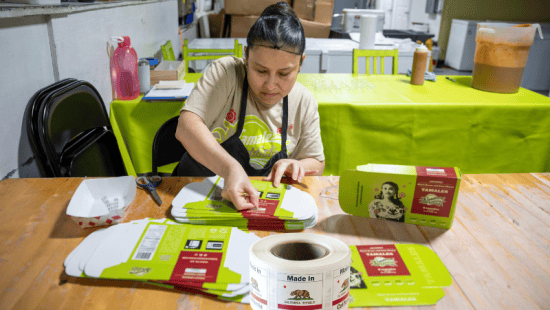
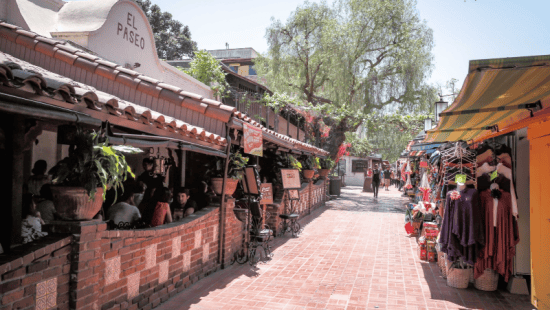
Many small business owners have expressed frustration watching, day by day, as their lifelong dream falls apart: a lack of effective support, a disappearing customer base, and a harmful environment because of the air quality and the smell. Many have closed for good.
“I think there are two phases in what we can recommend and do. These businesses need to find a lawyer. There are a lot of people affected, and it’s not just the economic side of it, it’s the people caught up in that environment, people who’ve stopped working. Some of them didn’t even live there, but commuted to that area for work. There’s another piece too: health. They also need guidance; they need to find a lawyer they trust. We still don’t have a clear sense of the extent of the health damage. Many elderly residents couldn’t leave their homes; they were already sick, and now their condition has gotten worse. We want to help. I know there are good lawyers and bad ones, and that’s exactly why a lot of people are being cautious. For example, we’re charging 25 percent to take on a case. Others are asking for as much as 50 percent. That makes me wonder whether they actually want to help or just want to profit,” he adds.
Gastélum expects a long legal battle, possibly two to three years, maybe longer.
“We’re talking about companies worth billions of dollars, ready to fight this out for as long as it takes. Right now, we’re in the initial phase: filing the lawsuit. There are three parties involved: the warehouse owner, its operator, and the solar panel company. Things could evolve; there could be changes, but for now those are the parties named in the lawsuit. This is a mass action,” he says.
For now, Gastélum hasn’t included municipal or county authorities as defendants, but he adds that could change. There are a lot of factors at play, including health, the inability to use a residence, emotional distress, lost wages, and more.
“My advice is this: if you feel sick, go to a hospital. If you need immediate financial help, check with the agencies working with the authorities to secure funding, and stay informed, ideally through a lawyer. A lot of clients come to our door asking us to help translate things, because they’re not clear on what the letters they’re receiving actually say. The clearest thing I can tell you is this: the only requirement to get our help is that you have to be a resident of Boyle Heights,” he says.
NOTE:
Every Wednesday from 7 to 9 p.m., five attorneys are available to hear from people interested in presenting their case, at this address: 3628 E. Olympic Blvd., Los Angeles, CA 90023.