About half of U.S. workers hold working-class jobs, but only 1.6% of state legislators come from those occupations. Researchers say money, time and political networks help explain the gap.
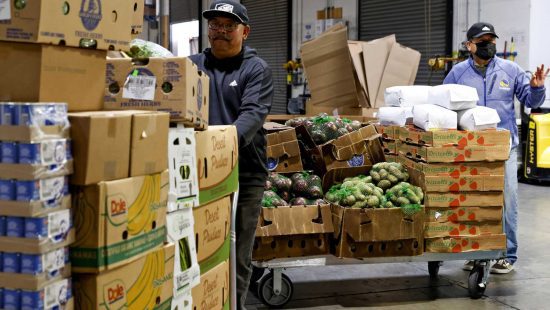
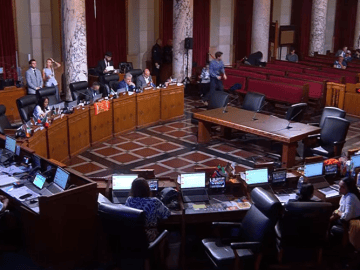
Half of American workers hold what researchers classify as “working-class” jobs: manual labor, service work, clerical positions, union trades. In the rooms where laws get written, that half all but disappears. Roughly 1% of state lawmakers, and about the same share in Congress, currently or last held one of those jobs.
The gap isn’t partisan. Among state legislators, only about 2% of Democrats and 1% of Republicans come from working-class backgrounds. Both major parties claim to be the party of the working class. Neither is run by one.
The Numbers
The data comes from a biennial study by political scientists Nicholas Carnes (Duke) and Eric Hansen (Loyola University Chicago), who track the occupational backgrounds of every state legislator in the country. Their most recent count found just 116 of the nation’s roughly 7,400 state lawmakers, 1.6%, came from working-class jobs. That’s down from 1.8% two years earlier.
The distribution is uneven. Alaska leads the nation, with working-class lawmakers holding 5% of its seats; three out of sixty. Ten states, including Texas, Virginia, and North Carolina, have none at all. New Hampshire has the highest raw number: eight of its 420 legislators, including a transportation worker and a bartender.
Congress tells a similar story. More than half of sitting members now have $1 million or more in net worth. The ten richest members of a recent Congress each had estimated fortunes exceeding $30 million.
Why It Happens
Three barriers do most of the work here.
Money. Campaigns cost money to run, and candidates without personal wealth or wealthy networks to draw on start at a disadvantage before a single vote is cast. Someone paying rent from an hourly paycheck has little room to self-fund a campaign or take unpaid leave to knock on doors.
Time. State legislative sessions, fundraising calls, and campaign events often run during business hours, manageable for a lawyer or a business owner who can restructure their schedule, much harder for a shift worker who loses pay for every hour not clocked in.
Networks. Party recruiters, donors, and local political organizations are disproportionately drawn from professional and managerial classes, and they tend to recruit people who look like them. Someone without a law degree or a business card often doesn’t get asked to run in the first place and may not see themselves as a plausible candidate even if they did.
The result is a pipeline that filters out working-class candidates well before election day, regardless of how any given voter might feel about them.
Why It Matters
This isn’t only a matter of optics. Research shows working-class legislators vote differently. They tend to hold more liberal views on taxation, business regulation, social spending, and labor law, and are less supportive of free trade, Wall Street, and corporate bailouts than their colleagues from professional backgrounds.
Nicholas Carnes puts the mechanism plainly: the shortage of working-class people in American legislatures skews policymaking toward outcomes that favor the upper class’s economic interests and not necessarily out of hostility toward workers, but because legislators who haven’t lived with unstable scheduling, medical debt, or wage disputes are less likely to prioritize fixing them.
The evidence bears this out. Congress spends less than 3% of its floor time on issues related to poverty. Historically, legislation has tended to pass when middle- and upper-income groups agree on it, but not when middle- and lower-income groups agree without upper-income support.
Where the Gaps Compound
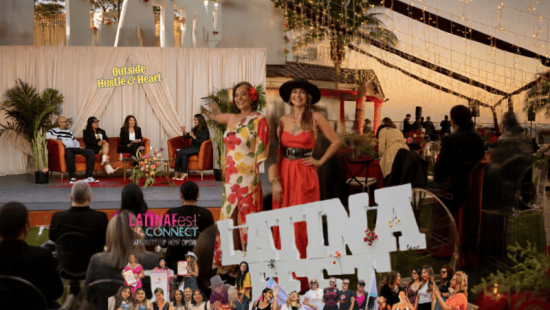
Working-class underrepresentation doesn’t exist in isolation. Latino lawmakers, for instance, have made real gains in recent years; the current Congress is about 10% Hispanic, up from just 14 members 40 years ago, but that’s still below the roughly 19–20% of Americans who are Latino. California, an outlier, has pushed its legislature to 32.5% Latino representation, still short of the state’s nearly 40% Latino population.
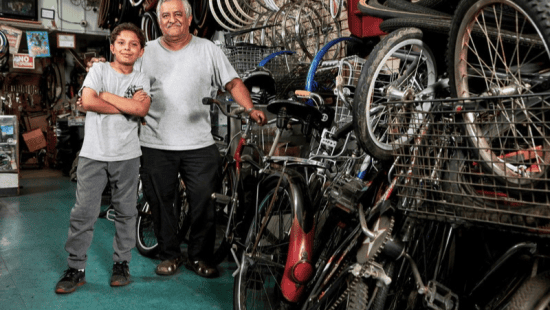
No study has directly measured how many working-class legislators are also Latino, so any claim about that overlap is inference rather than established fact. But it’s a reasonable one: Latino workers are disproportionately concentrated in the same manual labor, service, and clerical jobs the working-class studies track. A Latino candidate from a working-class background plausibly faces the barriers of both gaps at once; the structural hurdles of being working-class, layered onto the funding and network disadvantages that limit racial and ethnic representation more broadly.
A Widening Gap
The trend line matters as much as the snapshot. Working-class representation fell from 1.8% to 1.6% in just two years, tracking alongside decades of declining union membership; historically one of the few institutions that trained and financed working-class candidates for office.
Anyone can run for office, in principle. In practice, the people running and serving are overwhelmingly drawn from America’s professional classes and the gap between who is governed and who governs shows little sign of closing on its own.