Despite decades of declining religious participation in the United States, thousands of adults are seeking baptism as they search for faith, community, and a deeper sense of belonging.
For much of the past two decades, the story of religion in America has been one of decline.
Church attendance has fallen. Younger generations have become less likely to identify with organized religion. Millions of Americans have moved into the category of the religiously unaffiliated, often described as the “nones.”
But inside churches across the country, a different story is unfolding.
In 2026, thousands of adults are seeking baptism.
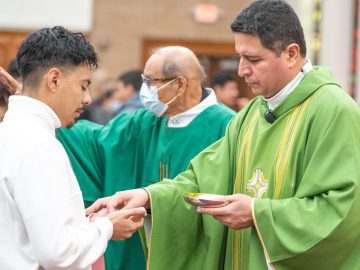
Catholic dioceses across the United States have reported unusually large groups of adults entering the Church, with many describing their Easter initiation ceremonies as among the largest in recent memory. In Los Angeles, one of the nation’s largest Catholic communities, 8,598 adults participated in baptism or reception into the Catholic Church during the Easter season.
Other dioceses have reported similar increases, with clergy describing a renewed interest among adults who had little or no connection to organized religion earlier in life.
There is no single national database tracking every adult baptism across denominations, ages and ethnic groups. But the scale of the increase has been large enough to attract attention from religious scholars, sociologists and church leaders.
The question many are asking is simple: Why now?
A Different Kind of Religious Shift
The rise in adult baptisms comes at a complicated moment for American religion.
The country has not experienced a broad return to traditional religious participation. Surveys continue to show that the percentage of Americans identifying as Christian has declined over several decades.
Yet that decline may be hiding a more complicated transformation.
Some adults who grew up without strong religious involvement are now exploring Christianity later in life. Many say they are not simply returning to childhood traditions but searching for something they feel is missing from modern life.
For some, that search is spiritual. For others, it is also social.
They describe wanting:
deeper meaning
stronger community
moral direction
stability during uncertain times
a connection to something larger than themselves
The new converts are not all coming from the same background. Some grew up with religion and left. Others never had a serious religious experience until adulthood.
What connects many of them is a sense that modern life has become increasingly fragmented.
Who Is Joining?
The demographic picture challenges some assumptions about the new wave of adult baptisms.
A 2026 survey of more than 2,100 participants involved in Catholic adult initiation programs found that:
64% identified as White
29% identified as Hispanic or Latino
smaller percentages identified as Black, Asian or other backgrounds
The survey included both adults preparing for baptism and already-baptized Christians entering full communion with the Catholic Church, so it does not represent an exact count of baptisms alone.
Still, the numbers suggest that the increase is not driven by one community.
Latino Catholics remain a central part of American Catholic life. Hispanic Catholics represent a large share of the Catholic population, particularly among younger generations, and many parishes in states such as California, Texas, Arizona and Florida have strong Hispanic ministries.
But the recent growth also appears to include a significant number of White American adults, particularly younger people who grew up with limited religious practice and are now reconsidering questions of faith.
The trend is less about one group replacing another and more about different groups arriving at similar questions.
Why Are Adults Turning Toward Faith?
Experts point to several overlapping factors.
One is uncertainty.
The past several years have brought economic pressure, rising living costs, political conflict and rapid cultural change. For some people, those pressures have created a desire for institutions that offer stability and community.
Religious communities have traditionally provided those things: relationships, service opportunities, shared traditions and a framework for understanding difficult moments.
But researchers caution that economic stress alone does not create conversion. People rarely change their religious identity because of one factor. Personal experiences, relationships and individual beliefs usually play a larger role.
Another factor is loneliness.
Across the United States, many adults report having fewer close relationships and fewer spaces where they feel connected. Churches, at their best, offer a built-in social network through small groups, volunteer programs, education and community activities.
For some new converts, baptism is not only a religious decision. It is also a decision to belong.
Digital culture has also changed how people encounter faith.
Religious exploration that once began by attending a church can now begin online. Podcasts, YouTube channels and social media discussions have introduced millions of people to conversations about Christianity, philosophy, history and questions about purpose.
For some adults, an online conversation becomes the first step toward visiting a church, joining a study group and eventually seeking baptism.
Did Politics and the Trump Era Play a Role?
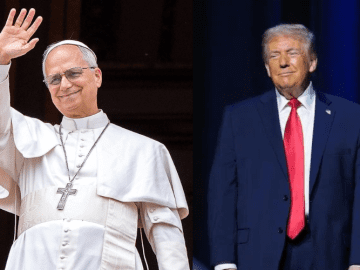
The political environment of recent years, including the Trump era, may have influenced some people’s religious journeys, but experts caution against viewing politics as the main explanation.
The years surrounding Donald Trump’s presidency intensified debates about culture, identity and values. For some Americans, that strengthened their connection to religious communities. For others, political conflict encouraged them to search for spaces focused more on spirituality than political battles.