California approved a new DMV data-sharing system to comply with federal REAL ID rules, but lawmakers also added privacy protections after immigrant advocates warned it could expose undocumented drivers.
More than one million Californians who hold driver’s licenses under Assembly Bill 60 (AB 60) are asking the same question after state lawmakers approved a new DMV data-sharing system: Does this make undocumented drivers easier to identify?
The short answer is it’s more complicated than a simple yes or no.
California has agreed to connect its Department of Motor Vehicles to the State-to-State Verification Service (S2S) and the SPEXS platform, nationwide systems operated by the American Association of Motor Vehicle Administrators (AAMVA). State officials say the change is required to help comply with federal REAL ID standards and prevent people from holding driver’s licenses in multiple states.
But immigrant advocates argue the decision also creates new privacy risks that did not exist when California first allowed undocumented residents to obtain driver’s licenses through AB 60.
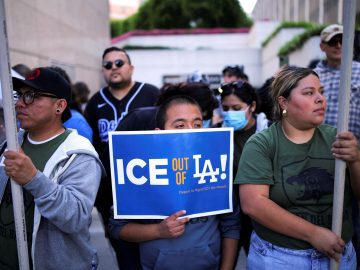
For California’s large Latino community, especially in Los Angeles County where many AB 60 license holders live, the debate has become one of trust, privacy, and immigration enforcement.
Key Takeaways
- California will share limited driver’s license information with other participating states.
- The system is intended to detect duplicate licenses, not enforce immigration law.
- California says ICE and Border Patrol cannot directly search the database.
- Privacy groups warn legal loopholes still exist through subpoenas and court orders.
- Home addresses are not included in the shared information.
- Lawmakers added new safeguards before approving $55 million to build the system.
Why California Is Joining the System
The State-to-State Verification Service allows DMVs across participating states to verify whether someone already holds another driver’s license or identification card elsewhere.
The goal is to improve identity verification and help states comply with the federal REAL ID Act, which established nationwide security standards for driver’s licenses accepted for boarding domestic flights and entering certain federal facilities.
According to California officials, the system is designed to reduce fraud while limiting the amount of information shared between states.
Why Immigrant Advocates Are Concerned
The biggest concern centers on how the system identifies people who do not have a Social Security number.
To perform duplicate-license checks, participating states exchange a limited identifier tied to a driver’s Social Security number. For many AB 60 license holders, California uses a placeholder value rather than an actual Social Security number.
Privacy advocates argue that placeholder effectively signals a person is likely undocumented.
Organizations including Alliance San Diego and Oakland Privacy say that once this information exists in a multistate system, it could become more vulnerable to legal requests from outside California.
They argue this represents a significant change from the assurances many undocumented Californians believed they received when AB 60 became law in 2015.
Can ICE Search the Database?
Based on the budget agreement, not directly.
California negotiated several restrictions before approving funding for the system.
According to state officials:
- ICE does not receive direct login access.
- Customs and Border Protection cannot routinely browse the database.
- Federal agencies cannot perform bulk searches.
- Searches must be conducted one person at a time.
Those protections were considered essential before lawmakers approved approximately $55 million to implement the system.
The Privacy Protections California Added
Lawmakers required multiple safeguards to reduce the risk of immigration-related misuse.
One-person searches only
The system cannot be used to generate lists of drivers or identify everyone using a specific placeholder code.
No home addresses
Residential addresses will not be included in the information shared through the interstate verification system.
Notification before data release
If AAMVA receives a subpoena seeking California driver’s information, it must notify the California DMV whenever legally allowed, giving the state an opportunity to challenge the request in court.
Oversight and audits
The budget establishes ongoing monitoring and future audits to ensure the system operates as intended and complies with California privacy protections.
What Risks Still Exist?
Privacy advocates say the safeguards reduce risk but do not eliminate it.
Several legal scenarios remain possible.
A federal judge could issue a subpoena requiring information about a specific individual.
In some cases, courts may also issue a gag order preventing AAMVA from notifying California before records are released.
Another concern involves law enforcement agencies in other participating states. While California prohibits using an AB 60 license to investigate immigration status, not every state has the same protections.
Civil liberties organizations argue those differences could create vulnerabilities for Californians traveling outside the state.
Should AB 60 Drivers Be Worried?
For most AB 60 license holders, there is no immediate change to their daily lives.
They can continue driving legally, renewing licenses, registering vehicles, and purchasing insurance just as before.
The new system is not designed to allow immigration officers to search for undocumented drivers.
However, privacy experts say concerns are understandable because any expansion of data sharing increases the number of entities involved in handling personal information.
The debate ultimately reflects two competing priorities.
California says the system is necessary to comply with federal REAL ID requirements while preventing identity fraud.
Privacy advocates argue even limited data sharing creates new risks that lawmakers cannot fully eliminate.
This is relevant in California because more than one million residents have obtained driver’s licenses under AB 60.
Supporters of the law have long argued that licensed and insured drivers make roads safer for everyone.
Advocates worry that if undocumented residents lose confidence in the DMV, some may avoid renewing licenses or registering vehicles altogether, potentially increasing the number of uninsured and unlicensed drivers.
That concern extends beyond immigration policy and into public safety, transportation, and community trust.
Next, California DMV must now build the system while implementing the privacy protections required in the state budget.
Lawmakers have also directed continued oversight and future audits through the remainder of the decade.
Immigrant rights organizations say they will closely monitor implementation and may pursue additional legal action if they believe Californians’ personal information is improperly shared.
For now, the practical question is no longer whether California will join the interstate verification network. It is whether the privacy safeguards lawmakers negotiated prove strong enough to maintain the trust of the communities AB 60 was designed to serve.
FAQ
Does California share my entire DMV record?
No. California says the interstate system is limited to identity verification information and does not include home addresses.
Can ICE directly search the new DMV database?
According to California’s agreement, ICE and Customs and Border Protection do not have direct access to search the State-to-State Verification Service.
Will AB 60 licenses still be valid?
Yes. The law allowing undocumented Californians to obtain driver’s licenses has not changed.
Why is California joining the system?
State officials say participation is needed to comply with federal REAL ID requirements and prevent duplicate driver’s licenses across states.
Can federal agencies ever obtain information?
Potentially, but generally only through legal processes such as subpoenas or court orders. Privacy advocates note that this remains one of the primary concerns despite California’s safeguards.