Advocacy groups estimate 1.5 million Latinos have lost SNAP food assistance nationwide, raising concerns about how Los Angeles families and already-strained food banks will cope.
An estimated 1.5 million Latinos across the United States have lost access to federal food assistance since President Donald Trump signed his sweeping tax and spending legislation into law in July 2025, raising concerns about hunger among working-class families and the growing pressure on food banks struggling to meet the need.
The estimate, released by Unrig Our Economy and Americans for Tax Fairness, points to the potential consequences of changes to the Supplemental Nutrition Assistance Program, known as SNAP, which helps low-income households afford groceries. The One Big Beautiful Bill Act combines tax cuts with major reductions to federal safety net programs, including SNAP and Medicaid. Critics say the legislation prioritizes tax benefits for wealthy households and corporations while making it harder for vulnerable families to afford necessities.
In seven states alone, an estimated 771,687 Latinos have lost food assistance since the law was enacted. Texas accounted for the largest share, with an estimated 396,164 Latino residents losing benefits, followed by Arizona with 200,124 and New York with 92,816. The other states included in the analysis were Pennsylvania, New Jersey, Nebraska and Iowa.
The figures are estimates, not a direct count of every Latino person removed from SNAP. The groups calculated the numbers using changes in state program enrollment and demographic data, assuming Latino and non-Latino recipients were equally likely to leave the program. That distinction matters when assessing how the cuts are affecting individual communities.
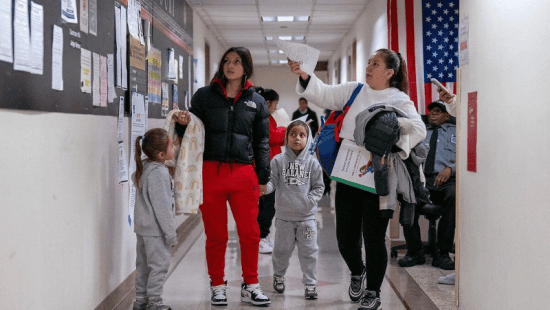
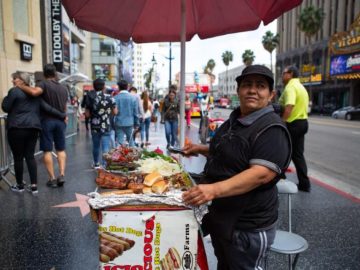
For Los Angeles, where food assistance is a lifeline for millions of residents, the national findings raise an urgent question: what happens when families lose federal support and must turn to food banks to put meals on the table?
Approximately 1.5 million Los Angeles County residents were enrolled in CalFresh, California’s version of SNAP, according to the county’s Department of Public Social Services. The county also reported that more than 320,000 additional residents may qualify for the program but are not enrolled. These figures illustrate the scale of local need, although they do not establish how many Latino residents have lost benefits because of the federal legislation.
The impact is unfolding against a backdrop of persistent food insecurity. A Los Angeles County report published in October 2025 found that 44 percent of CalFresh recipients experienced food insecurity that month, meaning they struggled to obtain enough food. The report warned that additional federal restrictions and benefit reductions could worsen the situation.
For families already struggling with rent, transportation, utilities, and grocery costs, losing food assistance can mean difficult choices about which bills to pay and which necessities to go without. Parents may stretch meals, rely on relatives, or visit neighborhood food pantries more frequently. For households living paycheck to paycheck, even a modest reduction in grocery assistance can leave a serious gap.
Food banks are a critical part of the response, but they cannot automatically replace the money families receive through federal benefits.
The Los Angeles Regional Food Bank reported that it served an average of 1.1 million people each month in 2025, distributing approximately 160 million pounds of food and other products, equivalent to 129 million meals. The organization said demand remained high in 2026. During the first eight months of the year, it distributed 103 million pounds of food, slightly more than during the same period in 2025.
The urgency was visible in Baldwin Park in May, when a food distribution organized with the Los Angeles Regional Food Bank ran out of all 2,000 grocery boxes by 11:30 a.m. Residents continued waiting, and some left without food. The event offered a stark illustration of the gap between the need for assistance and the supplies available at a single distribution.
Meanwhile, changes to CalFresh eligibility and work requirements are creating additional uncertainty. Beginning June 1, 2026, certain adults must meet expanded work requirements to continue receiving benefits beyond a limited period, unless they qualify for an exemption. Los Angeles County officials estimated that approximately 260,000 CalFresh recipients could be subject to the new requirements. That number represents people potentially affected, not people who have all lost assistance.
Supporters of the federal legislation have defended its tax and spending provisions as part of the administration’s economic agenda. But the groups behind the new Latino food assistance estimate argue that reductions in public benefits are placing a disproportionate burden on working families while wealthy taxpayers benefit from tax cuts.
For Los Angeles, the question is how much more pressure local food assistance programs can absorb as families confront changing eligibility rules, rising living costs and the possible loss of benefits.
Updated county data on benefit terminations, including demographic information where available, would help establish the impact on Latino households. Food bank distribution figures and interviews with families and pantry operators could also show whether local demand is rising and whether charitable organizations have the resources to respond.
The national estimate puts a number on a growing concern, but behind it are households facing a more immediate problem: how to keep food on the table when assistance disappears. As the effects of the legislation continue to unfold, Los Angeles food banks may become increasingly important to families who need help, even as the limits of charitable assistance become harder to ignore.