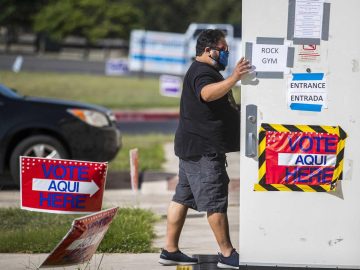
Federal officials have told state election administrators that immigration agents will not be stationed at polling places during the November 3 midterm elections. But as news outlets report increased immigration enforcement in California, families face a different concern: what happens when people worry about encountering federal agents on the way to work, school or other everyday activities?
The two developments overlap in timing, but they do not prove the same thing. There is no verified evidence presented here that the reported California operation is intended to interfere with voting. The question is whether enforcement activity is affecting eligible voters and what election officials know about it.
On February 25, a Department of Homeland Security official reportedly assured state election administrators that Immigration and Customs Enforcement (ICE) agents would not be stationed at polling places during the midterms. DHS said it was not planning operations targeting voting locations, while leaving open the possibility of responding to a specific, active public-safety threat.
That assurance addresses whether agents will be stationed at polling places. It does not answer whether enforcement elsewhere is affecting people’s willingness or ability to participate in the election.
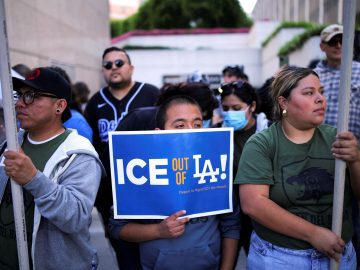
On October 7, The Washington Examiner reported that ICE had begun an operation internally known as “Operation Safe California.” Citing sources familiar with the plan, the newspaper said it began around San Diego and was expected to last at least 45 days. The report said officers had been instructed to arrest undocumented immigrants they encountered, including people without criminal records.
NBC 7 San Diego reported the following day that community organizers were seeing increased enforcement activity. The station also described reports of encounters near businesses and schools, and said ICE and DHS had not responded to its requests for comment.
On October 9, the San Francisco Chronicle reported concerns from California officials and advocacy groups about enforcement activity in the Central Valley, including detentions reported by Faith in the Valley in Fresno and Madera counties.
These reports provide accounts of increased activity in several parts of California. They do not independently confirm every detail of the alleged statewide operation, including its full geographic scope, duration or arrest instructions. DHS has not publicly confirmed all the details reported by these outlets.
As reported before, there is also the economic impact of ICE enforcement in California, providing broader context for how enforcement can affect workers, businesses and communities.
Are Eligible Voters Changing Their Plans?
In San Diego, NBC 7 interviewed community organizers who described more calls about suspected ICE activity and encounters near businesses, gas stations, construction sites and schools. The station also reported a school district’s response to an incident involving a suspected federal agent who approached and questioned a student.
These accounts describe concern among residents and community organizers. But a key question remains unanswered: are eligible voters changing their plans because they fear an encounter with immigration agents?
The reporting reviewed for this article does not establish that eligible voters have been prevented from voting, that turnout has fallen because of the reported operation, or that agents have been deployed to polling places. It also does not establish that the operation was designed to affect the election.
Those gaps are a reason to ask election officials direct questions. Have they received complaints connecting immigration enforcement or fear of enforcement to voter registration, early voting, access to voting locations or intimidation? Are they tracking those reports, and what should voters do if an incident disrupts their access to a ballot?
We have also covered ICE enforcement and immigration-related arrests. That coverage offers additional context, but it should not be treated as evidence of election interference unless the reporting directly supports that connection.
Where Voters Can Get Help
California’s Voter Bill of Rights says eligible registered voters have the right to cast a secret ballot without anyone bothering them or telling them how to vote. Voters also have the right to ask election officials questions and report suspected illegal or fraudulent election activity.
If you have questions about voting or believe your voting rights have been denied, call the California Secretary of State’s voter hotline at (800) 345-VOTE (8683). Spanish-language assistance is available at (800) 232-VOTA (8682), with additional language hotlines listed on the state’s official voter hotline page.
Read the state’s Voter Bill of Rights for a full explanation of voting protections. For Los Angeles County election information, visit the Registrar-Recorder/County Clerk website.
These resources address voting questions and election-related concerns; they are not immigration legal services.
The assurance about polling places is one specific commitment. The reported enforcement activity raises another question: whether fear of immigration enforcement is affecting eligible voters’ ability or willingness to participate.
Answering that requires evidence, not assumptions about intent. Election officials should explain whether they have received relevant complaints, what safeguards are in place and how voters can report intimidation or disruption. Federal officials should clarify the reported operation’s scope and explain how their policies apply near voting locations.
With the November 3 election approaching, Californians deserve clear answers about what is happening in their communities and what officials know about its effects on voting.