After a quieter 2025 shaped by immigration fears, organizers say this year’s festival feels different as children and families return to celebrate Spanish-language books and culture.
Last year, the people behind LéaLA did not know what to expect. Immigration raids were weighing on the community, and it showed. This year, the mood at LA Plaza de Cultura y Artes is different.
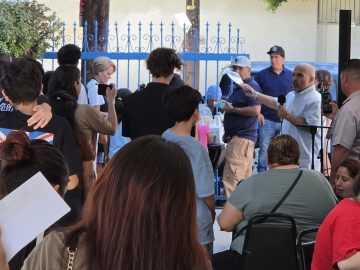
Since last Thursday, hundreds of visitors, most of them children, have filled the plaza in the center of the city. Amid laughter and wonder, they had the chance to let their imaginations run and get closer to Spanish, which for many of them is their first language.
“This year I see more people. Last year there were more worries; immigration raids were affecting the community, and we didn’t know what to expect. This year it feels calmer, the scene is different, but our commitment is the same: to bring the community closer to our culture and our language, with top quality events,” says its director, Marisol Schulz.
Eleven editions, sixteen years
This is the eleventh edition of the Spanish Language Book Fair and Literary Festival LéaLA, which first arrived in Los Angeles in 2011 and has run in several formats since, with a few years skipped along the way. Its story has been one of persistence, and organizers say that despite everything, they are here.
Schulz is a leading figure in the Spanish language publishing world. She has directed the Guadalajara International Book Fair (FIL Guadalajara), the largest Spanish-language book fair in the world, since 2013, and she recently received Barcelona’s Gold Medal for Cultural Merit for her career. Her presence in Los Angeles reflects the commitment of the University of Guadalajara, which backs LéaLA, to these activities in the city.
“I think the goals have been the same since we began. To promote freedom of expression, bring high-quality literature in Spanish and important authors, and share this in-person experience with people. At this festival, we have created a space where people feel welcome. Our mission is to defend our language and highlight the values of our community. We have brought the contribution and the richness of the University of Guadalajara, a Mexican public university. We saw it these past few days. I don’t have the final figure, but there is more movement and more people. Seeing the children so happy is a great satisfaction in itself,” says Schulz.
The festival has become a reference point for Spanish language books in the United States, even at a time of heavy attacks on Latino culture and the immigrant community.
Books in person, not on a screen
The fair also arrives as publishers and readers debate what artificial intelligence means for books. Schulz is not intimidated by that conversation. On the contrary, she stresses the importance of having it.
“Before, the debate was about the e-book. People speculated that it would reduce the appetite for physical books and that people would read less in print, and we are still here. Now the debate is about AI. We haven’t tackled it here, but we have promoted it in Guadalajara, at the FIL. We have held many discussion panels. The question is how we can use it as a tool and not as something that determines our activities. At these events, we promote in-person activities. For example, our schedule is not streamed; it is 100 percent in person. People who don’t come don’t have access to the discussions, book presentations, and other activities,” she adds.
A permanent home downtown
The University of Guadalajara is now adding a year-round presence to the annual fair. On September 24, 2026, it opened a Los Angeles location of the Carlos Fuentes Bookstore at the Herald Examiner Building downtown. The space opened with around 4,000 copies covering about 2,000 titles from roughly 300 publishers, plus publications from the university itself, on subjects ranging from literature and humanities to art, gastronomy, science, and health and wellness.
The university sees the location as more than a store. It is meant to be a permanent cultural space for the community, with book presentations, author meetings, reading activities and other events in Spanish. The project is tied to other university initiatives in the city, including the Sor Juana Inés de la Cruz Institute and LéaLA itself. The bookstore is directed by Verónica Mendoza Urista, coordinator of Cultural Entities of the University of Guadalajara’s University Network.
“I take away many things,” adds Schulz. “The hope that this type of activity can become more permanent. I hope that with the arrival of the Sor Juana Inés de la Cruz Institute this can become a reality. It filled me with joy to see these children.”