For decades, the Servitje family and the company they helped build have been expanding from Mexico into the American food market. It started with bread. Today, the same Mexican company stands behind some of America’s best known bakery brands and one of the most recognizable snacks among teenagers: Takis.
Most Americans probably do not know the Servitje family.
They know their food.
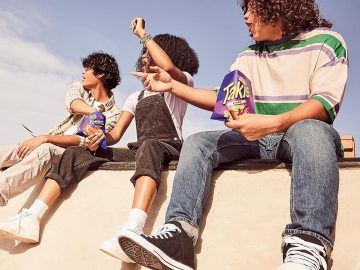
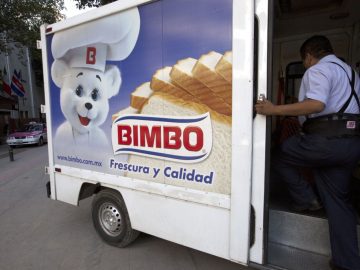
Bimbo bread is sold across the United States. So are brands including Oroweat, Arnold, Brownberry, Entenmann’s and Thomas’. And millions of American teenagers know another Grupo Bimbo product by sight: the bright red bag of Takis.
The connection is easy to miss.
Bimbo is a Mexican company. Takis is a Mexican snack. Both are part of the business empire built by Grupo Bimbo, the company founded by Lorenzo Servitje and his partners in Mexico City in 1945.
The Servitje family has remained deeply involved in the company across generations. Daniel Servitje, Lorenzo’s son, became one of its most important leaders and is now executive chair of Grupo Bimbo. But the company is publicly traded and includes other founding families among its shareholders, making the description of Grupo Bimbo as simply a family business too narrow.
What is undeniable is the family’s role in building the company’s American empire.
The bread came first
Grupo Bimbo’s American story began with Mexican consumers.
In 1985, the company began exporting Bimbo and Marinela products to the United States to serve Mexican immigrants. Daniel Servitje later recalled that he worked to establish distribution routes in Los Angeles after graduating from Stanford’s business school. At the time, the company was operating roughly 40 routes in the area.
Then the strategy changed.
Instead of simply sending Mexican products north, Grupo Bimbo began acquiring American bakeries.
In 1996, it acquired Pacific Pride Bakeries in California, its first US bread bakery. Two years later, it acquired Mrs. Baird’s Bakeries in Texas.
The expansion accelerated.
In 2008, Grupo Bimbo announced a $2.38 billion acquisition of the US fresh bakery business of George Weston Foods. The transaction included brands such as Arnold, Brownberry, Entenmann’s, Freihofer’s, Stroehmann and Thomas’, along with 22 bakeries and more than 4,000 distribution routes. Grupo Bimbo said the acquisition would make Bimbo Bakeries USA the largest bakery company in the United States.
Then came Sara Lee.
In 2011, Grupo Bimbo completed the acquisition of Sara Lee’s North American fresh bakery business. Before regulatory divestitures, the operation had 41 plants, more than 4,700 distribution routes and approximately 13,200 employees. The combined Bimbo operation was projected to have more than 28,000 employees, 75 plants and more than 13,000 distribution routes.
The Mexican company had become an American bakery powerhouse.
Then came Takis
Takis represents a very different kind of American success.
The brand belongs to Barcel, Grupo Bimbo’s snack business. Takis Fuego was introduced in Mexico in 2006, where Barcel described it as a product created for young consumers who wanted intense flavors, particularly the combination of chili and lime.
The same year, Takis Fuego entered the US market.
Barcel initially positioned the product toward the growing Hispanic market. But the company soon discovered that the audience was much larger.
In 2014, when Barcel USA received Nielsen’s US Breakthrough Innovation Award for Takis, the company said teenagers of all ethnicities had become captivated by the snack’s distinctive shape and flavor.
Barcel also said Takis had experienced strong growth year after year and that it had opened a production facility in Coppell, Texas, in 2012 to accommodate growing US demand.
The Mexican snack had crossed a cultural boundary.
From Hispanic market to American youth culture
That transformation is what makes Takis such an interesting part of the Servitje story.
The company did not enter the United States by abandoning its Mexican identity.
It brought that identity with it.
The rolled corn snack, covered in intense chili and lime seasoning, was different from many of the traditional American snacks already dominating store shelves. The heat became part of its appeal, particularly among teenagers.
And the product kept growing.
Piper Sandler’s recurring survey of US teenagers has consistently tracked Takis among their preferred snack brands. More than 6,000 teenagers participated in the spring 2024 edition.
Grupo Bimbo’s North American brand portfolio now lists Takis alongside the company’s many established food brands in the United States.
A different kind of Mexican American success story
The Servitje family’s American story is therefore not simply about exporting Mexican food.
It is about adapting to America in stages.
First came Mexican bread and pastries sold to Mexican immigrants.
Then came factories, distribution networks and acquisitions of established American bakeries.
Then came a Mexican snack that was initially aimed at Hispanic consumers and found a much broader audience among American teenagers.
Bread and Takis may seem like completely different businesses. For Grupo Bimbo, they are part of the same expansion.
The company built an American bakery operation by buying some of the country’s most familiar brands. Through Barcel, it also introduced a distinctly Mexican snack that became part of American youth culture.
The Servitje name may not appear on the front of a loaf of bread or a bag of Takis.
But it is behind both.