A Los Angeles coffee shop owner is driving for gig apps just to keep her own storefront open; a sign of how thin the margins have become for small-business owners.
Keeping her business, 21 Coffee, alive hasn’t been easy for Yojana Fombona in recent years.
First came the pandemic, which devastated the two businesses she operated in the same location: a pizzeria and a coffee shop. Then, during Donald Trump’s second term as president, pressure on immigrant communities increased, and so did the challenges facing her businesses.
She did what immigrants have long learned to do: adapt.
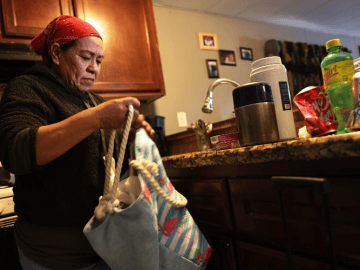
Yojana began looking for an additional source of income to help cover the rent, supplies and employee costs at her businesses. She found it delivering packages for Amazon.
Every night, from 8 to 9 p.m., she spends an hour delivering between 40 and 50 packages to help cover her expenses.
“It made sense. People are buying more online, immigrants are going out less, and demand for Amazon deliveries is high. Amazon also lets me put flyers for my business in the packages, so sometimes I’m delivering pizzas to the same houses where I’m making deliveries,” says the Honduran immigrant.
The math behind the shift
The numbers show why side hustles have become less of a choice and more of a financial lifeline.
A 2026 LendingTree survey found that 33% of Americans have a side hustle, and 61% of those side hustlers say their lives would be unaffordable without the extra income. Gig and on-demand work — including food and grocery delivery and rideshare services — was the most common category, accounting for 29% of side hustles.
The pressure is particularly striking because gig work often comes with a trade-off: flexibility in exchange for lower and less predictable earnings.
A Goldman Sachs Research analysis found that among people who had taken a pay cut, lost a job or had their hours reduced in the previous two years, 20% turned to gig work. The analysis estimated that gig workers earn roughly 50% to 65% as much per hour as they did in their previous traditional jobs.
What national surveys still don’t tell us is how many of those gig workers are already small-business owners — people using a second job not simply to pay their household bills, but to keep their own businesses open.
That gap is important. Yojana’s story suggests a less visible dimension of the gig economy: entrepreneurs working for other companies to subsidize the businesses they own.
“For now, this job allows me to keep my business open. I’m not taking anything home, but at least I can cover the expenses of the coffee shop and pizzeria,” she says.
The risk on top of the risk
A small-business owner has already taken on significant financial risk simply by opening the doors. But for some entrepreneurs, running a business now means taking on a second job — and sometimes a second business — to keep the first one alive.
Víctor Ortiz, an immigrant who lost his job, decided not only to deliver packages but also to start selling pet products on Amazon. He invested part of the money he received as compensation and is encouraged by the results during these first few months.
“I have to try other things. These jobs give me the opportunity to spend more time at home with my wife and children while also working on my own business,” Ortiz says.
Amazon does not publicly provide a single figure for the number of gig delivery drivers working across its delivery ecosystem. But the scale of its delivery network is significant. Amazon says its Delivery Service Partner program has employed about 275,000 drivers, while more than 140,000 drivers had participated in its delivery-driver training program as of October 2025.
Like food-delivery and rideshare platforms, package delivery has become a financial lifeline for people who have lost income — including business owners looking for ways to replace part of what their businesses once generated.
For Yojana, geography makes the equation work.
She delivers within roughly half a mile of her business, allowing her to save on both gasoline and time. Her delivery route is close enough to her storefront that she can move between the two without sacrificing an entire evening.
“You know how we immigrants are. We look for opportunities here and there,” she says.
The numbers at her business tell the story of how much has changed.
“I used to have 14 workers in my business. Now I have two or three, and only part-time. Before, we would wait for the kids to get out of school. Now people are trying to save money. Coffee and pizza have become almost like luxury products.”
For Yojana, delivering packages is not about building a new career. It is about keeping the one she already built alive.
“For now, this job allows me to keep my business open. I’m not taking anything home, but at least I can cover the expenses of the coffee shop and pizzeria.”
“That’s how it is. This is what we’ve been dealt. Now we have to keep moving forward,” she says.