New reporting and economic research show many Latino entrepreneurs aren’t facing a single crisis. They’re navigating several at once, forcing difficult decisions about hiring, investing and simply keeping their doors open.
On a typical weekday morning, the phones should be ringing.
Construction estimates should be coming in. Families should be stopping for breakfast before work. Hair salons should be filling appointment books. Neighborhood markets should be stocking shelves for the afternoon rush.
Instead, many Latino business owners across Los Angeles describe something different.
Fewer customers are walking through the door. Workers are worried about showing up. Bills continue arriving even as sales slow. Owners who survived the COVID-19 pandemic now find themselves navigating another period of uncertainty, but this time the challenges are coming from several directions at once.
This is not simply a story about a slowing economy.
It is a story about how immigration enforcement, rising operating costs, wildfire recovery, and limited access to affordable financing are colliding in ways that are reshaping Latino-owned businesses across Southern California.
For many entrepreneurs, success today is no longer measured by growth. It is measured by resilience.
Latino entrepreneurs have become one of the fastest-growing forces in American business.
Across California, Hispanic-owned businesses employ hundreds of thousands of workers, serve neighborhoods that larger retailers often overlook, and generate billions of dollars in economic activity. In Los Angeles County, family-owned restaurants, construction companies, auto repair shops, grocery stores, beauty salons, trucking companies, and professional service firms form the backbone of many local commercial corridors.
These businesses do more than create jobs.
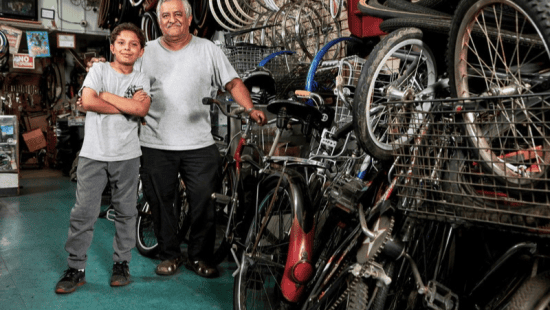
They sponsor youth sports teams. They donate to church fundraisers. They hire neighbors. They provide first jobs for teenagers and opportunities for newly arrived immigrants trying to establish themselves.
When these businesses struggle, entire neighborhoods feel the effects.
Four Crises, One Reality
Business owners often talk about economic downturns as if they happen one at a time.
Today’s reality is different.
Instead of confronting a single recession or one unexpected event, many Latino entrepreneurs are adapting to several overlapping pressures that reinforce one another.
The first is consumer uncertainty.
Even families with steady incomes are spending more cautiously as housing costs, groceries, insurance premiums and utilities consume larger portions of household budgets. When families postpone discretionary purchases, neighborhood businesses often feel the slowdown first.
The second is immigration enforcement.
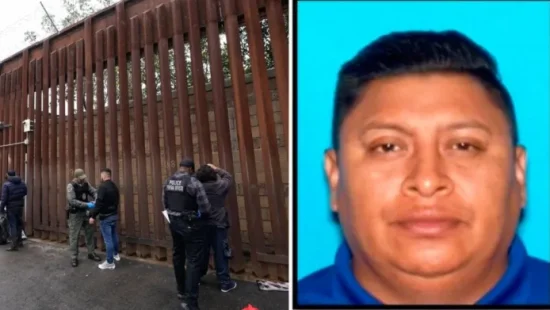
Recent analysis by the Los Angeles County Department of Economic Opportunity and the Los Angeles County Economic Development Corporation found that federal immigration enforcement activities have disrupted business operations throughout many communities. Surveyed businesses reported sharp declines in customer traffic, staffing shortages and significant revenue losses during enforcement periods.
The effects extend well beyond businesses whose owners or employees are immigrants.
Some customers stay home because they are afraid.
Others avoid shopping districts where enforcement activity has occurred.
Employers report workers missing shifts, not because they quit, but because they fear traveling to work or are caring for family members affected by enforcement actions.
The result is an economic ripple that spreads through entire commercial districts.
Recovery Didn’t End When the Fires Did
For some business owners, another challenge has yet to disappear.
Communities affected by recent Los Angeles County wildfires continue rebuilding homes, restoring neighborhoods and reopening businesses.
Recovery is measured in years, not months.
Even businesses that escaped physical damage often lost customers, experienced supply chain disruptions or saw construction delays affect surrounding neighborhoods.
Economic recovery depends on far more than rebuilding structures. It requires workers returning, customers spending again and communities regaining confidence.
For many entrepreneurs, that recovery remains incomplete.
The Financing Gap That Makes Everything Harder
Perhaps the least visible challenge is access to capital.
When revenue falls, large corporations often rely on established banking relationships, lines of credit or investors.
Many small businesses do not have those options.
Family-owned businesses frequently depend on personal savings, credit cards or loans secured against personal assets. If sales decline for several months, owners may quickly find themselves making difficult choices about payroll, inventory or expansion plans.
For many first-generation entrepreneurs, borrowing enough to weather a downturn remains one of the greatest barriers to long-term success.
And unlike large corporations, small businesses rarely have the luxury of waiting out prolonged uncertainty.
For many small business owners, the hardest decision during difficult times is accepting that the old way of doing business may no longer be enough.
The instinct is understandable.
Owners want to protect what they built. They want customers to return. They want costs to come down.
But research on business resilience shows that companies that survive economic downturns are often not the ones that simply wait for conditions to improve.
They are the ones that adapt early.
They adjust their pricing. They strengthen relationships with existing customers. They find new sources of revenue. They protect cash. They make difficult decisions before a crisis forces them to.
For Latino entrepreneurs in Los Angeles, adaptation is not about abandoning the businesses they built.
It is about protecting them.
The First Move: Protect Cash Before Protecting Growth
During uncertain times, many business owners focus immediately on increasing sales.
But financial experts often point to a more basic priority:
Cash flow keeps the doors open.
A business can be profitable on paper and still fail if money arrives too slowly to cover payroll, rent, inventory, insurance, and other expenses.
The U.S. Chamber of Commerce recommends that small businesses regularly review cash flow projections, identify financial risks, and prepare for different economic scenarios rather than assuming conditions will remain stable.
For Latino-owned businesses, this can mean making difficult but important decisions:
- Reviewing every recurring expense
- Negotiating better payment terms with vendors
- Following up faster on unpaid invoices
- Separating personal and business finances
- Building emergency reserves when possible
For a small restaurant, contractor, salon, or retail shop, protecting cash can create the time needed to survive a slowdown.
The Second Move: Stop Competing Only on Price
When customers spend less, many business owners immediately consider lowering prices.
Sometimes that works.
Often, it creates a bigger problem.
A business that cuts prices too aggressively may attract more customers but lose the profit needed to stay open.
Instead, successful businesses often rethink what they offer.
A restaurant might create affordable family meal packages instead of discounting every menu item.
A contractor might offer smaller repair services instead of waiting for large renovation projects.
A beauty business might introduce monthly memberships that create predictable income.
The goal is not simply charging less.
The goal is creating more ways for customers to say yes.
The Third Move: Turn Existing Customers Into Long-Term Relationships
During a slowdown, many businesses spend too much time searching for new customers and not enough time taking care of the customers they already have.
That can be a costly mistake.
Existing customers already know the business. They already trust the owner. They require less effort to reach.
Successful businesses often strengthen those relationships through:
- Loyalty programs
- Membership services
- Regular follow-ups
- Special offers for returning customers
- Better communication
For neighborhood businesses, relationships are often their greatest competitive advantage.
A customer who has known a family-owned business for years is more likely to return during difficult economic periods.
The Fourth Move: Find Hidden Value Inside the Business
Many small businesses have assets they are not fully using.
During difficult periods, owners often discover new ways to generate revenue from what they already have.
Examples:
A restaurant can add catering.
A contractor can offer maintenance plans.
A professional service provider can create educational workshops.
A retailer can sell online.
A manufacturer can produce products for other businesses.
The question becomes:
What does my business already do well that customers would pay for in another way?
That question has helped many businesses survive difficult periods.
Latino Businesses Are Also Turning to Community Resources
One advantage many small businesses have is access to organizations designed to help entrepreneurs navigate uncertainty.
In California, small business owners can seek assistance through:
- Small Business Development Centers (SBDCs)
- Community Development Financial Institutions (CDFIs)
- Local chambers of commerce
- Economic development organizations
- Government small business assistance programs
These organizations can help with:
- Business planning
- Financial preparation
- Loan applications
- Marketing strategies
- Disaster recovery assistance
For entrepreneurs who have traditionally relied on personal networks, these resources can provide access to information and capital that may otherwise be difficult to find.
The Bigger Challenge: Building Businesses That Can Handle the Next Crisis
The pandemic changed how many business owners think about risk.
Wildfires changed how communities think about recovery.
Inflation changed how families spend money.
Immigration enforcement has changed how some workers and customers interact with businesses.
The lesson many entrepreneurs are learning is that resilience cannot depend on one source of income, one customer group, or one financial strategy.
The strongest businesses are building flexibility into their operations.
That means:
- Multiple revenue streams
- Strong customer relationships
- Better financial planning
- Lower unnecessary costs
- Faster decision-making
For many Latino entrepreneurs, these strategies are not new.
Adaptability has always been part of the immigrant and small-business experience.
The difference now is that the challenges are arriving faster and from more directions.
What Los Angeles Can Do to Protect Its Small Businesses
The future of Latino-owned businesses is not only the responsibility of individual entrepreneurs.
Local economic health depends on whether communities create conditions where small businesses can survive.
That includes:
- Expanding access to affordable financing
- Supporting disaster recovery
- Providing trusted business assistance
- Reducing unnecessary barriers
- Helping entrepreneurs understand available programs
Small businesses are not just economic statistics.
They are employers, community gathering places, and pathways to opportunity.
When they succeed, neighborhoods become stronger.
When they struggle, the impact spreads far beyond the storefront.