American students are not simply “failing” school. The latest international assessment tells a more complicated and more important story.
The OECD’s PISA 2025 results show that 15-year-old students in the United States continue to perform above the OECD average in science and reading and about average in mathematics. But the direction of change is concerning, particularly in reading.
The skills being measured, reading carefully, evaluating evidence, solving problems and understanding information, are becoming more important as artificial intelligence makes it easier to generate answers without necessarily understanding them.
U.S. students scored an average of 502 in science, 490 in reading and 463 in mathematics in PISA 2025. The U.S. science and reading scores were above OECD averages, while mathematics was essentially at the OECD average. U.S. students also scored above the OECD average in computational problem solving. (OECD U.S. country note)
But reading performance fell 14 points between 2022 and 2025. Compared with 2015, the share of U.S. students performing below the basic Level 2 threshold increased by seven percentage points in reading and six percentage points in mathematics.
That creates a difficult contradiction: America can produce students who perform at very high levels while also leaving too many students without a strong enough academic foundation.
Across OECD countries, reading scores have fallen sharply. Between 2015 and 2025, the OECD average dropped 28 points.
The OECD says the decline also involves skills that are particularly important in an information-saturated world: evaluating information, connecting ideas across multiple sources and thinking critically about what we read. The share of students displaying what researchers call “hasty reading”, reading quickly but inaccurately, nearly doubled between 2018 and 2025, reaching 9%.
That is increasingly an AI-era problem.
A student who cannot distinguish evidence from assertion, evaluate a source or recognize a misleading claim is vulnerable whether the information comes from a social-media post, a political advertisement, a search result or an AI chatbot.
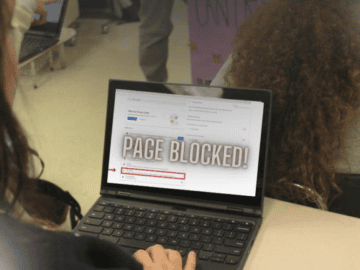
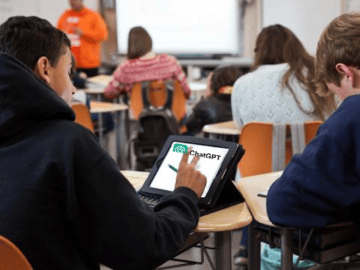
The OECD reports that 46% of students across OECD countries use AI chatbots weekly or more to help them learn. Its broader findings emphasize that AI can support learning when used appropriately, but should not replace the effort students need to make themselves.
The question for schools, then, is no longer simply whether students know how to use AI.
It is whether they know when not to let AI do the thinking for them.
Parriva has noted this same tension locally in LAUSD’s debate over student access to AI and preparation for an AI-driven job market.
California is not directly measured by PISA. The state has its own assessment system, the California Assessment of Student Performance and Progress, or CAASPP.
The latest California results provide some encouraging news.
In 2024–25, the percentage of California students meeting or exceeding standards increased to 48.8% in English language arts, 37.3% in mathematics and 32.7% in science. The California Department of Education also reported that Hispanic/Latino students made larger-than-average gains in all three subjects. (California Department of Education)
But improvement does not mean the gaps have disappeared.
Among Hispanic/Latino students, 38.8% met or exceeded the standard in English language arts, compared with 48.8% of all California students. In mathematics, the figures were 25.7% and 37.3%, respectively. In science, Hispanic/Latino students were at 21.8%, compared with 32.7% statewide.
California therefore presents a useful counterpoint to the national PISA story: students can be improving while significant gaps remain.
That distinction matters, particularly for families trying to understand what school progress actually means for their children.
Parriva recently reported on the broader issue in “California Promised Education Equity. Why Are Latino Students Still Falling Behind?”, which looked at persistent education gaps involving poverty, language support and unequal educational resources.
What parents should watch for
Test scores cannot tell parents everything about a child. But the skills behind them offer a useful checklist.
Parents can ask:
- Can my child explain what a story or article is actually saying?
- Can they tell the difference between evidence and an opinion?
- Can they check where information came from?
- Can they compare two sources that disagree?
- Can they solve a problem without immediately asking AI for the answer?
- Can they use AI to improve their work without allowing it to replace their thinking?
Those skills increasingly function as a form of protection.
What PISA cannot tell us
There is an important limitation to this story.
PISA 2025 does not provide Parriva with a reliable national Latino/Hispanic score that we can responsibly use to say how Latino students performed in the United States.
The OECD cautions that U.S. participation and questionnaire coverage did not meet several technical standards. More than 40% of responding U.S. students were not administered the student questionnaire, and the OECD says potential bias in the U.S. results cannot be ruled out.
For that reason, this story does not use PISA to make claims about Latino students nationally.
Instead, California’s independently reported CAASPP data provide the appropriate Latino-specific context.
That distinction is important. Good data journalism should not turn a useful dataset into a claim the data cannot support.
The most important finding in PISA 2025 may not be where American students rank.
It may be whether they are learning how to think clearly in a world where information and misinformation—is everywhere.
The future will demand students who can read carefully, understand numbers, evaluate evidence, solve unfamiliar problems and question an answer even when technology produces it instantly.
AI may make those skills easier to apply.
It may also make their absence harder to notice.
For families, schools and policymakers, that is the real warning in PISA 2025: the goal should not simply be students who can produce answers. It should be students who understand how to determine whether those answers are worth trusting.