New public charge rules expand the benefits immigration officers may consider when evaluating permanent residency applicants, as Los Angeles joins a federal legal challenge.
Applying for a Green Card in the United States now involves a broader examination of an immigrant’s financial circumstances, including whether they receive certain government benefits.
The Trump administration’s new public charge rule, which took effect September 18, 2026, gives immigration officers greater discretion to determine whether an applicant is likely to become dependent on government assistance.
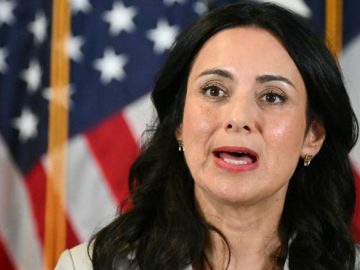
The changes have prompted legal challenges from state and local governments. On November 16, Los Angeles City Attorney Hydee Feldstein Soto announced that the city had joined a federal lawsuit seeking to overturn the rule. Los Angeles County has also joined the litigation.
For immigrants pursuing permanent residency, understanding which benefits may affect their applications, and which immigration categories are exempt, has become particularly important.
What has changed in Green Card requirements?
The Department of Homeland Security’s final rule eliminates regulations established in 2022 that restricted how immigration officers evaluated public charge inadmissibility.
Previously, the assessment generally focused on cash assistance for income maintenance and long-term institutional care funded by the government.
The expanded public charge framework allows immigration officers to consider additional income-based public benefits alongside five factors established by federal law:
- Age.
- Health.
- Family circumstances.
- Assets, resources and financial status.
- Education and skills.
Financial sponsorship through Form I-864 also remains relevant, although having a sponsor does not guarantee approval.
The Trump administration maintains that the changes better reflect congressional immigration policy promoting financial self-sufficiency.
Which public benefits could affect your Green Card application?
Under the updated USCIS guidance, immigration officers may consider a broader range of income-based government assistance, potentially including:
- Medicaid, known as Medi-Cal in California.
- SNAP food assistance, known as CalFresh.
- Housing assistance.
- Cash assistance.
- Income-based college financial aid.
The guidance does not provide an exhaustive list of every benefit that may be considered.
The new framework applies to covered adjustment-of-status applications postmarked or electronically submitted on or after September 18, 2026.
For applicants assessed under the new framework, benefits received before September 18 remain subject to the earlier, narrower benefit standard. Assistance that continues beyond that date may be evaluated differently.
Receiving public assistance does not automatically disqualify someone from permanent residency. Officers must consider the applicant’s overall circumstances.
In certain cases, otherwise eligible applicants may be invited by USCIS to provide a public charge bond, a financial guarantee intended to address potential dependence on government assistance. Applicants cannot submit such a bond without an invitation from the agency.
Who is affected by the new public charge rule?
The assessment generally applies to many immigrants seeking permanent residency through family or employment sponsorship, including spouses, children and parents of U.S. citizens.
However, several immigration categories are exempt, including qualifying refugees, asylees, victims of human trafficking, certain crime victims and applicants petitioning under the Violence Against Women Act.
Existing Green Card holders are generally not subject to a new public charge assessment simply because they receive assistance, although certain circumstances involving international travel may create exceptions.
Benefits received by relatives are not treated as benefits directly received by the applicant.
However, a November 5 analysis by KFF explains that household income and assets may still influence the assessment when those financial circumstances helped establish a family member’s eligibility for assistance.
California families could face consequences beyond immigration applications
Approximately 3.5 million Latino Medi-Cal enrollees in California live in households with at least one noncitizen, according to research from the UCLA Latino Policy and Politics Institute.
Researchers modeled potential benefit losses resulting from public charge concerns and other immigration-related fears.
Under their hypothetical scenarios, between 350,000 and 1.05 million Latino Medi-Cal enrollees could leave the program. Between 172,000 and 517,000 Latinos living in households receiving CalFresh could also be affected.
These estimates are not documented enrollment losses. They illustrate potential consequences if eligible families withdraw from assistance because of immigration-related concerns.
KFF researchers similarly warn that uncertainty surrounding the new rules could discourage families, including those with U.S.-citizen children, from accessing essential services.
What should immigrants know before changing their benefits?
The public charge framework does not independently eliminate eligibility for public assistance. Immigration admissibility and benefit eligibility are separate legal questions.
In its November 20 update, the Immigrant Legal Resource Center confirmed that the changes took effect September 18 and noted the ongoing legal challenges.
California and several local governments argue that the administration exceeded its statutory authority. Those allegations remain subject to judicial review.
The Los Angeles County Office of Immigrant Affairs and California Health and Human Services provide resources for immigrant families seeking information.
Before discontinuing healthcare, food or housing assistance, applicants should consult a qualified immigration attorney to establish whether they are subject to public charge and how the rules apply to their circumstances.
Understanding those distinctions can help families avoid unnecessarily sacrificing essential services while pursuing permanent residency.