Los Angeles has opened its first new subway stations in more than 25 years as drivers face gas prices above $6 a gallon. The Metro D Line extension could offer faster, cheaper travel for many working families, including Latino commuters.
Although public transportation ridership in Los Angeles has seen slight improvement, cultural barriers and safety myths have prevented the expected emergence.
However, in May 2026, gas prices in Los Angeles averaged over $6.10 per gallon, with reported peaks of up to $8.21 at some stations. For many workers, the cost of commuting is making car ownership financially unsustainable.
But perhaps what happened last Tuesday marks the beginning of a major shift. For decades, Angelenos accepted this time-consuming crawl as their reality. But last week, traversing this busy corridor reached another level, about 50 to 70 feet underground. How about Union Station to Beverly Hills in 21 minutes?
That is the travel time the Los Angeles Metro is highlighting as it unveils the city’s first new subway stations in more than a quarter century. The first section of the long-awaited D Line extension opened on Friday, a project that Metro officials, transportation experts, and transit advocates say marks a game changer for the car-dependent region.
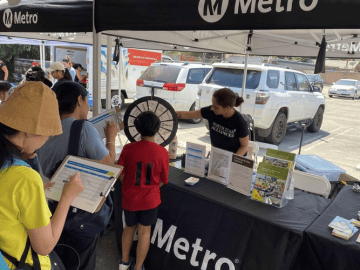
Friday’s grand opening was full of fanfare and energy. Like any major Los Angeles premiere, there were Hollywood celebrities, flashing news cameras, and a purple carpet. There was even a life-sized saber-toothed tiger puppet created by the Jim Henson Creature Shop, and the entire Metro system was free to ride through the weekend.
The four new miles of subway service arrive as the region prepares to host major global events, including World Cup matches this summer, followed by the Olympic and Paralympic Games in 2028. After decades of delays and years of negative headlines about falling ridership, rising crime, and service issues, some Angelenos are ready to celebrate positive transit news, wearing playful “Ride the D” T-shirts to show their excitement.
Tim Lindholm, chief program management officer for LA Metro, said breaking this east west divide marks a major milestone that residents may need to experience to fully believe.
For the average Angeleno, it has not yet fully registered that you could travel from Union Station to Beverly Hills in 21 minutes, or that when the third section is completed you could go from downtown to UCLA in 25 minutes, Lindholm said. That is a game changer.