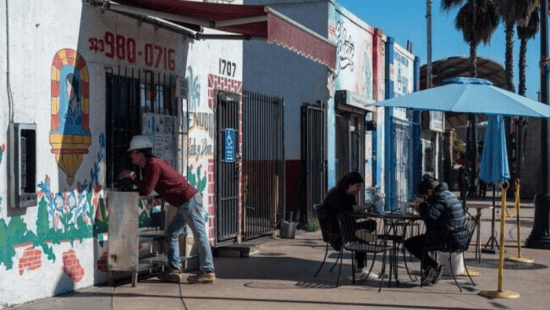
The trade agreement remains in place, but annual reviews could create new uncertainty for businesses that depend on imports, exports, manufacturing and supply chains tied to Mexico.
California’s trade relationship with Mexico isn’t changing overnight, but many small businesses could soon face a more unpredictable business environment.
On July 1, the United States declined to renew the United States-Mexico-Canada Agreement (USMCA) during its mandatory six-year review. The decision does not end the trade pact. Instead, it begins a period of annual reviews and negotiations that could continue until 2036 unless all three countries agree to extend the agreement sooner.
For California, where Mexico is the state’s largest trading partner, that uncertainty matters. It could influence everything from inventory costs and manufacturing to trucking, agriculture, construction materials and consumer prices.
For Latino-owned businesses, the impact may be even greater because many operate in industries closely tied to cross-border commerce and often have fewer financial resources to absorb sudden cost increases.
No state has more to lose from prolonged trade uncertainty than California.
Mexico remains California’s largest export market, and Southern California serves as one of North America’s busiest gateways for goods moving between the United States and Mexico.
Every day, products ranging from auto parts and electronics to produce and medical equipment move through California’s ports, warehouses, rail lines and trucking corridors before reaching businesses and consumers across the country.
Even companies that never export internationally may feel the effects if imported materials become more expensive or shipments become less predictable.
What Changed?
Under USMCA, the three countries were required to decide during the 2026 joint review whether to extend the agreement for another 16 years.
Instead, the United States announced it would not renew the agreement in its current form, arguing that changes are needed to reduce trade imbalances and strengthen North American manufacturing. Negotiations with Mexico and Canada will continue through annual reviews while the existing agreement remains in effect.
That means businesses can continue operating under current trade rules, but future changes have become harder to predict.
Latino entrepreneurs have become one of California’s fastest-growing economic forces.
According to research from the UCLA Latino Policy and Politics Institute, the Los Angeles County Economic Development Corporation, and the Stanford Latino Entrepreneurship Initiative:
- Los Angeles County is home to approximately 374,000 Latino-owned businesses, representing more than one-quarter of all businesses in the county.
- More than 34,000 are employer firms generating roughly $59 billion in annual revenue.
- Hispanic-owned employer businesses have expanded at a pace far exceeding the county average.
- Statewide, California has roughly 807,000 Latino self-employed entrepreneurs, reflecting one of the fastest-growing business communities in the country.
Many of these businesses operate in transportation, logistics, warehousing, manufacturing, construction, wholesale trade and food distribution, sectors that rely heavily on stable trade with Mexico.
The Bigger Risk Isn’t Today’s Tariffs. It’s Tomorrow’s Uncertainty.
Trade experts often note that businesses can adapt to higher costs if they know those costs will remain stable.
Uncertainty is more difficult.
Companies may postpone hiring, delay expansion, reduce inventory purchases or avoid signing long-term contracts until they know what future trade rules will look like.
That uncertainty can ripple through local economies long before any tariff actually changes.
Capital Challenges Make Small Businesses More Vulnerable
For many Latino-owned businesses, access to financing remains a persistent challenge.
Research from the Stanford Latino Entrepreneurship Initiative has found Latino entrepreneurs continue to face significantly lower approval rates for traditional bank loans than white-owned businesses.
That makes it harder to absorb unexpected increases in shipping costs, supplier delays or changes in import pricing.
Large corporations often have cash reserves and diversified suppliers.
Small businesses frequently do not.
Four Steps Business Owners Can Take Now
Business owners do not need to panic, but they should prepare.
Review your suppliers. Determine whether key products or materials depend on imports from Mexico.
Build flexibility into contracts. Long-term pricing agreements may need adjustment if trade rules change.
Monitor official updates. Follow announcements from the U.S. Trade Representative rather than relying on rumors or social media speculation.
Explore export assistance. Businesses involved in international trade can receive guidance through the U.S. Commercial Service and regional trade organizations.
Negotiators from the United States, Mexico and Canada are expected to continue discussions over possible changes to the agreement during annual reviews. Among the issues expected to receive the most attention are automotive rules of origin, manufacturing requirements and trade balances.
For California business owners, the agreement still provides tariff-free trade under current rules. The bigger question is whether years of negotiations will discourage investment or lead to new trade requirements that reshape one of the world’s largest economic partnerships.
For Parriva readers, the takeaway is simple: the trade agreement is not disappearing, but uncertainty itself can carry real costs for small businesses. Understanding those risks now can help entrepreneurs make smarter decisions before any policy changes take effect.