Waymo’s autonomous ride-hailing service has expanded steadily across Los Angeles, growing from an initial service area centered on the Westside into a network that now covers more than 120 square miles. The service operates in areas including Downtown Los Angeles, Santa Monica, Beverly Hills, West Hollywood, Echo Park, Silver Lake and parts of Inglewood.
The expansion has made driverless rides available to a growing number of Los Angeles residents.
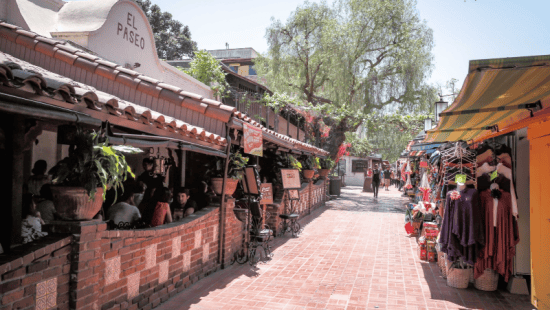
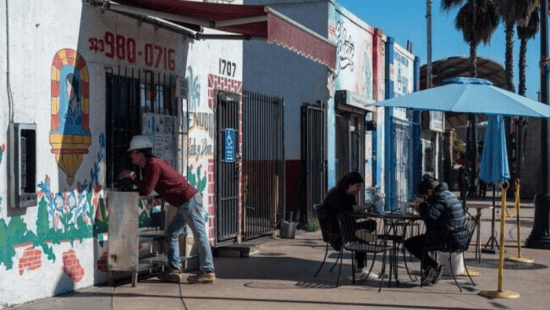
However, several communities east and southeast of Downtown Los Angeles—including East Los Angeles, Boyle Heights, Huntington Park, South Gate, Bell and Maywood—remain outside Waymo’s current operating area.
The difference in geographic coverage has prompted discussion among transportation researchers, community advocates and journalists about access to emerging mobility technologies and whether autonomous transportation services are reaching communities across Los Angeles at the same pace.
There is no publicly available evidence that Waymo selected or excluded neighborhoods based on race or ethnicity. The company has not stated that demographic characteristics influence decisions about where it launches service. Instead, Waymo has described expansion decisions as being based on factors including mapping, testing, safety validation, fleet operations and the ability to provide reliable service.
Transportation researchers distinguish between intentional discrimination and unequal outcomes.
A service can become available in some communities before others without evidence that those differences were created intentionally. Researchers have noted that new transportation technologies often launch first in areas with stronger commercial demand, higher expected usage, favorable operating conditions or existing infrastructure before expanding to additional neighborhoods.
These patterns have been observed with other forms of mobility technology, including ride-hailing services, shared transportation programs and electric vehicle charging networks. Researchers studying transportation equity have examined how market-driven deployment decisions can create differences in access, even when companies are not explicitly using demographic factors in their decisions.
Juan Matute, deputy director of the UCLA Institute of Transportation Studies, has written and spoken about transportation equity, mobility access and how transportation investments affect different communities. His research examines how transportation systems can produce unequal outcomes and why equity considerations are often discussed alongside efficiency, cost and operational requirements. He has not publicly argued that Waymo is excluding Latino communities from service.
Community organizations have raised broader concerns about transportation access in Los Angeles. LA Walks, a nonprofit focused on pedestrian safety and equitable transportation, advocates for improvements that benefit communities that have historically experienced transportation gaps. Its executive director, John Yi, has emphasized the importance of ensuring that transportation improvements reach communities with different mobility needs. LA Walks has worked with Waymo on pedestrian safety initiatives but has not publicly accused the company of excluding Latino neighborhoods.
Transportation journalists covering Waymo’s Los Angeles expansion have also noted the geographic pattern of the service area, including the fact that many predominantly Latino communities remain outside the current operating zone. Those reports have generally focused on documenting where Waymo operates and how the company expands rather than claiming that the service boundaries are based on race.
Waymo’s gradual expansion reflects the complexity of autonomous vehicle deployment. Unlike traditional ride-hailing services, robotaxi companies must complete extensive mapping, testing and software validation before operating in new areas. Each expansion requires additional operational planning and ongoing monitoring to ensure vehicles can safely navigate local streets, traffic conditions and changing environments.
As autonomous vehicles become more common in Los Angeles, the discussion is increasingly focused on how emerging transportation technologies should balance safety, commercial viability and equitable access. Whether future Waymo expansions reach neighborhoods such as East Los Angeles and Boyle Heights will likely remain part of the broader conversation about who benefits from the next generation of urban mobility.