For Los Angeles renters searching for a new place to live, Riverside is emerging as an unlikely standout.
New data from Zillow show that renters searching from Los Angeles generated 21.3% of all rental listing page views in Riverside, making the Los Angeles-to-Riverside flow the strongest cross-metro rental search in Zillow’s analysis. The figure measures online rental searches, not completed moves, but it offers a revealing glimpse into where Angelenos are considering living next.
The question is why Riverside.
Affordability is an obvious part of the answer. Zillow’s March 2026 rental data put the typical rent at $2,895 in Los Angeles compared with $2,493 in Riverside, a difference of about $400 a month.
But Riverside offers something beyond a lower price.
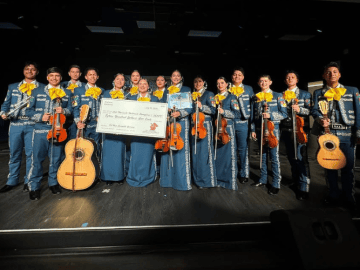
The city is majority Latino, and its Latino community is not a recent development. Riverside’s own historical account describes it as one of California’s oldest and most cohesive Latino communities, with roots stretching back more than a century through Mexican and Mexican American families, agricultural workers, entrepreneurs, community organizers and civil rights leaders.
That raises an intriguing possibility for the thousands of Angelenos searching Riverside’s rental listings: could cultural familiarity be part of the attraction?
There is a particularly strong reason to ask that question when looking at the housing pressures facing Latino renters in Los Angeles.
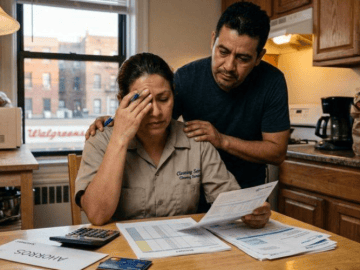
More than half of Latino renters in Los Angeles County, 55%, were housing cost-burdened in a UCLA analysis, meaning they spent at least 30% of their income on housing. Twenty-eight percent were severely cost-burdened, spending at least half their income on housing.
The pressure does not necessarily disappear when renters cross into the Inland Empire. UCLA found that 44% of Latino workers who rent in the Inland Empire are housing cost-burdened. But the region has also become an important center of Latino life and employment. Latino workers make up more than half of the Inland Empire’s labor force, according to the UCLA Latino Policy and Politics Institute.
That combination could make Riverside particularly interesting for some Angelenos.
A renter priced out of Los Angeles may not want to leave Southern California entirely. Riverside can offer a lower cost of housing while keeping a person within the same broad regional economy and, for Latino residents, within a community where Mexican American and Latino history, businesses and institutions have been established for generations.
But that is still a hypothesis, not something Zillow’s data prove.
The 21.3% figure does not tell us the race or ethnicity of the people looking at Riverside rentals. It also does not tell us whether those people ultimately moved. To establish a connection between Riverside’s Latino identity and the L.A. rental searches, we would need to know more about the people behind those searches.
That is where the story gets more interesting.
Are Latino Angelenos disproportionately searching Riverside? Are they looking for specific neighborhoods? Do they already have relatives or friends there? Are they attracted by the possibility of finding a larger home for less money while remaining close to an established Latino community? Or is the explanation much simpler, with Riverside attracting Angelenos of many backgrounds primarily because of housing costs?
There is another important wrinkle.
Latino renters in the Inland Empire are themselves under significant financial pressure. UCLA’s research found that Latino renters in the region have a higher housing cost burden than white renters, and Latino workers also experience overcrowding and other housing challenges.
So the story may not be about Riverside becoming an easy refuge from California’s housing crisis. It may instead be about where people go when Los Angeles becomes too expensive but leaving the region entirely is not an option.
Zillow’s data provide the clue. Riverside is where Los Angeles renters are looking.
The next question is who those renters are and what they are looking for.
Is Riverside’s Latino community helping make the city a destination for Latino Angelenos being priced out of Los Angeles?
That is the question worth answering.