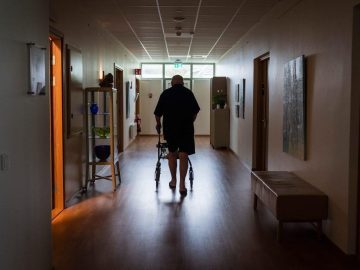
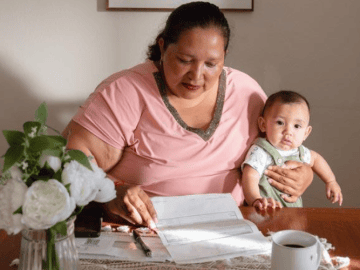
A new CDC report finds frequent fatigue among 1 in 8 Hispanic adults. For California’s Latino workforce, the bigger question is what work, sleep and economic pressure have to do with exhaustion.
Feeling tired after a long day is normal. But when exhaustion becomes a regular part of life, showing up most days or every day,it can affect far more than energy.
A new report from the Centers for Disease Control and Prevention’s National Center for Health Statistics offers one of the clearest national looks yet at how common that kind of fatigue is among U.S. adults.
And for Hispanic adults, the numbers raise an important question for California: What happens when being exhausted becomes part of everyday life for people who cannot afford to slow down?
How common is frequent fatigue among Hispanic adults?
According to the CDC’s 2024 National Health Interview Survey, 12.9% of Hispanic adults experienced frequent fatigue—meaning they reported feeling very tired or exhausted most days or every day during the previous three months.
That is lower than the national rate of 16.6%. White non-Hispanic adults had a rate of 18.0%, Black non-Hispanic adults 17.3%, and Asian non-Hispanic adults 9.1%.
But looking only at frequent fatigue misses another important part of the picture.
Among Hispanic adults, 50.9% said they experienced fatigue some days during the previous three months. Another 12.9% reported it most or every day.
In other words, while the CDC data do not show that Hispanic adults have the highest rate of persistent fatigue, they do show that tiredness is common.
And for people balancing work, transportation, caregiving, housing costs and other demands, the difference between occasionally feeling tired and regularly feeling exhausted can matter.
The CDC makes an important distinction: fatigue is physical or mental tiredness or exhaustion that does not improve with additional sleep or rest. It is different from sleepiness—the feeling of being drowsy or having difficulty staying awake.
That distinction matters because someone can technically get enough hours of sleep and still experience significant fatigue.
The new report found that frequent fatigue was closely associated with difficulties in other areas of daily functioning.
Among adults experiencing frequent fatigue, 69.6% reported anxiety symptoms, 46.1% reported difficulty with cognition, and 45.0% reported symptoms of depression. About half—50.9%—reported difficulties in at least three functioning domains.
The connection to mental health is particularly important for Latino communities, where access to treatment can be another barrier.
Parriva recently reported on the mental-health treatment gap among Latinos, including the barriers that can keep people from receiving appropriate care.
But the CDC data come with an important warning: they do not prove that fatigue causes anxiety, depression or cognitive difficulties—or that those conditions cause fatigue.
The survey is cross-sectional, meaning researchers can identify associations but cannot establish which problem came first or what caused the other. The CDC says the relationship could involve fatigue affecting functioning, an underlying condition producing both, or a combination of factors.
Why work may be an important part of the conversation
Among adults with frequent fatigue, 36.0% reported limitations in the kind or amount of work they could do, compared with 15.3% of adults without frequent fatigue.
That does not mean fatigue caused those work limitations. But it does show that persistent exhaustion and the ability to function at work are closely connected.
That question has particular relevance in California.
According to the UCLA Latino Policy & Politics Institute’s 2026 State of Latinos in California report, Latinos make up roughly 39% of California’s workforce—about 7.8 million workers.
Latino workers are also disproportionately represented in several physically demanding and lower-wage industries, including construction, agriculture, hospitality and retail.
That does not establish that those jobs cause fatigue. But it gives California reporters an important place to look when asking why exhaustion may persist for some workers.
California already has warning signs
One example comes from research on California farmworkers.
A 2022 study of 587 farmworkers in California’s Central Valley and Imperial Valley found that 78% reported fatigue at work.
That study involved a specific group of workers and cannot be used to estimate fatigue among all California Latinos. But it provides a useful example of how occupational conditions can intersect with fatigue and deserves consideration alongside the new national CDC findings.
The broader question is what happens when demanding work, long or irregular schedules, economic pressure and limited opportunities for rest overlap.
Those factors can also intersect with California’s environment.
Heat, for example, is already a significant occupational concern in California. Extreme heat can increase physical strain and contribute to fatigue, particularly for people working outdoors or in hot environments.
Parriva’s reporting on LA County’s hidden heat crisis provides another piece of that larger health-and-work picture.
Sleep is another obvious part of the fatigue conversation.
But the CDC’s definition is useful here precisely because fatigue and sleepiness are not the same thing.
A person can sleep poorly and be tired. A person can also experience fatigue that is related to an underlying health condition, mental-health issue, medication, work demands or other circumstances.
That is one reason sleep-related health problems deserve attention without being presented as the single explanation.
Parriva has also reported on why sleep apnea in women is often missed and why it matters for Latinas, another example of how sleep and health conditions can intersect with daytime functioning.
The CDC report itself does not attempt to determine what causes people’s fatigue. Its purpose is to establish how common the symptom is and how frequently it appears alongside difficulties with functioning.
The income connection is worth watching
Across the entire U.S. adult population, frequent fatigue became less common as family income increased. The rate was 21.7% among adults below 100% of the federal poverty level, compared with 13.6% among those at 400% of the poverty level or higher.
Again, this does not prove that lower income causes fatigue.
But it reinforces an important reporting question: How much of persistent exhaustion is connected to the conditions in which people live and work?
For California, that could mean looking more closely at wages, commuting, housing costs, work schedules, caregiving, health coverage, occupational conditions and access to preventive care.
Those questions cannot be answered by the CDC report alone.
What the CDC data tell us and what they don’t
The new data give us a national baseline.
They tell us that 12.9% of Hispanic adults experienced frequent fatigue in 2024, while another 50.9% experienced it some days.
They show that persistent fatigue is associated with difficulties involving cognition, anxiety, depression, work and other areas of daily functioning.
But they do not tell us how many California Latino adults experience frequent fatigue.
They do not tell us whether immigration status, occupation, wages, housing costs, caregiving, commuting or access to healthcare explains the difference between people who experience fatigue occasionally and those who experience it persistently.
And they do not establish cause and effect.
Those are questions that require more California-specific research.
For a state where Latinos represent such a large share of the workforce and population, that research could be especially valuable.
Because being tired after a long day is normal.
Being too exhausted to function should not simply be accepted as the price of getting by.