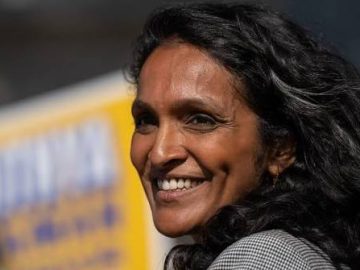
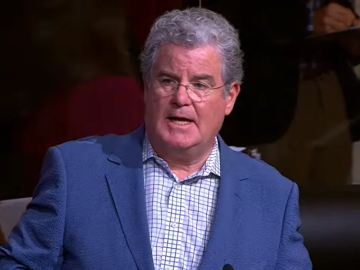
Jose Ugarte’s razor-thin lead marks a historic political transition in South Los Angeles, ending more than six decades of Black council representation if the result stands.
Sixty-six votes separated Jose Ugarte from Estuardo Mazariegos in a South Los Angeles election that marks a significant change in the city’s political representation.
Ugarte declared victory Friday, November 27, after Los Angeles County released its latest election results: 19,591 votes, or 50.08%, for Ugarte, and 19,525 votes, or 49.92%, for Mazariegos.
The result positions Ugarte, an immigrant from Oaxaca, Mexico, to succeed outgoing Councilmember Curren Price and become the first Latino to represent District 9 in more than six decades.
But the possibility of a recount remains.
From Oaxaca and Guatemala to South Los Angeles
Jose Ugarte was four years old when his family immigrated to California. His mother became an immigrant-rights activist, while his father supported the family working in construction.
In an August interview with Parriva, Ugarte recalled attending a demonstration against Proposition 187 as a child and growing up among Black families in South Los Angeles.
His entry into politics came through an opportunity with the African American Caucus. He later worked alongside Councilmember Curren Price, eventually becoming deputy chief of staff.
Ugarte, who described himself as formerly undocumented in his campaign biography, also has Indigenous Mazatec roots.
Mazariegos’s journey began in La Limonada, Guatemala. He was three when his family traveled through Mexico to the United States during Guatemala’s civil war.
In a separate interview with Parriva, Mazariegos described how his family’s experience shaped his commitment to social justice. He has spent approximately two decades organizing communities, advocating for tenant protections and economic opportunity.
Both candidates arrived in the United States as young children. Their experiences led them toward different paths of public service, one working within government and the other organizing communities to demand change.
A historic political transition in South LA
Edward Roybal represented District 9 from 1949 to 1962 before entering Congress. Los Angeles City Planning historical research documents his cooperation with the NAACP to integrate the Los Angeles Fire Department.
Gilbert Lindsay became the city’s first Black councilmember in 1963, beginning more than six decades of Black council representation in District 9.
During that period, the district underwent substantial demographic changes.
The city’s 2025 Park Needs Assessment identifies approximately 83% of District 9 residents as Latino and 10% as Black.
Those figures describe residents, not the electorate. California’s Latino electoral representation gap illustrates why population size does not necessarily translate into proportional political participation.
The district’s political transition also brings a responsibility to ensure that its Black communities, which have helped shape South Los Angeles for generations, continue to have a meaningful voice at City Hall.
Nearly twice as many votes as in June
According to the official June primary results, 20,417 votes were cast among six District 9 council candidates. In November, the two finalists received a combined 39,116 votes, an increase of approximately 92%.
The election records do not establish which demographic groups drove that increase or why residents participated.
Nevertheless, the additional 18,699 votes reflect a substantial increase in participation in the council contest.
Could a recount change the election result?
California does not have an automatic recount threshold. According to the California Secretary of State, a registered California voter may request a recount regardless of how narrow the margin is.
The county’s official recount schedule identifies November 28 through December 2 as the anticipated request period, based on certification occurring November 27.
In a November 27 statement reported by MyNewsLA, Mazariegos stressed the importance of protecting constituents’ votes.
As of November 28, Parriva has not independently confirmed a recount filing or recovered the signed election certification.
What residents can expect and how to follow City Hall
During the campaign, Ugarte identified affordable housing, improved public transportation, cleaner neighborhoods and greater access to parks as priorities.
His proposals for District 9 also emphasized local hiring and ensuring that major investments benefit South Los Angeles residents.
The city’s parks assessment places District 9’s median household income at $53,472, compared with $81,173 citywide. It also documents concerns about aging recreational facilities, inadequate shade, maintenance and safety.
These findings provide starting points for evaluating the next councilmember’s work.
Residents can report neighborhood problems by calling 311 or accessing the city’s municipal service request information. They can also follow council motions, spending proposals and votes through the Legislative Management System.
For South Los Angeles, this election represents a historic change in political representation. For the families who live there, its longer-term significance will be measured in affordable homes, safer public spaces and city services that reach every community.