Two proposals affecting mayoral authority were sent back to committee after public criticism, exposing differences between the city’s published agenda and what Council leadership said it intended to accomplish.
The Los Angeles City Council sent two proposals affecting mayoral authority back to committee Friday after a public dispute among elected officials over their timing, purpose and potential consequences for the incoming administration.
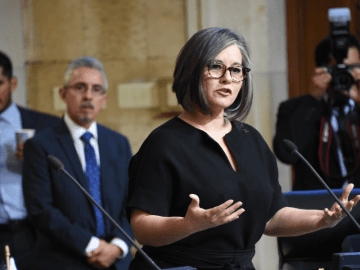
Before requesting the referral, Councilmember Tim McOsker spent several minutes explaining how Charter reform works, why city staff needed authorization to analyze the proposals and why the Council could not change the Charter that day.
His explanation followed criticism from City Controller Kenneth Mejia, who questioned why the proposals had been scheduled just weeks before Mayor-elect Nithya Raman takes office.
But the November 20 meeting also exposed a communication gap: the city’s published agenda described a different immediate action from the one McOsker said he intended.
What the Council was supposed to decide
One of the proposals, introduced in May by Councilmember Monica Rodriguez and seconded by McOsker, would allow 10 of the 15 Councilmembers to change or overturn executive directives issued by the mayor.
The other, introduced by Councilmember Ysabel Jurado and seconded by Bob Blumenfield, would allow a two-thirds Council majority to remove department heads or general managers.
Both proposals predated Raman’s election.
However, the November 20 Council agenda still requested the preparation of Charter amendment documents for the November 2026 ballot, an election that had already taken place.
McOsker, who chairs the Ad Hoc Committee on Charter Review, explained during Friday’s meeting that he wanted Council authorization for staff to analyze the proposals ahead of the committee’s November 30 discussion.
He acknowledged that insufficient information can contribute to misinformation and explained that the broader reform effort was looking toward 2028.
Neither proposal advanced toward ballot drafting Friday, and no new restrictions on mayoral authority took effect. Changes to the Charter would ultimately require voter approval.
City officials disagree publicly
Before the meeting, Mejia accused the Council on social media of attempting to weaken the incoming mayor’s authority. Although he acknowledged that voters would have the final say, he questioned why the proposals needed to come before the Council Friday.
Council President Marqueece Harris-Dawson acknowledged that legislative language could be confusing to the public but rejected accusations that the proposals had been introduced to target Raman.
In interviews and statements reported by the Los Angeles Times, Rodriguez cited overlapping executive directives, while Jurado pointed to concerns about police leadership accountability.
Raman’s spokesperson said the mayor-elect was concerned that reducing executive authority could affect government efficiency and accountability, but denied coordination with Mejia over his Instagram criticism.
McOsker linked the controversy to his decision to request that both proposals return to committee.
He said the committee would now have to discuss those subjects on November 30 without the staff analysis he had hoped to receive.
Questions about the process remain unanswered
Under Council Rule 17, a committee chair can waive consideration of a pending matter with the Council president’s approval, allowing it to reach the full Council agenda.
Friday’s agenda identified both proposals as having received a committee waiver.
The publicly available records reviewed by Parriva did not identify who initiated the November 20 scheduling request or explain why the published recommendations retained the expired election date rather than describing the preliminary analysis McOsker said he wanted.
Parriva contacted McOsker’s office seeking clarification about the scheduling decision, agenda language and intended staff analysis. The office had not responded as of November 23.
The Council had already approved the Charter review committee’s broader work plan on November 17.
McOsker explained Friday that additional authorization was needed for staff to work on individual proposals. How that authorization was intended to correspond with the published recommendations remains unclear.
Why clear government communication matters
A 2024 study by the Organisation for Economic Co-operation and Development found that only 39% of respondents across surveyed countries considered government communication about policy reforms adequate.
The researchers identified accessible evidence, clearer explanations of decisions and meaningful public participation as opportunities to strengthen institutional trust.
While the research does not measure the effects of Friday’s controversy on Los Angeles residents, it illustrates why communicating government decisions clearly matters.
For Angelenos, understanding whether officials are studying a proposal, preparing a ballot measure or making a final decision can determine when and how they participate.
The dispute also highlights differences over executive authority before Raman takes office. The mayor and Council exercise separate powers, but cooperation between them is necessary to establish budgets, implement policies and deliver many city services.
McOsker said the Charter review committee will meet November 30 to discuss how governing authority is distributed across Los Angeles.
Residents can follow the proposals and submit comments through Council File 26-0675 and Council File 26-0703. The city’s Charter review file contains additional documents about the broader reform process.