The Justice Department says the largest immigration judge class in U.S. history will reduce court backlogs, but advocates warn the accelerated system could leave many immigrants with less time to fight their cases.
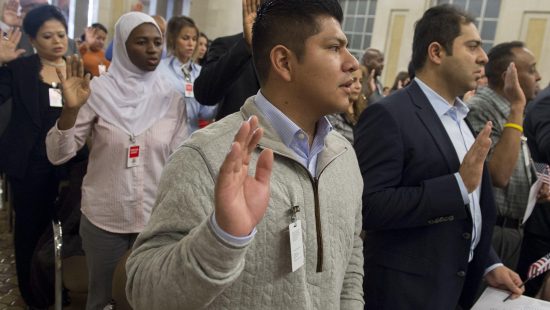
The U.S. Department of Justice has sworn in 82 new immigration judges in what officials describe as the largest single onboarding class in the history of the nation’s immigration court system. The move is expected to dramatically speed up deportation proceedings, reduce years-long court delays, and reshape how immigration cases are handled across the country, including in California and Los Angeles.
The new group includes 77 permanent immigration judges and five temporary judges assigned through the Executive Office for Immigration Review, commonly known as EOIR. According to the DOJ, the new hires bring the total immigration judge corps to nearly 700 nationwide. Many come from law enforcement, military, prosecutorial, and immigration enforcement backgrounds.
The administration says the expansion is necessary to reduce a massive immigration court backlog that at one point exceeded 4 million pending cases. Federal officials now report that the backlog has fallen below 3.53 million cases as the court system pushes aggressively to move cases faster.
The announcement comes as immigration enforcement becomes one of the defining political and legal battles of 2026, especially in California, which has one of the country’s largest immigrant populations and some of the busiest immigration courts in the United States.
According to the DOJ announcement, the judges were sworn in during a ceremony in Washington, D.C.
California is home to millions of immigrants, including large mixed-status households where some family members are citizens and others are undocumented or waiting on asylum and residency cases. Los Angeles immigration courts already handle some of the nation’s heaviest caseloads.
For years, immigration cases often stretched across four or more years because of limited staffing and overwhelming demand. That long timeline sometimes gave immigrants additional opportunities to secure legal representation, gather evidence, apply for humanitarian protections, or wait for policy changes that could affect their status.
Now, attorneys and immigrant advocates say the pace is changing quickly.
Groups including the American Immigration Lawyers Association warn that tighter scheduling rules and pressure to close cases rapidly may make it harder for immigrants to successfully apply for asylum or other forms of relief.
The administration has also sharply limited procedural tools that judges historically used to pause or delay cases, including administrative closures and continuances. Immigration lawyers say those changes reduce flexibility for families trying to prepare complex cases involving trauma, persecution claims, or missing documentation.
Immigration judges play a central role in the deportation system because the federal government generally cannot remove someone from the United States without a formal court order.
That means expanding the judge corps effectively increases the system’s capacity to authorize deportations.
Recent data cited by the Vera Institute of Justice found that newly hired immigration judges have issued removal outcomes at significantly higher rates than more experienced judges in detained immigrant cases.
According to the data, more than 93% of detained cases handled by newer judges resulted in immigrants being ordered to leave the country, either through formal deportation orders or “voluntary departure” agreements that require individuals to leave on their own.
Critics argue the rapid pace of proceedings can disadvantage immigrants who do not yet have lawyers. Nationally, immigration court is a civil system, meaning the government does not automatically provide public defenders for people facing deportation.
That issue is particularly important in California, where legal aid groups already struggle with overwhelming demand for low-cost immigration representation.
The hiring push is happening alongside a major restructuring of the immigration court system.
Since January 2025, more than 100 immigration judges have reportedly left or been dismissed as the administration refocused the courts on enforcement priorities. Many of the new hires previously worked as prosecutors, ICE trial attorneys, military lawyers, or law enforcement officials.
Supporters of the changes say the immigration system needs faster decisions and stronger enforcement credibility after years of mounting delays at the border and in the courts.
Critics counter that immigration judges are supposed to function as neutral adjudicators, not extensions of enforcement agencies.
That debate is likely to intensify as the courts handle politically sensitive cases involving asylum seekers, long-term undocumented residents, and mixed-status families living in California communities.
The new judges are expected to begin handling cases immediately, with many assigned to detained dockets that move faster than standard immigration court proceedings.
Immigration attorneys expect shorter timelines between hearings and final decisions. That means immigrants with pending cases may need to secure legal help and organize documentation much faster than in previous years.
For Los Angeles-area families, advocates say the coming months could bring noticeable changes in court scheduling, hearing frequency, and deportation outcomes.
The broader question is whether the administration’s push for speed will successfully reduce the backlog without sacrificing fairness inside one of the most overburdened legal systems in the country.
The DOJ’s official announcement about the new immigration judges is available through the U.S. Department of Justice.