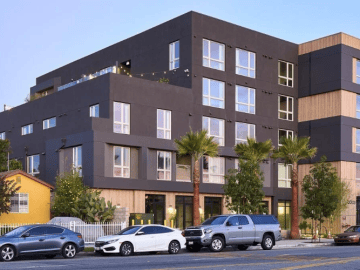
For many Latino families, owning a home has represented stability and generational wealth. But rising prices, high mortgage rates, and limited affordable housing are changing what the American dream looks like for a new generation.
For generations, buying a home has represented more than owning property. It has meant stability, a place to raise children, financial security, and a chance to build something that can be passed on.
But for many younger Latino Californians, that path is becoming harder to reach.
Across California, especially in expensive markets like Los Angeles County, families are facing a difficult reality: even households with steady jobs are finding that saving enough for a down payment, qualifying for a mortgage, and keeping up with monthly payments can feel impossible.
The challenge is not that Latino families stopped wanting to own homes.
The challenge is that the cost of entering the housing market has moved far beyond what many working families can afford.
A new generation is asking a question that has become increasingly common:
“Can I still buy a home in the place where my family built its life?”
According to the Harvard Joint Center for Housing Studies’ “The State of the Nation’s Housing 2026,” the cost of buying a typical home has reached levels that require much higher incomes than many families earn.
Harvard found that the monthly payment on a median-priced home reached roughly $3,100 per month by late 2025, compared with about $1,700 in early 2020.
Under Harvard’s estimates, a household would need more than $120,000 in annual income to comfortably afford that payment.
For many California workers, that is a major problem.
A family can have:
- Two working adults
- Stable employment
- Good credit
- A desire to buy
and still struggle to compete in today’s market.
The problem is not only the price of the home.
It is the difference between what homes cost and what families earn.
The housing crisis affects many Americans, but Latino families often face additional challenges.
Many Latino households are first-generation homebuyers.
That means they may not have:
- Parents who own a home
- Family savings for a down payment
- Inherited wealth
- Financial guidance passed down through generations
For families whose parents rented throughout their lives, buying a home often starts with building wealth from zero.
That creates a major disadvantage in markets where buyers compete against households that already have equity.
A homeowner who bought years ago may use rising home values to help their children.
A renter often cannot.
That difference can shape an entire generation.
California’s strongest job markets are also some of the most expensive housing markets.
In Los Angeles County, many Latino workers are employed in industries that keep the region running:
- Construction
- Healthcare support
- Hospitality
- Food service
- Transportation
- Caregiving
But many of those workers face a difficult choice:
Pay more to live closer to work, or move farther away and spend more time commuting.
For some families, housing decisions affect everything else:
- Which schools children attend
- How much time parents spend with their children
- Whether relatives can stay nearby
- Whether families can save for emergencies
Housing is not just where people sleep.
It shapes daily life.
Renting is not a failure.
Many families rent because it is the only realistic option.
But the long-term challenge is that rent payments do not build ownership.
Homeownership remains one of the strongest ways American families build wealth over time.
For Latino families hoping to create financial security for their children, delayed homeownership can mean delayed wealth creation.
A young adult who cannot buy at 30 may still be renting at 40.
That changes the timeline for building equity and passing assets to the next generation.
The housing crisis is changing family decisions
When homes become unaffordable, families adapt.
Some choices include:
- Living with parents longer
- Sharing housing with relatives
- Moving farther from jobs
- Delaying marriage or having children
- Taking additional work
- Reducing savings or healthcare spending
These are not simply financial decisions.
They are life decisions shaped by housing costs.
What Harvard’s report does not fully answer
The Harvard report provides an important national picture, but more Latino-specific data is needed.
Important questions remain:
- How many Latino families are delaying buying homes?
- Which California communities are losing Latino homeowners?
- How many renters could afford monthly payments but cannot save a down payment?
- Are affordable housing programs reaching Latino communities?
- How are mixed-status families navigating housing opportunities?
Understanding these questions matters because housing policy affects the future of entire communities.
What could change the path forward?
Experts often point to several possible solutions:
- Building more affordable housing
- Expanding first-time buyer assistance
- Increasing access to down payment programs
- Creating more opportunities for affordable ownership
- Addressing wage growth alongside housing costs
California has launched multiple housing initiatives, including programs through the California Department of Housing and Community Development aimed at increasing housing supply and affordability.
The challenge is scale.
The need remains much larger than available resources.
For younger Latino Californians, the question is not whether homeownership still matters.
It does.
The question is whether the path to owning a home will remain available to the next generation.
California’s housing crisis is becoming a defining economic issue because it determines who can build stability, who can stay near opportunity, and who can create wealth for the future.
For many Latino families, the dream of owning a home is still alive.
But the road to get there has become much harder.