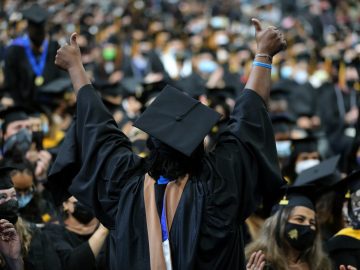
From Arizona to California, graduation ceremonies are becoming emotional flashpoints as students confront layoffs, automation, student debt, and fears about an AI-driven future.
The Class of 2026 is turning college graduation ceremonies into something few universities expected: public protests against artificial intelligence.
Across the United States, commencement speeches praising AI are being drowned out by boos, whistles, and jeers from newly graduated students entering one of the toughest entry-level job markets in years.
The backlash has erupted at universities from Arizona to Florida and reflects a growing generational divide between tech executives celebrating AI’s future and graduates increasingly worried that the same technology is eliminating the careers they trained for.
For students in California and Los Angeles, where housing costs, student debt, and job competition are already crushing pressures, the anxiety feels especially personal.
Many graduates say AI no longer represents innovation or opportunity. It represents layoffs, automation, and a shrinking path into the middle class.
At the University of Arizona, former Google CEO Eric Schmidt was loudly booed after telling graduates that AI “will touch every profession.”
Students later described the speech online as “tone deaf” and compared it to “the world’s longest Gemini commercial.”
At the University of Central Florida, real estate executive Gloria Caulfield barely finished the phrase “AI is the next industrial revolution” before arts and humanities graduates interrupted with boos.
At Middle Tennessee State University, music executive Scott Borchetta faced immediate backlash after discussing AI-generated music production and telling students to “make it work for you.”
The frustration became even more visible at Glendale Community College when an AI-powered system used to announce graduates’ names malfunctioned repeatedly, mispronouncing names, skipping students, and disrupting the ceremony badly enough that the school later apologized and planned a re-walk event.
The viral clips spreading across TikTok, Instagram, and X reveal a consistent pattern: mention AI at a graduation ceremony, and many students immediately turn hostile.
Why graduates are so angry
Behind the viral moments is a much deeper economic fear.
For decades, entry-level jobs gave young workers a way into industries like marketing, entertainment, journalism, software development, customer support, and design.
Now many recent graduates believe those pathways are disappearing before they even begin.
An Ohio State University study found Gen Z employment in AI-exposed fields has fallen sharply since generative AI tools exploded into mainstream use in late 2022.
Companies increasingly use AI systems to handle tasks once assigned to interns, assistants, junior analysts, and entry-level employees.
That fear feels particularly intense in California, home to both Silicon Valley’s AI boom and some of the nation’s most expensive cities for young adults trying to start careers.
In Los Angeles, many graduates entering creative industries including music, film, media, and design see AI as a direct threat to already unstable career paths.
Students also say universities helped fuel the backlash themselves.
For years, colleges warned students against using AI in assignments and threatened disciplinary action for AI-assisted work.
Now many of those same schools are partnering with tech firms and encouraging students to “collaborate with AI” in the workplace.
To many graduates, the message feels hypocritical.
They spent years paying tuition and taking on debt to learn skills that corporations increasingly claim can be automated.
According to recent Gallup polling, as many as 42% of bachelor’s degree students have reconsidered or changed majors because of concerns over AI disrupting their future careers.
Only a small share of Gen Z respondents described AI as clearly positive for society.
Job market fears are making the backlash worse
The labor market is amplifying the frustration.
Gen Z unemployment remains significantly higher than the national average, while many recent graduates report sending hundreds of applications without hearing back.
Some say their resumes are filtered out by AI applicant tracking systems before a human ever reviews them.
Others are being interviewed by AI-powered recruiting bots and avatars instead of actual managers.
At the same time, major corporations continue announcing layoffs tied to automation and AI restructuring.
Standard Chartered recently announced plans to cut more than 7,000 jobs while increasing AI integration. Meta continues workforce reductions tied to efficiency goals, while Amazon has eliminated tens of thousands of corporate jobs in recent restructuring waves.
Graduates hearing executives praise “the exciting future of AI” are also reading headlines about companies replacing human labor.
That contradiction is fueling resentment.
The rare speakers who won the crowd
Not every commencement speaker faced backlash.
At Grand Valley State University, Steve Wozniak received applause after joking that graduates possessed “actual intelligence,” not artificial intelligence.
Similarly, Ed Bastian, CEO of Delta Air Lines, connected with graduates at Emory University after admitting he rejected an AI-written commencement speech because it lacked “soul and warmth.”
Those moments stood out because they acknowledged something many graduates fear is disappearing: human value.
Why this matters beyond graduation season
The graduation backlash may become one of the clearest cultural warning signs yet about how younger Americans view AI.
Tech companies continue racing to automate industries and expand generative AI into schools, workplaces, entertainment, and daily life.
But the students entering adulthood right now are increasingly questioning who benefits from that future.
For many graduates, especially those facing debt, housing pressure, and unstable work in California, AI does not feel like liberation.
It feels like competition.
And increasingly, they are no longer staying quiet about it.