A union-backed proposal would require clinics to spend more on patient care and cap executive pay. Opponents warn it could hurt already strained neighborhood health centers.
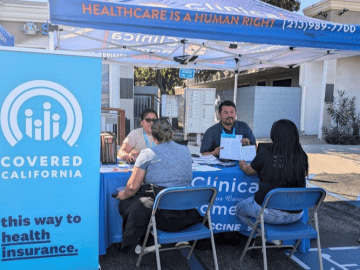
LOS ANGELES — A growing political fight in California could directly affect the neighborhood clinics millions of Latino families rely on for doctor visits, dental care, mental health services, and Medi-Cal access.
Service Employees International Union-United Healthcare Workers West (SEIU-UHW) is backing proposed ballot measures for November 2026 that would force certain nonprofit health clinics to meet strict spending rules and place limits on executive compensation.
Supporters call it overdue accountability. Opponents call it a risky new layer of regulation that could weaken clinics already operating under tight margins.
The stakes are especially high for Latino communities because these clinics serve a disproportionately large share of Hispanic patients across California (56% according to the CHCF).
The unions proposal would require many federally qualified health centers and nonprofit clinics to spend at least 90% of revenue on direct patient care and mission-related services.
Another related proposal would cap executive compensation at $450,000 annually for certain healthcare leaders.
The union argues too much money is going toward administration while patients face:
- long waits
- staffing shortages
- outdated equipment
- underpaid frontline workers
Their message is simple: more dollars should reach patients and staff.
Clinic leaders are pushing back. They say the proposals misunderstand how community healthcare actually works.
Running a clinic requires more than doctors and nurses. It also requires:
- billing departments
- IT systems
- cybersecurity
- payroll
- compliance staff
- grant management
- recruiting
- legal oversight
- scheduling systems
Many community clinics say these “administrative” functions are what keep doors open.
Opponents also argue executive leadership matters because clinics compete for talent in a difficult environment with lower salaries than private healthcare systems.
There is already heavy oversight
One of the biggest criticisms of the measure is that these clinics are already among the most regulated nonprofits in America.
Federally Qualified Health Centers (FQHCs) must comply with federal rules that include:
Patient-led boards
By law, at least 51% of board members must be patients of the clinic. That means actual community users have voting power over budgets and leadership.
Federal audits and reporting
Clinics receiving federal funds face regular audits, compliance reviews, and detailed annual reporting.
Public nonprofit disclosures
As nonprofits, many must publicly disclose executive pay and finances through IRS filings.
That means critics ask: if multiple accountability systems already exist, is another state mandate necessary?
Is this a power grab?
That depends on perspective.
The union’s argument
SEIU-UHW says current oversight does not create hard limits. A board can approve high salaries or rising overhead even if patients still face poor access.
They believe stronger legal mandates would shift power toward workers and patients.
The clinics’ argument
Clinics say the measure gives outside political actors more control over nonprofit operations and could reduce local flexibility.
They argue one-size-fits-all spending mandates may punish smaller clinics, rural clinics, and safety-net providers serving the hardest patients.
This debate matters to Latinos because Latinos make up a large share of patients using California community clinics, especially for:
- primary care
- pediatric visits
- prenatal care
- vaccinations
- dental services
- mental health support
- Medi-Cal enrollment help
Many immigrant, mixed-status, low-income, and uninsured families rely on these clinics because they are culturally trusted and geographically close.
If clinics lose staff or close sites, Latino neighborhoods could feel the impact first.
If the union is right and more funds reach patient care, families could benefit through shorter waits and better services.
The real issue beneath the fight
This may be less about greed versus reform and more about a deeper problem:
California expects clinics to do more every year while paying them under constant financial pressure.
Community clinics are asked to solve:
- healthcare access gaps
- language barriers
- behavioral health shortages
- undocumented care needs
- rising chronic disease rates
- workforce shortages
That creates conflict over every dollar.
The measures still face legal and political challenges before the November 2026 ballot.
Expect aggressive campaigns from unions, clinic associations, healthcare groups, and community organizations.
Voters may eventually decide who should control scarce healthcare dollars: regulators, boards, workers, or clinic leadership.
Latino families should watch this fight closely.
These clinics are not side institutions. They are often the front door to healthcare in many neighborhoods.
Any policy that changes how they hire, spend, or survive could reshape access for years.