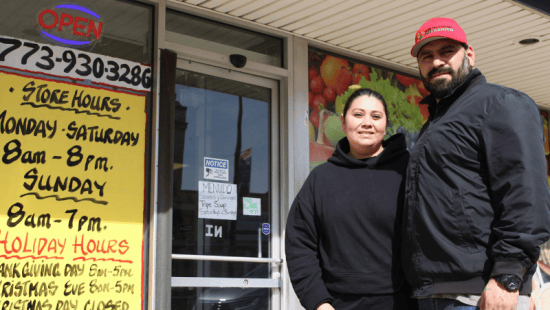
The owner of Chapos Tacos says fear of immigration enforcement has reduced customer traffic and made running a small business more difficult, reflecting a broader economic trend documented across Latino neighborhoods.
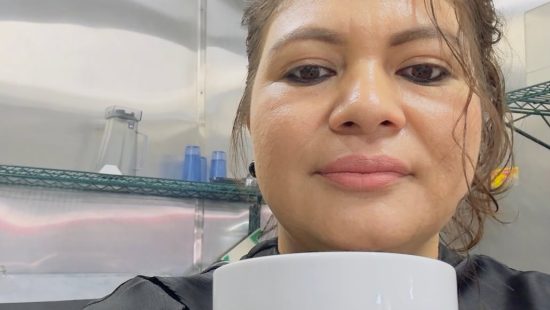
Rosa López Lorenzo has one thing clear: opening doors, keeping a business running, and fighting for it is part of her struggle. Giving up — the word “defeated” — simply isn’t in her vocabulary.
“I fight for it and I find a way, you have to be persistent and patient, things are hard right now, the economy is bad, the immigration raids have hurt businesses, people avoid going out on the street, that’s hurt us — but that’s no reason to give up, you have to keep pushing forward one way or another,” says Rosa, originally from the state of Puebla, Mexico, and owner of Chapos Tacos, located in South Los Angeles.
Since the start of the Trump era, immigrant communities in Los Angeles have lived under a growing sense of uncertainty amid the rise in immigration operations and raids. In areas like South Los Angeles, Watts, Huntington Park, and other neighborhoods with a strong Latino presence, residents and community organizations have reported changes in daily life: families avoiding leaving home, workers afraid to go to their jobs, and people cutting back on visits to schools, health centers, and public spaces out of fear of encountering immigration agents.
“I migrated four years ago — my brother was already here but he was struggling. I had my own businesses in Puebla, some eateries with contracts with the municipal government; things were going well, but I had to support him. He already had some taco stands, but a bad divorce left him without a business, so when I arrived we had to start from zero,” says the Mexican migrant.
Rosa has a resilience that seems to seep out of her pores — a classic “luchona,” a fighting Latina woman, eyes wide open in search of getting ahead. When she arrived four years ago, she started selling food on the streets; her project was to have her own business one day, and she had to save up for that — having her own business has always been her goal.
“I sold all kinds of food on the street — tacos, elotes, lonches… I’d walk the streets, go to the auto shops, I started getting known and built up regular customers that way. There came a point where I told my brother we had to open our own business, not just stay like that. He knew how to make tacos and I had business experience. That’s how we reopened Chapos Tacos, with all the difficulties that come with owning your own business,” she adds.
Rosa had to navigate a different culture — it wasn’t the typical business experience she’d had in Mexico. In this part of South Los Angeles, she had a diverse clientele and had to convince them her products were good. She came up with a strategy: she lowered the real price of the tacos, people came, she gave them the best-quality products, and they left delighted.
“They’d come back, and once I had a steady customer base, I raised the prices back to normal. There’s an important Black community in this area — they’re really lovely people, and they love chicken tacos, so I started building good relationships with them. We work here, but we live next to the Projects in Vernon, so we’ve been adapting little by little,” she adds.
South Los Angeles has become one of the areas with the largest Latino presence in the county. Although figures vary by neighborhood, recent demographic estimates indicate that Latinos make up roughly three-quarters of South LA’s population. The community is made up of generations of immigrant families and workers who have contributed for decades to the local economy, especially in sectors like services, construction, cleaning, manufacturing, and retail.
“Then ‘La Migra’ arrived, and with it, blows to the economy. Latino people either have financial problems or fear of being arrested. We keep pushing forward. We know this will pass — you have to hold on and we’ll manage to survive. Right now things are tough, but the expenses keep coming; I’ve thought that maybe if I went back to selling on the streets I’d do better, but the risks are too many, for everyone, so it’s better this way,” she says.
The impact of immigration operations hasn’t been limited to those detained. Small businesses, restaurants, markets, family-owned shops, and street vendors in Latino neighborhoods have reported a drop in customers, as many residents have chosen to limit their outings to reduce the risk of encountering immigration agents. A study by the UCLA Latino Policy and Politics Institute documented how the operations affected businesses located near areas where raids occurred, recording a drop in customer traffic and significant economic losses.
Among the main difficulties businesses have faced is the absence of workers who stopped showing up out of fear of being detained. According to the UCLA study, 51% of the business owners interviewed reported that employees missed work due to the fear generated by immigration operations. Some businesses also reduced their hours, closed temporarily, or operated with fewer staff; the same study found that 68% of the businesses surveyed made changes of this kind following the intensification of immigration enforcement actions.
Beyond the economic impact, the raids have brought emotional and family consequences. Civil rights organizations and community groups have pointed to a rise in fear of family separation, especially in households where some members hold U.S. citizenship while others face immigration uncertainty. Business owners and residents have described a constant atmosphere of anxiety that affects not only their income but also their well-being and relationships within the community.
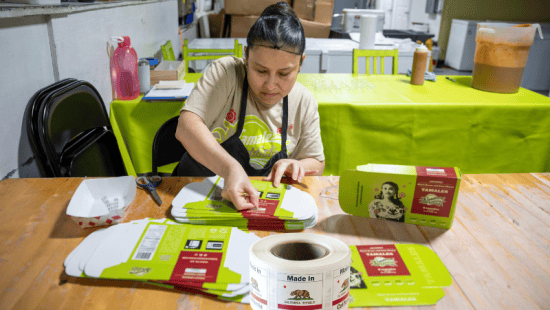
“I try to do my best in this situation. I offer the best food with the best ingredients. One hundred percent hygiene, everything is fresh, we make it the same day, nothing gets held over for the next day — we even make fresh tortillas,” she mentions.
Rosa is a traditional merchant in every sense — she doesn’t have social media, she relies on the quality of her products and word of mouth. Being consistent, she says, is her best weapon.
“If people come, they won’t be disappointed — they won’t find tacos like the ones we serve anywhere else, the carne asada, the sesos and cachete are amazing. We’re so confident in what we offer that we don’t need what a lot of businesses use nowadays — and here we are. Defeat isn’t in my vocabulary,” she finishes saying.