A new California voter survey suggests Latino voters are rapidly consolidating behind Xavier Becerra as immigration fears, healthcare costs, and labor support reshape the 2026 governor contest.
California’s 2026 governor race is beginning to reveal a powerful political reality: Latino voters are consistantly showing that they may become the deciding force in who replaces Governor Gavin Newsom.
A new statewide voter survey conducted by EMC Research and Evitarus Poll shows Xavier Becerra surging ahead among Latino voters and climbing into a leading position among Democratic candidates overall. The poll suggests immigration enforcement, healthcare affordability, and labor support are becoming defining issues for working-class California voters, especially in Latino-heavy regions like Los Angeles County, the Inland Empire, and the Central Valley.
The findings also expose growing political polarization around immigration and voting rights at a time when California Democrats are trying to avoid a chaotic top-two primary outcome.
Why This Poll Matters for California Latinos
The EMC Research survey found that 30% of Latino voters support Becerra in the initial ballot test. No other gubernatorial candidate crossed the 20% mark among Latino voters.
That is significant in a crowded field that includes candidates like Katie Porter, Tom Steyer, Antonio Villaraigosa, and Tony Thurmond.
The poll also found Latino voters responded especially strongly to messaging tied to:
- Becerra’s lawsuits against the Trump administration
- His opposition to ICE enforcement actions
- His support for more affordable healthcare
For many Latino households in California, those issues are real political talking points. They connect directly to concerns about family security, healthcare costs, deportation fears, and economic survival.
In Los Angeles County alone, millions of residents live in mixed-status households or communities deeply affected by immigration policy and healthcare affordability.
Immigration Still Shapes Latino Political Behavior
One of the clearest signals from the poll is that immigration enforcement remains emotionally and politically powerful among Latino voters.
Messaging around “fighting back against ICE” was among the most persuasive themes tested in the survey.
That finding highlights how immigration enforcement continues shaping community trust in government institutions years after aggressive federal crackdowns during the Trump administration.
The impact goes beyond politics.
Fear around immigration enforcement can affect:
- school attendance
- healthcare visits
- crime reporting
- public participation
- voter turnout
For many immigrant-heavy communities in Los Angeles and Southern California, immigration policy still affects daily life decisions.
Healthcare Is Emerging as a Major Economic Issue
The poll also shows healthcare affordability remains a major concern among Latino voters.
That matters in California because Latino workers are heavily represented in industries like:
- construction
- hospitality
- logistics
- agriculture
- home healthcare
- food service
Many workers in those sectors continue facing high insurance costs, unstable employer coverage, or limited access to affordable care.
Becerra’s background as former U.S. Secretary of Health and Human Services appears to strengthen his credibility with voters focused on healthcare access.
Labor Unions Are Quietly Reshaping the Race
The labor battle inside the Democratic primary is becoming increasingly important.
SEIU California, representing roughly 700,000 workers statewide through affiliated unions including SEIU Local 2015 and SEIU Local 1000, officially endorsed Becerra alongside Steyer.
Meanwhile, the politically influential California Teachers Association backed Steyer instead of Becerra.
The split reflects deeper divisions inside California’s Democratic coalition between organized labor groups, education unions, healthcare advocates, and establishment political networks.
Another important development: the California State Council of Laborers threw its support entirely behind Becerra, strengthening his ties with working-class union voters.
Why Top Democrats Are Staying Neutral
Despite Becerra’s momentum, major California Democratic figures have not endorsed anyone in the race.
That includes:
- Alex Padilla
- Gavin Newsom
- Joe Biden
- Kamala Harris
- Nancy Pelosi
That neutrality is not unusual in California politics.
Under California’s top-two primary system, the biggest fear among Democrats is a split vote that could theoretically allow two Republicans to advance to the general election.
Newsom has publicly stated his priority is ensuring a Democrat reaches the runoff rather than backing a specific candidate.
Still, POLITICO has reported that many longtime Newsom advisers and fundraising allies are quietly moving toward Becerra’s orbit.
California’s Voter ID Divide Is Growing
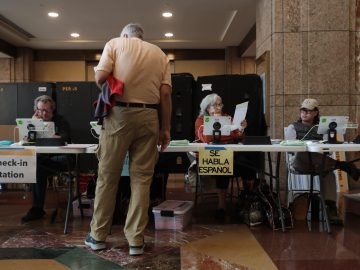
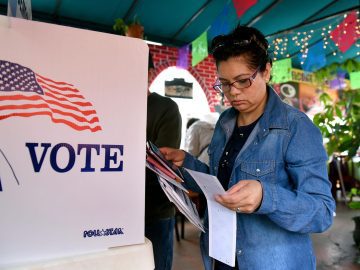
The poll also tested a proposed California voter ID measure.
Overall:
- 54% of California voters oppose the proposal
- 85% of Democrats oppose it
- 93% of Republicans support it
The proposal would require government-issued identification or identification numbers at polling places.
Supporters argue voter ID laws strengthen election security.
Critics argue such policies can create barriers for lower-income voters, elderly residents, immigrants, and communities with limited access to government documentation.
For Latino communities, even debates around documentation requirements can create confusion and fear, particularly among mixed-status families.
The biggest unanswered question is whether Latino voter enthusiasm will translate into turnout.
California primary elections historically struggle with lower participation rates among younger and working-class Latino voters.
That makes voter mobilization critical.
The race is also likely to intensify as more union endorsements, fundraising numbers, and television campaigns emerge over the coming months.
For now, the new polling suggests something larger may be unfolding in California politics:
Latino voters are no longer simply an important voting bloc.
They may become the central force shaping who leads the nation’s largest state next.