From East Los Angeles memorials to battlefields across the world, generations of Latino service members have defended the country with extraordinary sacrifice, bravery, and devotion to family and community.
Veterans Day carries deep meaning in Latino communities across California.
In neighborhoods like Boyle Heights, East Los Angeles, Bell Gardens, Long Beach, and communities throughout the Inland Empire, military service is woven into countless family histories. Photographs in uniform hang in living rooms. Folded American flags sit beside candles and framed medals. Grandparents tell stories about wars fought generations ago while younger relatives prepare for military careers of their own.
For many Latino families, Veterans Day is not simply a federal holiday. It is much more than that.
It is about sacrifice, resilience, service, and the belief that protecting family and community matters above all else.
Latino service members have fought in every major American conflict since the Revolutionary War. Despite facing discrimination and segregation throughout much of American history, Hispanic and Latino soldiers repeatedly stepped forward to serve the country with extraordinary courage.
Their contributions helped shape America’s military history. Yet many of their stories remain underrecognized.
Latino soldiers earned some of America’s highest military honors
According to military historians and veterans organizations, Hispanic and Latino Americans have earned more Medals of Honor per capita than any other ethnic group in U.S. history.
More than 60 Latino service members have received the nation’s highest military award for valor, while thousands more earned Purple Hearts, Bronze Stars, Navy Crosses, and Distinguished Service Crosses.
Many fought not only for their country, but also for recognition and equality back home.
That history stretches across generations.

The immigrant who became one of World War I’s greatest heroes
Long before he became a U.S. citizen, Private Marcelino Serna volunteered to fight for America during World War I.
Born in Chihuahua, Mexico, Serna joined the U.S. Army and fought during the brutal Meuse-Argonne Offensive in France. During one of the war’s deadliest battles, Serna single-handedly charged a German trench, killed 26 enemy soldiers, and captured 24 prisoners.
But the moment many historians remember most came afterward.
When fellow soldiers wanted to execute the captured prisoners, Serna physically stood in front of them and refused to allow it because it violated the rules of war.
Just days before the war ended, Serna was shot by a sniper.
He survived and became the most decorated soldier from Texas during World War I, earning two Purple Hearts, the Distinguished Service Cross, and France’s Croix de Guerre.
The Borinqueneers became legends in Korea
During World War II and the Korean War, Puerto Rico’s 65th Infantry Regiment became known for extraordinary battlefield courage.
Nicknamed “The Borinqueneers,” the regiment served as a segregated Latino unit at a time when discrimination remained widespread inside and outside the military.
Yet their combat record became legendary.
During the brutal winter fighting at Korea’s Chosin Reservoir in 1950, the Borinqueneers helped hold defensive lines under devastating conditions, allowing surrounded U.S. Marines to safely withdraw.
Decades later, Congress formally recognized their sacrifice by awarding the unit the Congressional Gold Medal in 2014.
Today, the Borinqueneers remain one of the most important symbols of Latino military history in America.
A Marine gave his life to save his commander in Vietnam
Corporal Angel Mendez grew up in a New York orphanage before joining the United States Marine Corps and deploying to Vietnam in 1967.
During a sudden ambush, his platoon commander was critically wounded and left exposed under heavy enemy fire.
Mendez rushed into the open, shielded his commander with his own body, and began carrying him to safety.
Even after being shot in the shoulder, Mendez refused to let go.
He continued protecting his commander until he was mortally wounded himself.
His actions saved another Marine’s life.
Mendez was posthumously awarded the Purple Heart and the Navy Cross.
Latino military courage continues today
The tradition of Latino military service did not end with earlier wars.
Master Sergeant Leroy A. Petry, a Mexican-American Army Ranger from New Mexico, became one of the most recognized American heroes of the war in Afghanistan.
During a firefight in 2008, Petry was already wounded when an enemy grenade landed near him and two fellow Rangers.
Knowing the blast would likely kill everyone nearby, Petry grabbed the live grenade and threw it away.
It exploded immediately, severing his right hand.
Petry survived, applied his own tourniquet, continued directing his squad, and later received the Medal of Honor and Purple Heart.
Today, Latinos represent roughly 17% of active-duty military personnel, making them the fastest-growing demographic in the U.S. military.
Latina trailblazers also changed military history
Latina service members also broke major barriers inside the armed forces.
Carmen Contreras-Bozak became the first Hispanic American woman to join the Women’s Army Corps during World War II. She volunteered for overseas duty and helped decode classified military communications in North Africa during wartime operations.
Decades later, Major General Angela Salinas shattered additional barriers when she became the first Hispanic woman to reach the rank of General in the Marine Corps.
Her rise represented a major milestone for Latinas in military leadership.
East Los Angeles holds some of California’s most important Latino veteran memorials
Los Angeles carries its own powerful Latino military history.
At Cinco Puntos in Boyle Heights and East Los Angeles, the historic Mexican American All Wars Memorial has stood since 1947 honoring Mexican-American service members who died during World War II.
Over time, the memorial evolved into one of the region’s most important Latino veteran landmarks.
The site later became connected to broader civil rights history, including the Chicano Moratorium movement of the late 1960s.
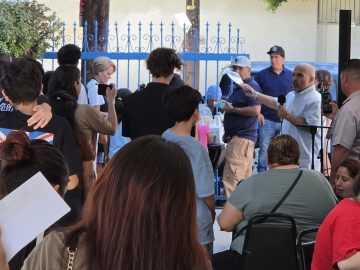
Nearby communities continue holding Veterans Day and Memorial Day commemorations there each year.
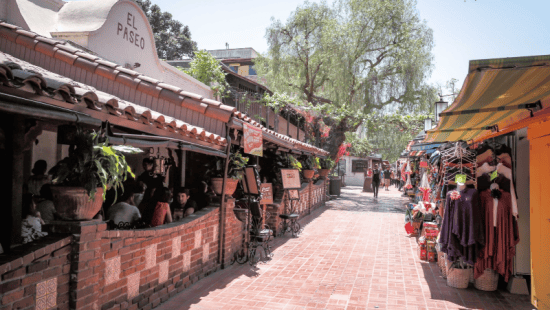
Other memorials across Southeast Los Angeles County continue honoring Latino veterans, including the Hispanic American Veterans Memorial in Bell Gardens and the Paseo de las Flores memorial promenade in Boyle Heights.
Together, they reflect how military service remains deeply connected to community identity throughout East LA.
A legacy carried through familia
Many Latino veterans describe military service through the language of familia.
That idea extends beyond blood relatives.
It includes loyalty, protection, sacrifice, and responsibility toward others.
Historians, veteran advocates, and military families often point to that cultural emphasis on collective responsibility as one reason military service resonates so deeply in many Latino communities.
Today, Latino veterans continue serving California long after leaving active duty.
Many become:
- teachers
- nurses
- firefighters
- police officers
- small business owners
- coaches
- public servants
- community leaders
Their service did not end overseas.
It continued at home.
Why this story matters
- Latino Americans have served in every major U.S. war
- Hispanic service members earned more Medals of Honor per capita than any other ethnic group
- California is home to one of America’s largest Latino veteran communities
Why this history deserves more recognition
Many Latino military contributions remain overlooked despite generations of sacrifice and heroism.
Why Veterans Day feels personal in East LA
Military service is deeply tied to family history, community identity, and civic pride across many Latino neighborhoods in Los Angeles.
What future generations should remember
Veterans Day is ultimately about memory.
It is about remembering names etched into monuments, photographs stored in family albums, and stories passed from grandparents to grandchildren.
Across California, Latino veterans helped defend the country while also helping build neighborhoods, businesses, schools, and communities that continue shaping American life today.
Their stories are not separate from American history.
They are American history.
¡Presente!
From East LA to Highland Park: 25 Free Memorial Day Weekend Events Families Can Enjoy in Los Angeles