From a Westlake house, Eduardo Renoj-Matul’s organization coordinated migrant smuggling across Guatemala, Mexico and the United States before hostage-taking, violence and a deadly crash helped bring the operation down.
For over a decade, a criminal organization built out of a modest house on James M. Wood Boulevard in the Westlake neighborhood of Los Angeles grew into what federal prosecutors call one of the largest human smuggling operations in the nation. It had no headquarters, no incorporation papers, and no name beyond the aliases of the man who ran it. But by the time it collapsed, it had moved an estimated 20,000 people across two countries, generated hundreds of millions of dollars, and left a trail of hostages, sexual assault, and death behind it.
This is the life story of that organization, from its roots to its reckoning.
Birth: A Network Built on Word of Mouth, 2012 to 2019
According to the indictment, the organization that prosecutors would later name the “Renoj-Matul transnational criminal organization” operated for at least 12 years before its final collapse. Its center of gravity was Eduardo Domingo Renoj-Matul, a Guatemalan national who went by several names on the street, “Turko,” “El Jefe,” “Patrón,” and “El Gallo,” each one suggesting a different face of the same man: foreign, authoritative, feared, proud.
Renoj-Matul did not start at the top. According to his own plea agreement, he first worked within the smuggling organization before rising to lead it, learning the business from the inside before building his own version of it. By the time prosecutors caught up to him, he had settled in the Westlake district near downtown Los Angeles, a neighborhood adjacent to MacArthur Park that has long served as an entry point for Central American immigrants arriving in the city.
Structure: Cells, Drivers, and Stash Houses
What made this organization function at the scale prosecutors describe wasn’t one man, it was a layered system. According to the U.S. Attorney’s Office, Renoj-Matul “oversaw smuggling cells, teams of drivers who transported illegal aliens, and operators of stash houses where illegal aliens were held” once they crossed into the United States.
The operation had a clear division of labor across two countries. In Guatemala, co conspirators recruited migrants and collected payments ranging from $15,000 to $18,000 per person, a price point that put the service well out of reach of casual buyers and signaled an organization built for volume, not individual favors. Those recruits were then transported through Mexico and into the United States, where a second layer of the organization took over: drivers who moved people to destinations nationwide, and operators who ran the stash houses where migrants were held if they could not pay.
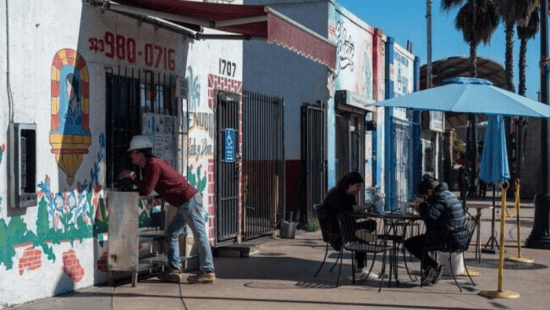
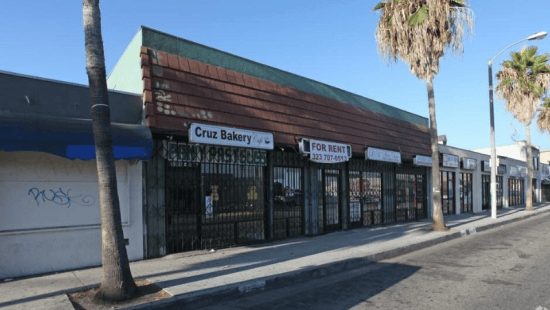
Cristobal Mejia Chaj, 51, also of Westlake, served as what prosecutors described as Renoj-Matul’s “right-hand man,” overseeing day-to-day operations of at least one of those stash houses, the one on James M. Wood Boulevard, just blocks from MacArthur Park.
Money flowed in a structured path too. Renoj-Matul directed that smuggling proceeds be transported from Los Angeles to Phoenix, Arizona, where the funds were handed off to the organization’s Mexican smuggling partners to pay expenses on that side of the operation. It was, in effect, a binational business with its own internal accounting.
The Product: Human Beings as Collateral
The organization’s entire business model depended on one brutal mechanism: debt enforcement through captivity. If a smuggled migrant’s fees went unpaid, Renoj-Matul and his co-conspirators held that person against their will at the Westlake stash house, or at a secondary location in Phoenix, until the debt was settled.
Court documents describe this debt collection escalating into violence and sexual abuse. In one case detailed in a sentencing memorandum, Renoj-Matul held a female victim captive in retaliation for her unpaid smuggling fees, sexually assaulted her, forced her into degrading labor, mistreated her, and threatened her family in an effort to extract payment.
In 2024, after a third party backed out of paying one victim’s smuggling fee, Renoj-Matul and co-conspirators in Guatemala called the victim’s mother and threatened that her child “would come home in a box” if the debt wasn’t paid. Separately, Renoj-Matul admitted to holding another Guatemalan migrant hostage for roughly two months, from April to July 2024, threatening to kill, injure, or continue detaining the victim unless a third party paid the smuggling fee as a condition of release.
The Cost of Scale: A Fatal Crash
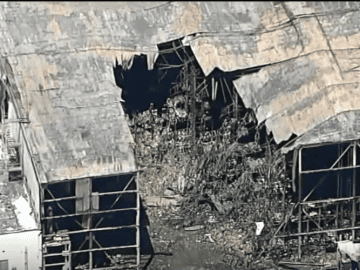
Moving an estimated 20,000 people over more than a decade meant the organization was, in effect, running an unregulated, unsafe transportation network on a massive scale. In November 2023, that reality caught up with it in the worst possible way: a car accident connected to the smuggling operation killed seven undocumented immigrants being transported inside the network. Judge Cynthia Valenzuela ordered Renoj-Matul to pay $64,945 in restitution tied specifically to that crash, a figure that stands in stark, almost clinical contrast to seven human lives.
The Collapse: Arrest, Guilty Pleas, and Sentencing
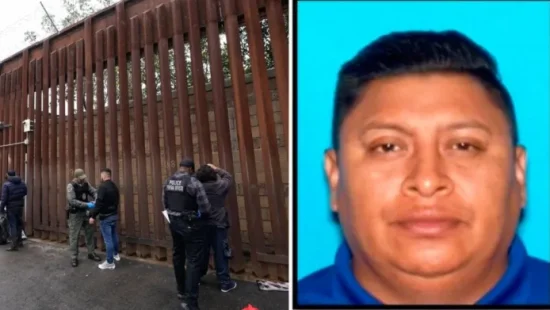
The organization’s downfall began in February 2025, when Renoj-Matul and Mejia Chaj were arrested in Los Angeles. On March 6, 2026, Renoj-Matul pleaded guilty in federal court to one count of conspiracy to bring, transport, and harbor aliens for private financial gain, and one count of hostage taking, a charge that alone carried a statutory maximum of life in prison. Mejia Chaj pleaded guilty earlier, in March 2026 as well, to the same conspiracy charge, though without the hostage taking count attached to his plea.
On October 2, 2026, roughly eight months after their arrests, both men stood before Judge Valenzuela for sentencing. Renoj-Matul, the architect of the operation, received 262 months, nearly 22 years, in federal prison. Mejia Chaj, the operation’s second in command, received 2 years and 9 months, a sentence that reflects the more limited scope prosecutors attributed to his role compared to Renoj-Matul’s.
Additional restitution hearings are still to come. One for Renoj-Matul’s kidnapping victims will be scheduled at a later date. Mejia Chaj faces his own separate restitution hearing on December 11.
What the Case Leaves Behind
What began as one man learning the smuggling trade from others became, over twelve years, an organization capable of moving tens of thousands of people, extracting over a quarter billion dollars in fees at its documented price point, and treating human debt like any other collections problem, with violence as the enforcement mechanism. Its story ends in a Los Angeles courtroom, but the human toll it left behind- the hostages, the assaulted, the seven dead in a single crash- will likely take years of further hearings to even begin to account for.