Los Angeles City Council is considering a local response as Salvadoran immigrants face continued uncertainty over Temporary Protected Status and work authorization. Here is what the city can do and what it cannot.
LOS ANGELES — The Los Angeles City Council is considering a motion that would direct city officials to report on how Los Angeles is responding to the federal government’s action involving Temporary Protected Status (TPS) for Salvadorans and other affected TPS communities.
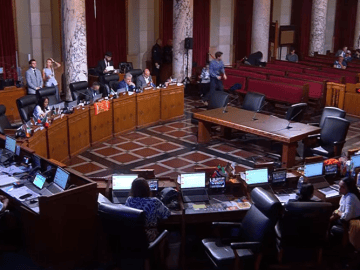
Council File 26-1172 was introduced Aug. 21 by Councilmember Hugo Soto-Martínez and seconded by Councilmember Marqueece Harris-Dawson. The Civil Rights, Immigration, Social Services and Neighborhoods Committee approved the motion Sept. 11, and the full Council placed it on its Sept. 22 agenda.
The motion does not determine whether Salvadorans can keep TPS. That is a federal decision.
Instead, it asks what Los Angeles can do locally if residents lose the protections and work authorization associated with TPS.
The motion would direct the Community Investment Department, in consultation with the Mayor’s Office of Immigrant Affairs, to produce a report within 14 days on the city’s response.
Among the areas the report would examine are:
- expanding immigration legal services through RepresentLA;
- rental and financial assistance;
- outreach and public education;
- targeted assistance for vulnerable residents;
- and the economic effects of losing TPS workers in affected industries.
That makes this a local services and preparedness question, not a new immigration-status program.
Why does this matter in Los Angeles?
Los Angeles has a large Salvadoran community, making changes to TPS potentially significant for local families, workers and employers.
The issue has already created uncertainty for Salvadoran TPS holders and businesses. The Los Angeles Times reported Sept. 10 that Salvadoran immigrants and employers were trying to determine what the federal government’s changing position meant for work authorization.
Parriva previously reported that the Sept. 9 federal deadline did not immediately produce a new long-term TPS extension or an immediate end to protection for current Salvadoran TPS beneficiaries. DHS said beneficiaries would remain protected while the government determined what comes next.
For the latest federal-status explanation, see: Salvadoran TPS Did Not End Sept. 9. What California Families Need to Know
The federal government controls TPS. Los Angeles does not.
What could the city provide?
If the Council adopts the motion and the subsequent city report leads to additional action, the areas under consideration could include several forms of local assistance.
Immigration legal services
The motion specifically calls for examining an expansion of RepresentLA, the city’s immigration legal-services program.
The city already directs immigrants seeking legal help to use licensed attorneys or federally accredited representatives and provides information about authorized nonprofit legal-service organizations.
Los Angeles immigration resources: Know Your Rights: Immigrants’ Rights and Resources
Rental and financial assistance
The motion also asks the city to consider rental and financial assistance for people affected by TPS changes.
That does not mean a new benefit has been approved.
At this stage, the Council is asking city departments to examine what additional assistance could be provided.
Outreach and information
The motion also calls for outreach and education.
That could become particularly important as federal immigration rules change and misinformation spreads quickly through communities.
The city maintains a broader Know Your Rights resource page with information about immigration services, legal assistance and other community resources.
What Los Angeles cannot do
The most important distinction for readers is simple:
Los Angeles cannot grant, extend or restore federal TPS.
TPS is a federal immigration program administered through the federal government.
The City Council can decide how Los Angeles uses its own resources and services to respond to local consequences. It cannot change the federal immigration status of an individual resident.
That means Council File 26-1172 should not be interpreted as an extension of TPS.
The immediate question is whether the full City Council adopts the motion.
If adopted, the motion calls for a city report within 14 days addressing the city’s current response, possible additional services and the economic effects of TPS changes.
That report could give Angelenos a clearer picture of what assistance the city already provides and whether additional programs or resources are being considered.
For Salvadoran TPS holders, however, the larger immigration-status question remains federal.
What Salvadoran TPS holders should know now
The Sept. 9 date has generated considerable confusion.
Parriva’s previous reporting found that the federal government had not announced a new long-term extension at that point, but current Salvadoran TPS beneficiaries remained protected while DHS determined what action would come next.
That means people should not assume that a date printed on social media or circulated through community networks automatically determines their individual immigration status.
Keep immigration and employment documents, monitor official federal announcements, and seek individual legal advice when necessary.
The City of Los Angeles also advises immigrants to obtain immigration assistance only from a licensed attorney or federally accredited representative.
Los Angeles is preparing for the possibility that Salvadoran TPS holders could face serious consequences from federal immigration changes.
The City Council motion would examine legal services, financial and rental assistance, outreach and economic impacts.
But it would not change TPS itself.
For Salvadoran Angelenos, the situation therefore has two separate tracks:
Washington decides what happens to TPS. Los Angeles is deciding how the city can respond to the local consequences.