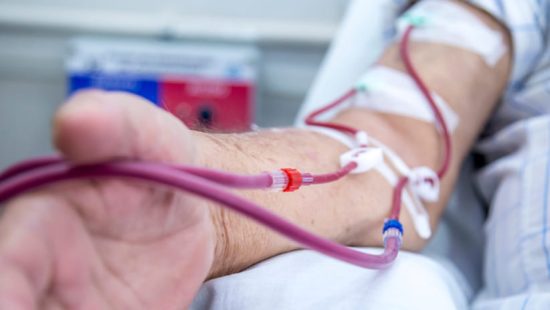
Diabetes is a leading cause of kidney failure, and Latino communities face a higher burden. In Los Angeles, the challenge stretches from preventing kidney disease to making sure patients can access care when they need it.
Los Angeles County has about 200 dialysis centers, providing treatment for people whose kidneys can no longer adequately filter waste and excess fluid from their blood.
But dialysis is the end of a much longer story.
For many patients, that story begins years earlier with diabetes, high blood pressure or kidney disease that can develop with few noticeable symptoms. The CDC’s 2026 kidney disease data estimates that 87% of U.S. adults with chronic kidney disease do not know they have it.
That makes the bigger question in Los Angeles not simply how many people need dialysis, but what happens before they reach that point.
Diabetes is a leading cause of kidney failure in the United States. Over time, high blood sugar can damage the blood vessels and tiny filtering structures inside the kidneys.
The CDC explains that chronic kidney disease often develops slowly and with few symptoms. As kidney function declines, patients can eventually reach kidney failure, when dialysis or a kidney transplant is needed to survive.
The CDC’s latest estimates show that about 38% of U.S. adults with diabetes have chronic kidney disease. Among adults with type 2 diabetes, the figure is about 41%.
That makes early detection and management important long before someone sits down for their first dialysis treatment.
And while diet is part of overall diabetes prevention and management, kidney failure cannot be reduced to sugar or individual food choices. The pathway involves multiple medical and social factors.
Latino communities face a higher kidney-failure burden
The disparity is especially important in Latino communities.
The organization also cites research showing a gap in care before dialysis begins: 52% of Hispanic and Latino patients receiving hemodialysis had not seen a kidney specialist before starting dialysis, compared with 44% of non-Hispanic patients.
Those numbers do not establish that one factor explains the disparity.
They do show that the path to kidney failure can involve more than diabetes itself. Early detection, access to primary care, specialist care and the ability to manage chronic conditions all matter.
For readers looking at diabetes prevention and nutrition, Parriva has also explained how dietary choices can affect type 2 diabetes risk in Latino communities.
The challenges do not necessarily end when kidney failure occurs.
At LA General Medical Center, officials created a transitional dialysis program for uninsured patients who were beginning hemodialysis while their insurance applications were being processed.
The Los Angeles County program addressed a practical problem: patients who needed regular dialysis could not simply wait for their coverage to be resolved.
The program reduced the average hospital stay for these patients from 13 days to 7.6 days, a reduction of 5.4 days.
It is a reminder that access to dialysis depends on more than having dialysis centers nearby. Insurance, hospital transitions and connections to outpatient care can also shape what happens after kidney failure is diagnosed.
Los Angeles is also trying to move upstream
Some local efforts are focused on preventing diabetes and its complications before they become severe.
California State University, Northridge’s 3 WINS Fitness program added a diabetes-prevention component in 2026. The CSUN program combines structured exercise with diabetes education, nutrition and stress-management workshops and offers culturally responsive programming in English and Spanish.
Its primary demographic is Latino.
It is not possible to say yet that programs like this will reduce future dialysis rates. But they represent a different point of intervention: reaching people before chronic disease progresses to the point where kidney failure becomes the central problem.
The path to dialysis is not simply a story about sugar or individual food choices.
It is a chain that can involve diabetes, high blood pressure, kidney disease, delayed detection, access to medical care and, eventually, access to dialysis itself.
For Los Angeles’ Latino communities, the higher kidney-failure burden makes that chain especially important to understand.
The opportunity to change the trajectory often comes before kidney failure — through preventing or better managing diabetes, controlling blood pressure, identifying kidney disease earlier and making sure patients can reach appropriate care.
Dialysis is where kidney failure becomes visible.
The opportunity to change the story often comes years earlier.