Four months after the MacArthur Park crackdown, another massive fentanyl seizure in Los Angeles raises questions about how drug trafficking networks adapt after major enforcement operations.
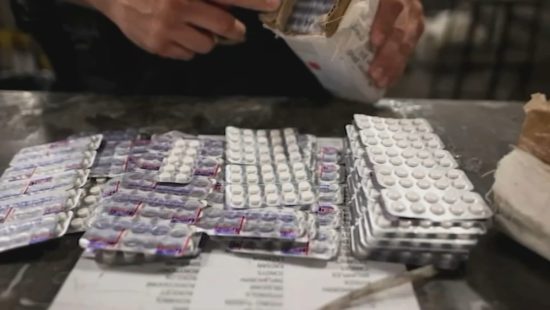
Federal agents seized nearly 94 pounds of fentanyl, along with cocaine, heroin, guns, and even a small alligator, from a luxury apartment in downtown Los Angeles this month. The bust made headlines mostly for its bizarre details. But for anyone following Los Angeles’s ongoing fentanyl crisis, the timing and location tell a more serious story: four months after one of the city’s most aggressive drug crackdowns in years, the supply chain feeding the crisis appears to be very much intact.
The Downtown LA Bust
Federal authorities arrested Marvin Angelito, 27, and Susan Gonzalez, 26, after executing a search warrant at their downtown apartment on September 10. According to court documents, the operation began with a sting in which federal agents purchased drugs from an associate of the couple before moving in on the residence, which law enforcement believes was being used as a stash house. Inside, agents found approximately 42.6 kilograms, or 93.9 pounds, of fentanyl pills and powder, along with 7.2 kilograms of cocaine, 1 kilogram of heroin, an AR-15-style rifle, a gold-plated Desert Eagle .50 caliber pistol, drug processing equipment including a hydraulic press, and a police radio. Officers also found a small alligator inside the unit.
Both defendants were charged with possession with intent to distribute fentanyl. A federal magistrate ordered Angelito held without bail, while Gonzalez was released on a $15,000 bond. Both face a statutory maximum of life in federal prison if convicted, with arraignments scheduled for early October.
To put the seizure in perspective, California’s Attorney General has noted that a single kilogram of fentanyl carries enough lethal doses to kill 500,000 people. The nearly 43 kilograms found in this one apartment represents a supply large enough to devastate a city many times over, a sobering reminder of just how much product moves through Los Angeles at any given time.
Echoes of MacArthur Park
This bust doesn’t exist in isolation. In May 2026, federal and local law enforcement launched Operation Free MacArthur Park, a sweeping crackdown aimed at dismantling what officials called a notorious open-air drug market that had plagued the park and its surrounding blocks for years. That operation resulted in 18 arrests, 25 total defendants charged, and more than $10 million worth of fentanyl seized, including nearly 40 pounds recovered from a single supplier’s home in Calabasas.
At the time, officials described the operation in triumphant terms. First Assistant U.S. Attorney Bill Essayli said the goal was to begin “reclaiming MacArthur Park from criminals and drug addicts,” while DEA Special Agent in Charge Anthony Chrysanthis called it an effort to “alleviate the anguish and sense of hopelessness burdening MacArthur Park, local businesses, and the surrounding neighborhood.” LAPD Chief Jim McDonnell praised the interagency partnership and vowed continued commitment to keeping fentanyl off the city’s streets.
Four months later, the downtown LA bust, just blocks from where that earlier operation played out, suggests the underlying problem never really left. It simply adapted. The volume of fentanyl found in this single apartment alone exceeds what was seized from the Calabasas supplier tied to the MacArthur Park case, a sign that whatever damage Operation Free MacArthur Park did to that particular network, the broader trafficking pipeline into central Los Angeles kept functioning.
A Pattern Familiar to Drug Enforcement
This dynamic isn’t unique to Los Angeles, and it isn’t new. Large-scale drug busts routinely disrupt a specific supply chain or a specific location for a period of time, only for trafficking activity to reappear nearby once dealers and suppliers adjust. Enforcement officials rarely frame these operations as a permanent fix; even DEA and LAPD leadership described May’s MacArthur Park sweep as “only one step,” not a resolution. What tends to follow a high-profile crackdown is not the end of a drug market, but its relocation or reorganization, sometimes just a short distance away, as this month’s case appears to demonstrate.
What Comes Next
Angelito and Gonzalez are scheduled for arraignment in early October, and prosecutors have not yet indicated whether their case is connected to any of the individuals charged in the MacArthur Park operation. For now, the two busts stand as separate cases on paper, but together they paint a clearer picture of a fentanyl trafficking problem in Los Angeles that has proven far more resilient than any single operation, however large, has been able to fully contain. Whether downtown LA becomes the next long term flashpoint in this fight, or simply one more data point in a citywide pattern, will depend on what investigators uncover as this case moves forward.