The Court ruled that migrants standing in Mexico have not legally “arrived” in the United States, a decision that could reshape asylum access for thousands of families seeking protection.
The U.S. Supreme Court has issued one of the most consequential immigration rulings in years, deciding that migrants waiting on the Mexican side of the border do not have a legal right to apply for asylum until they enter the United States.
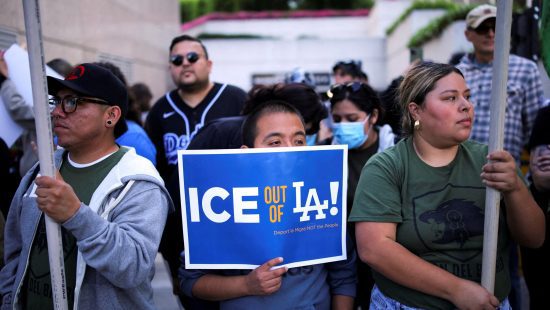
The decision in Mullin v. Al Otro Lado could affect thousands of people seeking protection through official border crossings, including many families from Latin America. For California, which is home to the nation’s largest immigrant population and millions of mixed-status families, the ruling could have significant consequences for family reunification, legal migration pathways, and community stability.
The Court’s ruling does not eliminate asylum. People may still apply for asylum under U.S. law. What changed is when those rights begin.
According to the Court, migrants standing in Mexico have not yet “arrived in the United States” under federal immigration law. As a result, immigration officers are not required to process asylum claims until a person is allowed to enter the country.
The case centered on a practice known as “metering.”
During periods of high migration, federal officials have sometimes limited how many asylum seekers can be processed each day at official ports of entry.
Immigrant rights groups argued that people who presented themselves at the border should immediately receive access to asylum processing.
The Supreme Court disagreed.
In a 6-3 ruling, the Court concluded that federal law does not require the government to process asylum claims from individuals who remain outside U.S. territory.
The decision overturns a lower court ruling from the Ninth Circuit that had sided with asylum seekers.
No state has a larger stake in immigration policy than California.
California is home to millions of immigrants, mixed-status households, and families with relatives seeking protection through legal immigration channels.
Los Angeles County alone contains one of the largest immigrant populations in the country.
For many families, this ruling is not about politics. It is about whether a parent, child, sibling, or relative can access protection through the legal asylum system.
Community organizations throughout California have long encouraged migrants to follow official procedures rather than cross illegally. Critics of the ruling argue that longer waits at ports of entry could create confusion about those legal pathways.
Who Is Most Likely to Be Affected?
Families Seeking Asylum
People fleeing violence, persecution, or political instability may face longer waits before gaining access to asylum processing.
Mixed-Status Families
Families already living in California may experience longer periods of separation while relatives remain outside the country waiting for entry opportunities.
Children
Children traveling with parents may spend extended periods in temporary conditions near the border while awaiting processing opportunities.
Legal Aid Organizations
Immigration attorneys and nonprofit organizations could see increased demand for guidance as families try to understand what the ruling changes.
What the Decision Does Not Answer
The ruling leaves several important questions unresolved.
The Court did not establish how long migrants may be delayed before being allowed to enter.
It did not address conditions asylum seekers may face while waiting in Mexican border cities.
The decision also does not determine whether Congress could change federal asylum law in the future.
Those unanswered questions could lead to additional lawsuits and policy battles.
Many asylum seekers arriving at the southern border come from Latin America.
That means changes to asylum access often affect Latino communities more directly than many other populations.
The effects extend beyond immigration.
Education, employment, housing, healthcare access, and family stability can all be influenced by immigration policy decisions.
For California’s Latino communities, immigration policy is often family policy.
When legal pathways become more difficult to navigate, the effects can ripple through entire households and communities.
Immigration advocates, federal agencies, and policymakers will now be determining how the ruling is implemented in practice.
Future administrations may use the decision differently depending on their immigration priorities.
For California families, the most important takeaway is that asylum remains available, but access to the process may become slower and more difficult at official border crossings.
The larger debate is far from over.
The Supreme Court answered a legal question about when asylum rights begin. The political, humanitarian, and practical questions surrounding immigration policy will continue long after this ruling.
Source: U.S. Supreme Court opinion in Mullin v. Al Otro Lado (2026), available through the official Supreme Court website.