
Americans spent $13.1 billion online on Black Friday, but for California’s independent retailers, the holiday shopping season presents a different challenge: turning customer demand into sustainable profits.
Americans spent more money online this Black Friday than ever before. Whether neighborhood businesses shared in that growth is another question.
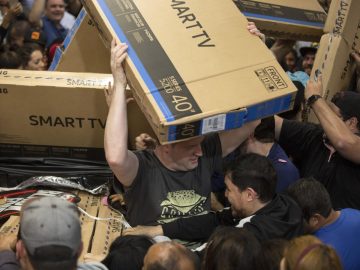
Online spending reached $13.1 billion on November 27, approximately 11% more than last year, according to Adobe Analytics figures reported by Reuters. The total exceeded Adobe’s earlier $12.9 billion forecast.
Meanwhile, estimates from geospatial analytics company PassBy, reported by Reuters, put visits to U.S. physical stores at approximately 930 million on Black Friday, down 2.2% from the previous year.
One figure measures spending and the other estimates store visits. Neither tells us how much independent retailers earned or whether they became more profitable.
The shift toward online commerce predates Black Friday. The Census Bureau’s November 19 report found that third-quarter online retail sales grew 10.4% from a year earlier, compared with 5.6% for total retail sales. Neither figure is adjusted for inflation.
Behind the spending record, a different reality
In February, Margarita López, owner of Monica’s Flowers in El Monte, described the financial uncertainty facing her family business. She and her husband had operated the shop for approximately 25 years.
“For about two years now, we’ve barely been able to cover expenses,” she said in an interview with Parriva.
Her experience predates this year’s Black Friday, but it illustrates why busy shopping seasons matter so much to merchants struggling to pay their bills.
The economic conditions leading into the holiday weekend remained challenging. The San Francisco Federal Reserve’s November 25 Beige Book reported slightly weaker retail sales across its Western district, which includes California. Consumers were choosing cheaper merchandise, while businesses faced costs that were rising faster than selling prices.
For merchants already dealing with higher operating costs and weaker demand, attracting more shoppers is only part of the challenge.
What Small Business Saturday can deliver
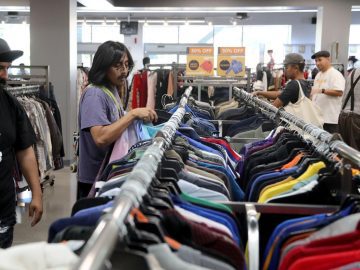
For neighborhood merchants, Small Business Saturday on November 28 offers another opportunity to attract holiday shoppers.
Historical business-account data suggest that the holiday weekend can help smaller retailers, although the benefits vary considerably by industry.
Chase’s November 25 Small Business Pulse, based on business account data, found that median retail small-business revenue during Small Business Saturday weekends was approximately 8% higher in 2024 and 6% higher in 2025 than during a typical weekend.
Shoe retailers, secondhand merchandise stores and florists experienced larger historical gains than clothing and specialty food retailers. These findings describe previous years, not this weekend’s results.
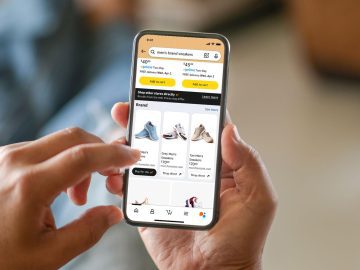
Online shopping also offers opportunities for merchants. Shopify reported $14.6 billion in global merchant sales across the 2025 Black Friday through Cyber Monday period, up 27% from the previous year. Its figures include businesses of different sizes and cannot be directly compared with Adobe’s U.S. single-day estimate.
Consumers also express interest in supporting local businesses. An American Express-sponsored survey released November 12 found that 88% of surveyed adults were likely to shop at small businesses during the holidays. Among surveyed business owners and managers, 70% said holiday spending would influence their ability to grow in 2027.
These are intentions and expectations, not completed purchases. American Express founded Small Business Saturday and has a commercial interest in promoting it.
How to turn holiday sales into sustainable profits
Consider a hypothetical retailer that generated $10,000 in revenue last year and incurred $8,000 in operating costs, leaving $2,000 in operating profit.
If this year’s revenue rises 10% to $11,000 while costs increase 15% to $9,200, operating profit falls to $1,800. Sales are higher, but profit is 10% lower.
Business owners can evaluate their holiday promotions by comparing net sales, merchandise costs, fulfillment expenses and other operating costs against the same period last year. They should avoid counting discounts twice when calculating costs from net sales.
The Los Angeles Regional Small Business Development Center offers no-cost business advising, including assistance in Spanish. Owners can call 866-588-7232 or register online for help with pricing, cash flow and financial management.
For shoppers, supporting independent businesses does not have to mean spending beyond their budgets. Comparing prices, buying directly when practical and recommending trusted merchants can all help.
As of November 28, the national figures do not establish how much of this year’s Black Friday spending reached independent or Latino-owned businesses in Los Angeles.
For merchants like López, the real measure of a successful holiday season is not the national spending record. It is whether the business can pay its bills and keep its doors open into the new year.