
Millions of consumers plan to use artificial intelligence to find gifts and compare prices. Independent retailers have ways to make their products discoverable, but being listed does not guarantee being recommended.
A shopper in Los Angeles looking for an educational toy might once have asked a neighbor for a recommendation, visited a nearby store or searched online for local options.
Now that shopper can ask an AI assistant to find a toy under $35 available for pickup nearby.
The question for an independent toy store is whether its merchandise will be among the options the shopper sees.
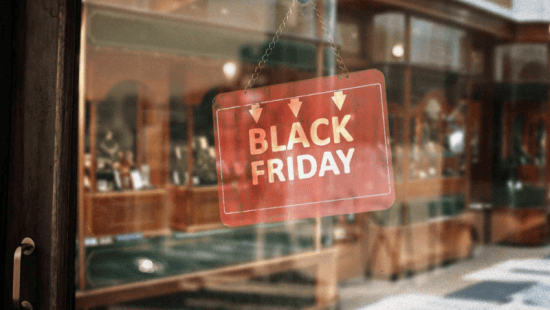
With Black Friday approaching, that question is becoming increasingly relevant.
According to the National Retail Federation, an estimated 182.7 million Americans plan to shop during Thanksgiving weekend. Of those expected shoppers, 59% plan to use artificial intelligence to help with holiday purchases.
Some want product recommendations. Others plan to compare prices, find gift ideas or manage their budgets.
The survey measures intentions, not actual purchases. But it points to another way customers may discover where to shop.
AI shopping is becoming another storefront
Shopping assistants such as ChatGPT and Google’s Gemini can help consumers discover products without visiting individual retailers’ websites first.
For California’s independent businesses, this creates another digital channel to understand, alongside traditional search engines and social media.
Parriva has previously reported on how AI is changing marketing and operations for California’s small businesses. Shopping recommendations introduce a different challenge: making individual products visible to potential buyers.
Google allows eligible merchants to display products through free listings across Search, Shopping, Maps and Gemini.
Its Merchant Center guidance explains that retailers can participate without purchasing advertising.
ChatGPT also uses product information from merchants and other sources when recommending merchandise.
According to OpenAI’s shopping documentation, product information from Shopify merchants is integrated through Shopify Catalog, helping their merchandise appear in relevant shopping conversations.
But there is an important difference
Being eligible for a shopping platform does not guarantee that an AI assistant will recommend a store’s products.
What neighborhood retailers need to get right
For a neighborhood retailer, product discovery can depend on details that are easy to overlook: whether an item is still in stock, whether customers can collect it locally and whether the listed price matches what the store charges.
Those details are important to shoppers looking for convenience, but they also give smaller businesses a way to describe what they offer beyond simply competing on price.
Preparing for AI shopping does not necessarily mean buying another software subscription. The immediate task is to make sure existing product information is accurate and accessible.
1. Verify prices and availability.
A product advertised at one price but listed differently in a merchant feed can create problems. Google requires consistency between submitted product information and the retailer’s website.
Check prices, stock levels, sizes and product variations.
2. Review Google Merchant Center.
Eligible businesses can use free listings to make merchandise available across supported Google services.
Retailers should review product approval status, shipping information and any errors that could prevent listings from appearing.
3. Make product descriptions useful.
Clear product names, descriptions, images and attributes help shopping systems interpret what a retailer sells.
For a store offering handmade gifts, specialty clothing or educational toys, those details should appear on individual product pages.
4. Publish clear shipping and return policies.
Customers need to know when an item will arrive, what delivery costs and whether they can return it.
Google requires shipping information for eligible U.S. merchant listings and recommends providing return-policy details.
Shipping costs also affect whether a holiday promotion makes financial sense. Parriva recently examined how rising delivery expenses can reduce Black Friday profits for small businesses.
5. Check existing e-commerce connections.
Shopify merchants can review their product catalogs and supported shopping-channel settings. Other retailers can check whether their website platform supports Merchant Center or structured product data.
These actions can improve product accuracy and eligibility. They do not guarantee higher placement in AI recommendations.
Who decides which stores shoppers see?
Even when products are available to shopping platforms, the platforms determine which options to present.
OpenAI says ChatGPT considers the shopper’s request, product information and other relevant factors. When presenting merchants selling a particular item, it may consider availability, price, quality and whether the seller is the manufacturer or primary retailer.
Google also uses merchant-provided information to match products with relevant searches.
Neither company promises that every eligible business will appear.
That leaves an unresolved question: How can a small retailer determine whether missing recommendations reflect incomplete product information, the customer’s request or the platform’s selection process?
The opportunity extends beyond Black Friday
Black Friday falls on November 27, followed by Small Business Saturday on November 28 and Cyber Monday on November 30.
For businesses already preparing promotions, AI visibility should be considered alongside inventory, delivery costs and profit margins.
As Parriva explained in its seven-day Black Friday preparation guide, a promotion only makes sense if the business can afford to fulfill the orders it attracts.
A neighborhood business cannot control every recommendation an AI assistant makes. It can, however, make sure its online information gives shoppers an accurate picture of what is available.
As holiday shopping changes, that information may help a customer discover a nearby store that otherwise would not have been considered.